Cannibalism in film is generally depicted in one of two ways; either it’s being perpetrated by savage maniacs who messily devour human flesh or savored by members of high society as an indulgent and sophisticated ritual. As is immediately evident by the cover art, The Cannibal Club clearly falls into the latter category. These sorts of depictions tend to have an undercurrent of social commentary, as the rich literally devour the lower classes for their own pleasure and this film is no different in that regard. However, that is far from all that TCC has to offer as this delectable treat gives viewers a lot more to chew on.
Wealthy social elites Otavio (Tavinho Teixeira) and Gilda (Ana Luiza Rios) are a Brazilian power couple who enjoy indulging in the flesh of their workers, in every sense of the word. Their life of leisure and twisted pleasures soon becomes threatened when Gilda accidentally uncovers the truth about a prominent member of the secret society that Otavio is part of.
There is a lot to like about this film, from the flawless acting, to the beautiful camerawork and of course the graphic gore effects, which are utterly sublime. What’s most interesting though is the unconventional and unpredictable script that subverts the expectations of what a film like this can be. I imagine that had this been made in Hollywood (or when the inevitable, ill conceived remake is greenlit) the plot would have the couple portrayed as the antagonists or softened their characters with a significant amount of remorse. Instead TCC leans into the twisted nature of its protagonists while still portraying them as fully fleshed out people in an imperfect and realistic relationship.
The only thing that I found lacking here (and frankly a bit surprising) was that a film with such graphic sexuality and violence would occasionally shy away from the good stuff and have it take place off screen. Perhaps writer/director Guto Parente was going for a “less is more” approach with these scenes and while they are still effective, I couldn’t help but feel a little cheated out of some great gore that I thought was coming.
 Fear not though gore hounds because there is still plenty of violence on display, especially as the film works up to its climactic ending. I also want to give credit to the fact that the social commentary is woven subtly and expertly into the story which gives the message a lot more resonance, especially in this day and age. So, if you are looking for an exotic and satisfying treat to satiate your darker appetites, you’ll definitely want to put this one on the menu.

 When working within the medium of short film it’s essential to communicate a lot of information in a small amount of time. Making the audience feel for the characters and telling a worthwhile story from beginning to end in just a few minutes is a very challenging task but Davide Melini’s Lion does all that and more within its concise runtime. Located entirely within the confines of an isolated family home somewhere in the snowy wilderness, Lion tells the story of an abused little boy who wishes his favorite animal could come and protect him from his own family.

 that makes an effort to establish the characters as real people and not just derivative stereotypes, thereby elevating the story above its basic setting. The feminist theme and social commentary also helps to set it apart and factors heavily into some major plot points (which I won’t spoil here) as well as dialogue that feels especially prescient today. It’s also nice that the characters (mostly) make logical decisions in service of their own survival although it does make it more noticeable the few times that they don’t. The twist nicely ties into the story thematically but it does make some of the earlier scenes feel like a bit of a reach as a result.
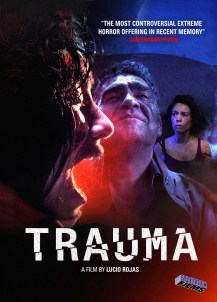 Incest! Necrophilia! Rape! Graphic murder! Have I got your attention yet? Because as a fan of Extreme Cinema the Chilean film Trauma certainly got mine. Some movies barely cross the line into Extreme Cinema territory, then there are others that grab the line by the fucking throat as they run past it. Trauma is certainly the latter, with certain scenes even echoing some of the most disturbing content from the legendary shocker A Serbian Film. Yet, at least at this point, this film isn’t talked about with anywhere near the same frequency. Hopefully that will change, because love it or hate it, Trauma is certainly a film that deserves to be watched and discussed.
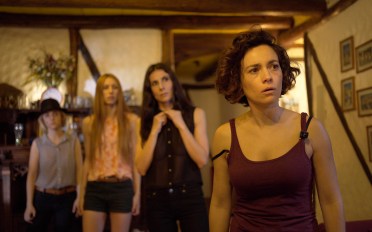 When viewing Trauma, it is important to have an understanding of where it’s inspiration comes from to truly appreciate what the film is trying to say. While the exact details of the story and the specific characters may not have actually occurred, the film is steeped in Chile’s modern history and very representative of a significant cultural issue that still impacts life today. In the real world, Chile’s democratically elected government was overthrown in 1973 in a brutal coup that resulted in Augusto Pinochet seizing power as the country’s iron-fisted dictator. During this period the country experienced an unfathomable amount of death and real world horror that left it irrevocably changed. This is important to know because at its core, this film is really about the country’s brutal and traumatic past still rearing it’s head in the modern world, and not simply another violent home invasion thriller.
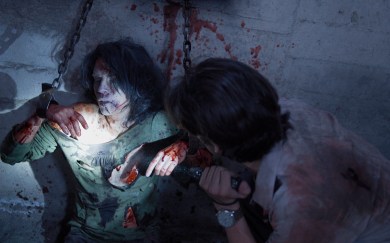 Another similarity between these films is the fact that they are all very well made, which is also what allows them to be so effectively disturbing. Writer/director Lucio A. Rojas has done an incredible job creating a living, breathing world thanks to gorgeous cinematography, top-notch gore effects, and realistic, believable characters. Speaking of characters, while I do want to make special note of the villainous perfection that Daniel Antivilo brings to his psychopathic character Juan, everyone across the board does an absolutely incredible job.
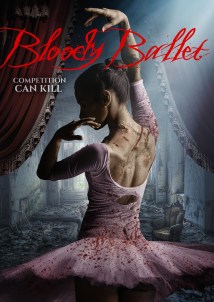 Bloody Ballet (aka Fantasma) certainly starts off promisingly enough. Snow falls heavily in the night sky as approaching police cars begin to illuminate the solitary figure of a young girl standing still, unmoved by the cold and completely unresponsive. The haunting score swells as the slow motion scene unfolds to reveal the bodies of her brutally murdered parents and I am officially hooked. Of course, it’s one thing to get the audience’s attention and quite another to actually hold it.
 The demonic possession sub-genre of horror is one that ebbs and flows in popular consciousness but never truly disappears. Perhaps this is because the idea of losing control to a powerful unseen force is something that can have the ability to instill a profound sense of dread within us, at least when it’s executed properly. Whether or not it factors in a heavy dose of religious anxiety, as they usually do, the general concept of demonic possession is a well that’s been dipped into many times and with the success of recent films like Hereditary, you can expect that trend to be on an upward swing. This means that for films on this topic to stand out, there needs to be more to their plot than a by-the-numbers rehashing of The Exorcist and today we’ll see if Luciferina has what it takes to stand out from the crowd.
 When you have a total runtime of under five minutes you have to pack a lot of content in to create a memorable experience. Fortunately Not in My Mouth does just that and is able to do a lot with it’s micro story in just a few short minutes. Set against a delightfully discordant and aggressive score by White Gardenia and Geimhreadh, the film is directed by (and stars) Poison Rouge, director of the newest American Guinea Pig film, Sacrifice.
 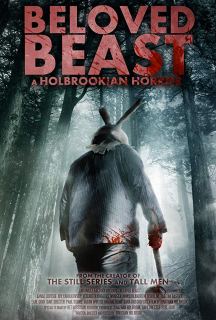 Writer/director Jonathan Holbrook’s new film Beloved Beast is his latest example of what has come to be known as ‘Holbrookian Horror’ following his excellent 2016 feature Tall Men. The term is apt because much like that film, Beloved Beast is imbued with the director’s signature style, one that successfully channels the surreal Americana of David Lynch, while maintaining it’s own unique flavor. In both cases, the viewer gets the feeling of slipping into a cozy nightmare, one that you want to envelop you as you willingly slide into the depths of its subtly surreal world.
  Ahhh, the found footage sub-genre, staple of the independent filmmaker. Some entries are notable and utilize that technique for innovative storytelling, but many others are simply trying to cover up low production values and a lack of budget. Ever since The Blair Witch Project exploded onto the horror scene in 1999, and raked in a quarter of a billion dollars on a $60,000 budget, filmmakers have been trying to capture a piece of that low-cost, high-profit magic.
 When a movie is titled Bus Party to Hell and features a masterclass thespian such as Sharknado alum Tara Reid, you have a pretty good idea what you’re in for. Of course, there’s nothing wrong with an over-the-top film that doesn’t take itself too seriously, provided it’s actually enjoyable to watch. There’s a surprisingly thin line between outrageously fun and irritatingly stupid and today we’ll see if BPtH falls more along the lines of the campy, gory fun of Father’s Day or the interminable slog that is Kudzu Zombie.