
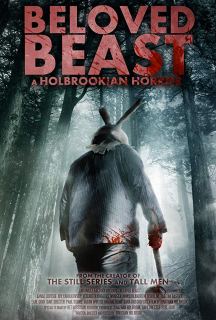
 Writer/director Jonathan Holbrook’s new film Beloved Beast is his latest example of what has come to be known as ‘Holbrookian Horror’ following his excellent 2016 feature Tall Men. The term is apt because much like that film, Beloved Beast is imbued with the director’s signature style, one that successfully channels the surreal Americana of David Lynch, while maintaining it’s own unique flavor. In both cases, the viewer gets the feeling of slipping into a cozy nightmare, one that you want to envelop you as you willingly slide into the depths of its subtly surreal world.
After young Nina (Sanae Loutsis) is involved in a car accident that claims the lives of her parents, she is put into the care of her estranged ne’er-do-well aunt, Erma (Joy Yaholkovsky). At the same time a dangerous escaped mental patient named Milton (played by Holbrook) is carving a bloody swath through Slough Town, where Nina lives. Through a series of unusual circumstances, Nina befriends Milton who (after donning his signature rabbit mask and wooden mallet) becomes known by his new identity, Harvey, Nina’s violent and unstable protector.
Beloved Beast is presented in the style of a dark, gruesome fairy tale and absolutely captures that aesthetic. The characters themselves are grounded in enough realism to make the viewer invested, while at the same time the world itself is awash in a subtle dreamlike quality. The story is very engaging and I was thoroughly invested in seeing what would happen next as it dove deeper into the dark world hidden beneath the veneer of small town civility. While the actual style is a bit more of a horror-drama hybrid that defies easy categorization, it certainly has enough blood and menace to keep horror fans satiated as it twists and turns through it’s unpredictable plot.
In this case it is very fortunate that the story is so interesting because with a runtime that’s just shy of three hours (!) it really puts the goodwill of the audience to the test. In fact, my only real criticism of the film is that there is just a bit too much of it, and it would greatly benefit from an aggressive recut. While I did enjoy every scene I watched, I would have preferred if several of them had been relegated to a ‘deleted scenes’ section on the Blu-ray because the cumulative effect drags down the pacing a bit. With about forty-five or so minutes trimmed off, this could become a sleeker and more horror focused film with a greater amount of tension and suspense.
Still, even in it’s current form, it is an incredibly interesting and delightfully twisted film that’s well worth your time. The myriad of strange and off-kilter characters make the journey a unique experience you won’t soon forget. Hell, I would love to see a spin-off that focuses entirely on The Belgian and the dark underworld that he inhabits. So, do yourself a favor and block off an evening for this grim fairy tale with a style all it’s own.

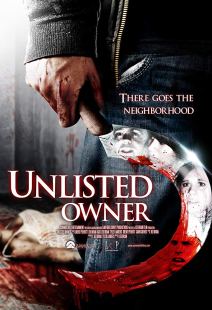 Ahhh, the found footage sub-genre, staple of the independent filmmaker. Some entries are notable and utilize that technique for innovative storytelling, but many others are simply trying to cover up low production values and a lack of budget. Ever since The Blair Witch Project exploded onto the horror scene in 1999, and raked in a quarter of a billion dollars on a $60,000 budget, filmmakers have been trying to capture a piece of that low-cost, high-profit magic.
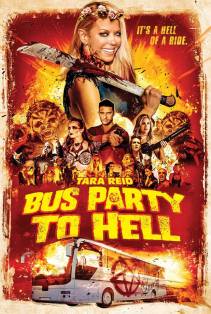 When a movie is titled Bus Party to Hell and features a masterclass thespian such as Sharknado alum Tara Reid, you have a pretty good idea what you’re in for. Of course, there’s nothing wrong with an over-the-top film that doesn’t take itself too seriously, provided it’s actually enjoyable to watch. There’s a surprisingly thin line between outrageously fun and irritatingly stupid and today we’ll see if BPtH falls more along the lines of the campy, gory fun of Father’s Day or the interminable slog that is Kudzu Zombie.
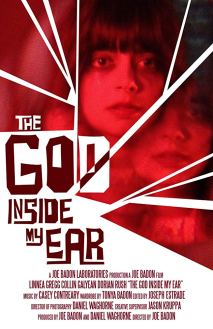 Creating a surreal film that really works is an incredibly difficult feat. In the hands of masters like Lynch and Jodorowsky the final product can be a multilayered work of art with symbolism and subtext that will have people in spirited debate for decades. On the other end of the spectrum are the myriad of films that bombard the viewer with “weird for the sake of weird” imagery, with no inherent meaning or intent, and no subtle clues to decipher what’s going on until we are simply told. Any surreal film is bound to fall somewhere along this line and today we’re going to see how close to the top (or bottom) The God Inside My Ear ends up.
 The incredible advances in digital technology over the last few decades have made it more possible than ever for aspiring and indie filmmakers to make their vision a reality, or at least attempt to. Freed from the burdens and excessive cost that goes along with shooting on film stock, many indie directors will attempt to replicate the lavish production values of multi-million dollar films with elaborate DIY sets and numerous on-screen characters. This almost always results in a disastrous final product but is still a far more common practice than the more sensible approach of using a small cast and a primary central location.
 The idea that alternate realities could simultaneously exist in the universe is certainly an interesting one and a concept that has become ever more pervasive in the popular consciousness of late.
 It wasn’t that long ago that horror anthology films were far less common than they are today. They never went away entirely of course but once the 90s rolled around they were pretty much relegated to cheap, straight-to-video cash grabs, most of which have been deservedly forgotten. That all changed with the success of modern anthology horror like Trick ‘r Treat and The ABCs of Death which revitalized a subsection of films that seemed destined for irrelevancy. As someone who is a big fan of anthology films, I couldn’t be happier with the unprecedented quality and abundance of these films today. Of course not all films are created equal and today we’ll see if The Forces of Horror Anthology feels more like a product of the modern anthology renaissance or a throwback to the dark days of the ’90s.
 It takes an unbelievable amount of work to make a feature length film and of course the longer your film, the more work it requires. This is why it’s unusual to see films venture past the standard ninety to a hundred five minute window, and downright rare for scrappy indie productions to attempt it. But this is exactly what writer/director (Jakob Bilinski) did with his ambitious and, uh, interestingly titled Three Tears on Bloodstained Flesh. Now, ambition is good, but it’s only half the battle so the real question here is, “how well does he pull it off?”
 Creating a film that inspires a genuine sense of dread and tension, with a small cast and limited locations, is no easy task. There is no sure-fire recipe for success with this, but there are two components that are required if a film is to have even a remote chance of working. The first is a genuine sense of realism, regardless of how fanciful the story, and the second is characters you can truly connect to as human beings so you are invested in their struggle. It sounds simple yet it’s amazing how rarely it’s pulled off effectively. So, does director Corin Hardy (great name btw) manage to succeed with his Irish folktale inspired film, The Hallow? Well, let’s discuss.
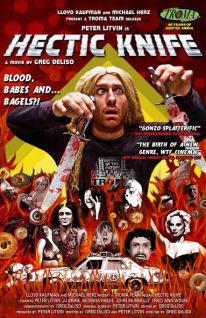 Some films throw logic and reason right out the window and subscribe only to the bizarre new reality they have created. Films like that can be difficult to critique because the acting, continuity, special effects and even the plot itself are so askew that you can’t judge it’s success or failure by any standard measurement. As someone who loves unconventional, surreal cinema, I’ve seen a lot of films in this category and have found that they inevitably fall to one side of the quality spectrum or the other. Either a film succeeds wildly as an innovative, daring work of creative brilliance or it quickly becomes clear that the filmmaker has simply slapped together a bunch of nonsensical images without any meaning or intention. So, where does the utterly surreal insanity that is Hectic Knife fall on that scale? Well, let’s discuss.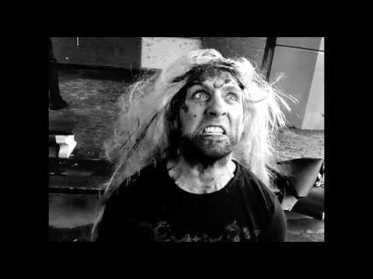
 From the small things like the living room couch that’s inexplicably vertical, the deliberately strange and repetitive dialogue, a character stopping in the middle of a fight to do a stand-up comedy routine complete with a laugh track, this entire experience feels like a stream of consciousness dream that only kinda obeys the laws of reality. One of my favorite scenes is when this black and white movie pulls out to reveal a random couple in full color watching and disparaging it. They in turn have their own scene that is just as intensely bizarre and violent as the rest of the film, but otherwise serves no purpose but to add yet another level of insanity to the experience.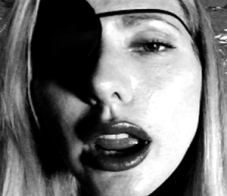
 Horror and Alternative Cinema Reviews