
 Creating a film that inspires a genuine sense of dread and tension, with a small cast and limited locations, is no easy task. There is no sure-fire recipe for success with this, but there are two components that are required if a film is to have even a remote chance of working. The first is a genuine sense of realism, regardless of how fanciful the story, and the second is characters you can truly connect to as human beings so you are invested in their struggle. It sounds simple yet it’s amazing how rarely it’s pulled off effectively. So, does director Corin Hardy (great name btw) manage to succeed with his Irish folktale inspired film, The Hallow? Well, let’s discuss.
The film centers around Adam (Joseph Mawle) a British scientist whose work with plant and fungal life requires him to move to a remote Irish village along with his wife Clare (Bojana Novakovic) and their baby son. Adam is initially dismissive of the locals’ warnings about the supernatural presence inhabiting the woods near their house, but before long finds himself and his family in a fight for survival with malevolent forces they can scarcely comprehend.
Right from the opening shots, this film does an excellent job transporting the viewer into the world of the story, through the gorgeous cinematography that showcases the emerald forest of Ireland in exquisite detail. As I previously mentioned, realism is an essential part of immersing the viewer in the experience and the rich, detailed image quality found in every shot is largely responsible for the excellent sense of realism that Hardy brings to the project. Of course, a quality image is only one piece of the puzzle but luckily the entire cast, down to the smallest role, is able to deliver top-notch performances that keep the viewer thoroughly engaged in the story as it unfolds.
Since the film itself is built on such a strong foundation, the scares have far more impact and I felt myself genuinely invested in the horrific ordeal the characters were facing. I am a firm believer that practical effects should be utilized over CGI whenever possible and this film is a shining example of how well that can work. Because of this, the creatures have a tangible, living quality to them that is far more menacing than the cartoony CGI abominations that pollute so many other films.
On top of all these other important attributes, this film has the most important of all, a tight, well-paced script that will keep you engaged and entertained throughout and makes you care about the characters without resorting to cheap, melodramatic dialogue. Overall, a great film that hits all the marks and will make you think twice the next time you want to take a walk in the woods.

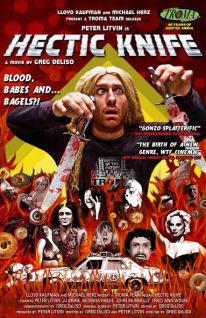 Some films throw logic and reason right out the window and subscribe only to the bizarre new reality they have created. Films like that can be difficult to critique because the acting, continuity, special effects and even the plot itself are so askew that you can’t judge it’s success or failure by any standard measurement. As someone who loves unconventional, surreal cinema, I’ve seen a lot of films in this category and have found that they inevitably fall to one side of the quality spectrum or the other. Either a film succeeds wildly as an innovative, daring work of creative brilliance or it quickly becomes clear that the filmmaker has simply slapped together a bunch of nonsensical images without any meaning or intention. So, where does the utterly surreal insanity that is Hectic Knife fall on that scale? Well, let’s discuss.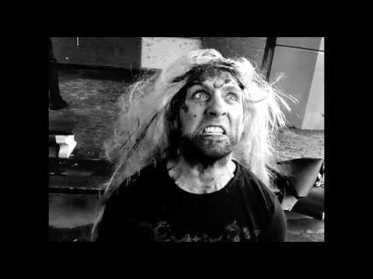
 From the small things like the living room couch that’s inexplicably vertical, the deliberately strange and repetitive dialogue, a character stopping in the middle of a fight to do a stand-up comedy routine complete with a laugh track, this entire experience feels like a stream of consciousness dream that only kinda obeys the laws of reality. One of my favorite scenes is when this black and white movie pulls out to reveal a random couple in full color watching and disparaging it. They in turn have their own scene that is just as intensely bizarre and violent as the rest of the film, but otherwise serves no purpose but to add yet another level of insanity to the experience.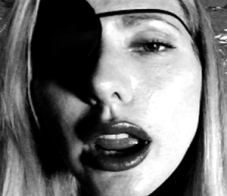
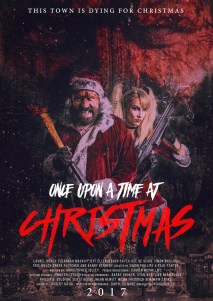 When a horror movie has a holiday-themed premise, especially holidays other than Halloween, that’s often a sign that the audience is in for a campy ride that is going to play up the novelty to extreme proportions. Of course, that’s not always the case and some notable exceptions include the well-crafted, emotionally developed slasher Silent Night, Deadly Night as well as the incredibly creative and bizarre Rare Exports. Today, I discuss whether or not Once Upon a Time at Christmas falls into the category of holiday classics or if it’s just another poorly crafted product that falls apart almost immediately.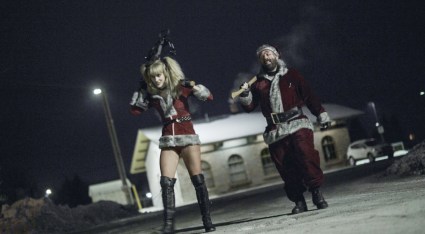


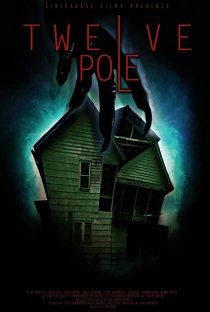 A good opening scene that grabs the viewers attention is very important for setting the tone of your film, especially in a horror movie. Conversely, when the opening of your film is so misguided that the audience is already rolling their eyes at minute one, you’re not off to a great start. Unfortunately, this is the case for Twelve Pole, which makes an incredibly lame attempt to be edgy by opening the film with a voice-over, warning the viewer about how graphic the movie is. Problem is, actual warnings like that aren’t a thing! Legitimately hardcore films don’t bother with such gimmicks, and for a film that doesn’t even qualify as Extreme Cinema, they’ve got some nerve pretending that a warning is required. Still, you can’t judge an entire film by a single misstep in the beginning, so let’s see how well the film itself holds up.
 Establishing the proper tone for a film can be very difficult to get just right, especially when your film incorporates elements of black comedy as well as horror. When it works it can be a very entertaining blend of genres that properly balances both, and when it doesn’t, it quickly devolves into a confused mess that serves neither. Today we’ll see if Murder Made Easy is able to strike the right balance with its modern take on an Agatha Christie style murder mystery.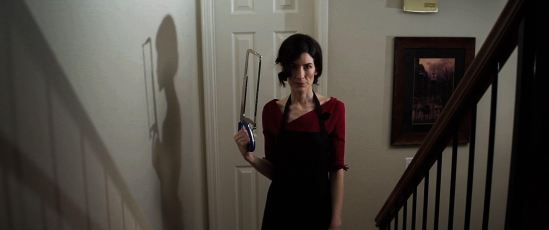
 While I can see why the overall plot itself was structured the way it was, the very device of having sequential guests show up does make much of the general plot rather predictable, and even a bit repetitive. Fortunately, as more of the larger story is revealed most of the characters have enough substance and variety to keep the interactions entertaining throughout…..with the notable exception of Cricket (Emilia Richeson). While most of the other characters are represented as slightly heightened archetypes, Cricket is full-blown New Age stereotype and her segment is the film’s most overt (and misguided) attempt at comedy, and a clear low point in the overall film itself. Had she simply been rewritten as a slightly more realistic character, her segment would have worked far better.
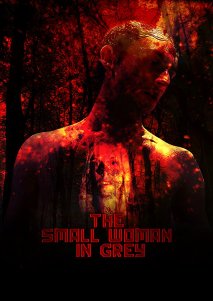 Ahhh the woods, the go to, ready-made set that is the favorite location for countless indie horror films. I understand the practicality of using this as a primary location, but aspiring filmmakers would do well to keep this advice in mind before they start lugging their cameras into the wilderness: If you are going to set your teen-massacring film in the woods, as we’ve seen countless times before, you’d better bring your fucking A game and show us a very creative and interesting twist on the most tired premise in horror. Otherwise, don’t bother showing up. So, even though it’s utilizing the most played out concept in horror cinema does The Small Woman in Grey elevate itself above the masses with a quality script and innovative filmmaking? Well, let’s discuss.
 When you think about the country of Turkey, ‘horror films’ probably isn’t the first thing that pops into your mind, but after the international success of Can Evrenol’s Baskin, that may be changing, at least a little. It certainly isn’t the first horror movie made in Turkey, but it is by far the most successful and just as A Serbian Film did in 2010, it puts an unexpected country into the international horror conversation. Based upon the 2013 short film of the same name, Baskin is a surreal and gruesome journey into a nightmarish world.
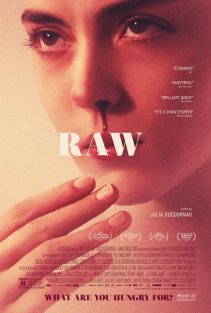 Sometimes the trailer for a film is so compelling and intriguing that you instantly know it’s a film you absolutely must see. For me, Raw was such a film and the dark, unusual, and clearly well-shot movie that was promised was one that I couldn’t wait to watch. Of course, a great trailer followed by months of waiting can certainly raise expectations for the film itself so the question is, did Raw live up to the hype and deliver on the high promise of the exquisitely made trailer? Well, lets discuss.
 No matter the size of your film’s budget there are always challenges to face. Big studio pictures have nearly unlimited resources but the filmmakers must contend with meddling producers dumbing down their vision until it’s palatable to a wide enough audience. Conversely, indie filmmakers have the freedom to explore innovative ideas regardless of their marketability but face the challenge of attaining the resources to properly execute their vision. Despite this disparity, both indie and Hollywood films are fighting for the exact same prize, the limited time and attention of a finite number of viewers.
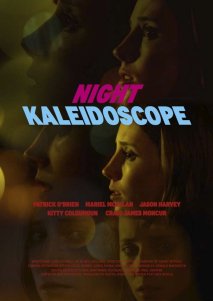 Some movies are created with an emphasis of style over substance, a deliberate attempt by the filmmaker to craft a compelling and surreal world that does not adhere to a standard narrative format. Suspiria, Lost Highway and Beyond the Black Rainbow are just a few examples of when this artistic gamble really pays off and pulls viewers into a compelling, living nightmare that brings you along for the ride, even if it’s not always clear where that ride is taking you. Conversely, when not done properly a lack of narrative only succeeds in creating frustration and quickly bores the viewer with a series of meaningless images. So, where does a film with a hallucinatory, dream-like style like Night Kaleidoscope fall on the spectrum? Well, let’s discuss.
