
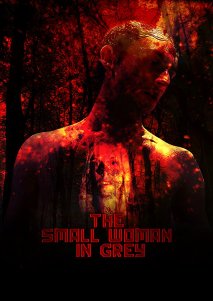
 Ahhh the woods, the go to, ready-made set that is the favorite location for countless indie horror films. I understand the practicality of using this as a primary location, but aspiring filmmakers would do well to keep this advice in mind before they start lugging their cameras into the wilderness: If you are going to set your teen-massacring film in the woods, as we’ve seen countless times before, you’d better bring your fucking A game and show us a very creative and interesting twist on the most tired premise in horror. Otherwise, don’t bother showing up. So, even though it’s utilizing the most played out concept in horror cinema does The Small Woman in Grey elevate itself above the masses with a quality script and innovative filmmaking? Well, let’s discuss.
The film centers around a group of teens who go into the woods to party. Coincidentally, they happen to run into a man who got separated from the rest of his broad daylight ghost hunting group (!) and is conveniently able to tell them all about the ghost that allegedly haunts the woods. Predictably, it’s not long before members of the group start dying mysteriously, and it’s up to the remaining survivors to try and figure out why before it’s too late.
So, clearly writer/director Andrew Sean Eltham-Byers wasn’t looking to break any new ground with the concept here. But, even a film about (yawn) teens partying in the woods until a mysterious stranger imparts plot exposition can still be worthwhile if the characters are well-crafted and compelling. Well, that’s unfortunately not the case here because while the characters aren’t the overt caricatures we sometimes see in these kinds of films, they are still completely insufferable and uninteresting. The fact that this is a micro-budget film means that the painfully amateur acting is somewhat forgivable….but the generic, plodding script is not.
Still, I’ve seen plenty of films that may not have had the most innovative plot but still managed to deliver a high level of entertainment value through well-crafted kills scenes. Sadly, this is where Eltham-Byers commits the most egregious cinematic sin and opts for bargain-basement CGI effects over practical ones. Shame! Shame! Shaaaaame! Seriously, this is a decision that I can’t even wrap my head around. I mean, even CGI effects on multi-million dollar productions often end up residing in the dreaded uncanny valley, but when your budget is next to nothing, the chance of pulling off convincing CGI is about the same. It’s a lot smarter move to scale back your set pieces to what you can effectively execute so you don’t end up with cartoony graphics that look like they were made on a home computer in the 90s.
Okay, this film has a lot of self-inflicted wounds but there were still some aspects that I did genuinely appreciate. For instance, it was refreshing to see a film where the primary romantic subplot involved a homosexual couple but was presented as casually as a heterosexual relationship, which was a nice, progressive touch. There are also a few times that the film was effectively creepy, but they were the all too infrequent times that Eltham-Byers opted for the subtler, less-is-more approach. Any scenes where the ghost was on full display in all her CGI glory were just awful, but the couple of times she was limited to a sinister voice and a shadow crossing the scene were (not surprisingly) far more effective.
Between the terrible pop music, worse special effects, lame script and unironic use of montages there isn’t really anything about this film to make it worth recommending. It is clear that everyone involved put a lot of effort into the production, but if Eltham-Byers had spent a little more time on the script and effects and a little less time on figuring out how to make text bubbles pop up on screen then perhaps it would’ve paid off with a better finished product.

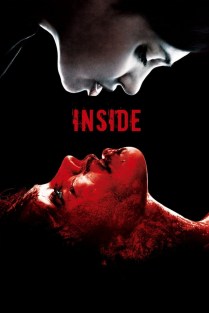 The New French Extremity movement created some incredible and daring films in the early 2000s, one of the most notable being Inside. This film along with Irreversible, Martyrs, Frontier(s) and many others defined the film movement that would give us some of the most extreme, taboo shattering films ever made. Much like The Human Centipede, Inside is a film in which the very concept is enough to make most people’s skin crawl. That alone makes it a must see for Extreme Cinema fans but the most important question is still “is there substance beneath the surface”?
 When you think about the country of Turkey, ‘horror films’ probably isn’t the first thing that pops into your mind, but after the international success of Can Evrenol’s Baskin, that may be changing, at least a little. It certainly isn’t the first horror movie made in Turkey, but it is by far the most successful and just as A Serbian Film did in 2010, it puts an unexpected country into the international horror conversation. Based upon the 2013 short film of the same name, Baskin is a surreal and gruesome journey into a nightmarish world.
 Creating a short film that tells an interesting and compelling story within the span of minutes can be challenging. Shorter films don’t have to hold the audiences attention for as long but also have less time to develop the plot. In the case of I Baked Him a Cake, the running time of only five minutes requires that a lot of story is packed into a very short amount of time, so let’s see if director Vanessa lonta Wright is up for the challenge.
 Based upon the Manga of the same name, Ichi the Killer is one of controversial director Takashi Miike’s most well known (and most gruesome) works. Often found on lists of the most disturbing films of all time this is certainly not one for casual moviegoers who require a calm, numbing escape from reality. The numerous scenes of rape, graphic torture, and blood-spraying violence is sure to scare off all but the most hardened fans of Extreme Cinema. As always, the most important question becomes “is there more to this film than it’s graphic content or is it little more than a two hour exercise in shock value?” Well, let’s discuss.
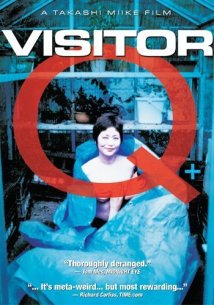 Is it possible to have a film that features incest, necrophilia, rape and a whole lotta violence and still have it infused with genuinely heartfelt sentiment? If you’re maverick director Takashi Miike, the answer is abso-fucking-lutely! Just like other Extreme Cinema films like A Serbian Film or Irreversible, Visitor Q is not actually a horror movie but is an incredibly horrifying drama that goes way beyond the boundaries of most horror films in terms of content. So, how does all this shock value content actually marry with a sentimental core? Well, let’s discuss.
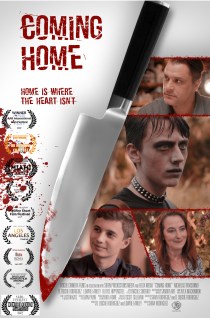 Even though it’s a tremendous amount of work creating a short film, it is undoubtedly a far more achievable task then attempting a feature, and a great way for indie filmmakers to hone their craft as they try to break into the business. Still, it comes with a unique set of challenges and being able to tell an interesting, concise, story in a very limited amount of time, is the most important (and difficult) of all. Given that most shorts are made independently, with very limited resources, there’s bound to be some rougher edges, but discerning audiences are willing to overlook such things as long as there is a compelling story at the core. So, does Coming Home have what it takes to be an indie short that’s worth your time? Well, lets discuss.
 The New French Extremity is the term used to describe a particular subset of films within the Extreme Cinema category, that were made by French directors around the start of the new millennium. Artforum critic James Quandt coined the phrase but, just as with the invention of David Edelstein’s term, Torture Porn, it was used in the pejorative sense. Regardless, both terms have been subsequently embraced by fans of boundary-pushing cinema, and it wasn’t long before the labels were worn like a badge of honor. Xavier Gens’ Frontier(s) is one of the most recognizable films of the French Extremity movement and certainly earns its stripes with graphic, visceral violence. But that aside, the real question becomes “how does it actually hold up as a film?” Well, let’s discuss.
 After successfully capturing the gruesome and dangerous feel of the original series with the first American Guinea Pig film, Bouquet of Guts and Gore, the primary challenge for the sequel becomes figuring out how to follow it up without being repetitive. It’s not surprising then, that Bloodshock would take the franchise in a pretty different direction from the first as it focuses on a male protagonist and is primarily shot in black and white. This is certainly a gamble, so the real question becomes, “does it pay off?” Well, let’s discuss.
 The Guinea Pig film series is celebrated by fans of Extreme Cinema for it’s uncompromising gore and sadistic violence that reaches levels so rarely able to be seen in film. Even though these films remain near and dear to the black hearts of us gore hounds, the fact is, that it’s been decades since the last film was released and at this point, the out-of-print DVDs are hard to even find. Although prior to the limited DVD release in 2002 by German company Devil Pictures, North American fans of the series only knew the films as grainy bootlegs from multi-generation VHS tapes.
 Horror and Alternative Cinema Reviews