
 Friend of the World exists in a very strange space. Originally penned in 2016, writer/director Brian Patrick Butler conceived of the story as a reflection of the political anxieties of the time. Now that it’s finally ready for release in 2020, this post-apocalyptic film about racial/cultural disparity, isolation, and paranoia feels almost painfully prescient. Some films are able to be an effective reflection of their time but the degree to which this one was able to accurately predict what 2020 would feel like is just plain unnerving.
The main story begins with a young black woman named Diane Keaton (Alexandra Slade) waking up in an underground bunker in a room full of corpses. After making her way out of the room and deeper into the bunker itself, she soon encounters a middle-aged white man named General Gore (Nick Young) who lives down there and seems to know more about the apocalyptic event that occurred on the surface world than he is letting on.
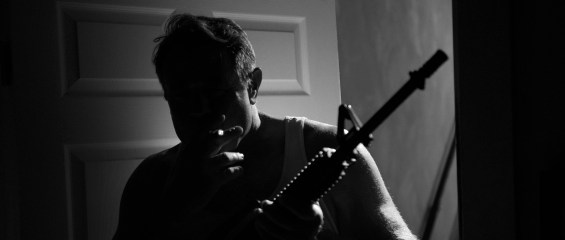
Given the short runtime it’s hard to say too much about the plot without getting into spoilers but suffice to say this is a strange film that gets more surreal by the minute. Much like the Lynch films that this is clearly drawing influence from not everything you see will have an immediate and obvious explanation but there is a lot beneath the surface waiting to be brought to light by further analysis and discussion. That being said, the narrative never feels lost or nonsensical and Butler effectively uses his unique visual style to communicate a feeling of accepted reality giving way to a nightmarish world of body horror and insanity.
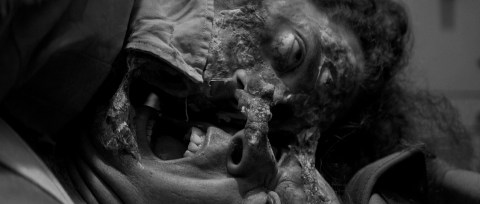
A stylistic example of this is the choice to have most of the film in black and white while idyllic memories of the world before play out jarringly in full color set to a background score of an almost unrecognizably discordant version of ‘Ode to Joy’. There are also a lot of impressive visual techniques at work here that create an uncanny and menacing effect. From simple sped up visuals that give an eerie and unnatural sense of movement to full on face melding that looks straight out of Tetsuo: The Iron Man, there is a lot to love here visually.
It’s not just visuals at play here though as the conversations between the cigarette chomping alpha male Gore and the young, gay, activist artist Keaton are very engaging and packed with commentary and subtext. The small cast all do an excellent job but Young especially shines with his portrayal of the patriarchal Gore whose bravado and subtle menace make for a mesmerizing on-screen presence.
This is a piece of art that is very much of this moment and really taps into the surreal horror that we are experiencing in the world at large right now. When we look back on the quarantine days it will be films like this and Host that will stand as an artistic representation of the anxieties of the time. Hopefully we won’t be watching them from a bunker.

 I’m no stranger to abstract filmmaking. From Jodorowsky to Lynch and many others I have certainly seen my fair share of films that eschew standard narrative conventions. Often times these films are so laden with symbolism and metaphor that the story itself can be incomprehensible upon initial viewing. The best of these have meaning behind each image and in-depth examination can peel back the layers to uncover the profound truths that the artist has hidden within. The worst of these are simply a nonsensical series of images that are nothing more than weird for the sake of weird, occasionally containing meaning that has been so obscured by the filmmaker that it is utterly indecipherable. Begotten is definitely abstract, so the question now is where along this spectrum it falls.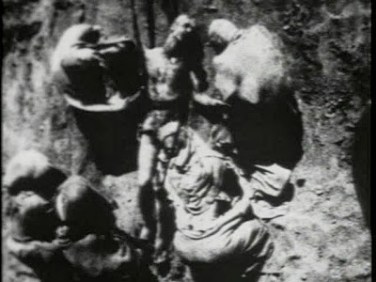

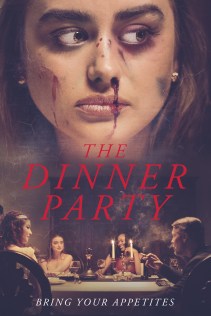 Sometimes just the fact that a film is in the horror genre tips you off that the plot is going to go in a certain direction. I mean, if a movie called The Dinner Party had everything go completely well for the characters the entire time you’d probably end up with a drama (and a damn boring one at that). So, while there is a certain amount of predictability and expectation within the basic structure itself, the real test of artistry is found in how well the filmmakers can finesse the details and create something original. Sometimes this means artists will take big swings with unusual concepts and plot twists, the end result of which is invariably a brilliant hit….or a spectacular miss.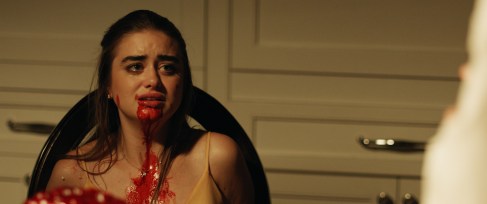
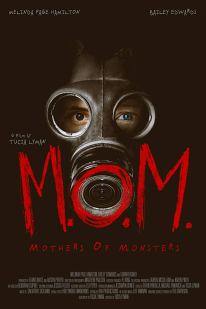 Ever since The Blair Witch Project exploded onto the horror scene in 1999 and crushed the box office to the tune of a quarter billion dollars, countless filmmakers have tried their hand at tapping into that low cost Cinéma vérité style magic. Now that it’s 21 years later any filmmaker looking to utilize that format needs to bring something more to the table than abandoned footage found in the woods. Fortunately, M.O.M (Mother of Monsters) does bring an innovative twist to the standard formula as all the footage comes directly from cameras that characters use within the world of the film.
 As anyone who follows me on Twitter knows, it’s my mission to track down and review the most fucked up films ever made. Because of this, my idea of what truly constitutes Extreme Cinema may be a bit …..different than many people’s so I’m always at least a little skeptical when filmmakers contact me out of the blue and claim that their film is shocking and edgy. Still, I went into 29 Needles deliberately knowing nothing about it and keeping an open mind. Within the first few minutes one thing became perfectly clear, this is one film that DEFINITELY belongs in the Extreme Cinema category!
 offended in the process. Rape, mutilation, watersports and bloodplay are all on full display here as well as fetishistic acts that even I had never seen before (I have two words for you, eyeball tube). Writer/director Scott Philip Goergens clearly has a vision and takes a punk rock, no holds barred approach to executing it.
 Clocking in at under ten minutes total (only about seven of which is the actual film) Duérmete Niño (Rock-a-bye Baby) is an interesting little slice of horror. Inspired by a real, sleep deprived nightmare that director Freddy Chávez experienced after the birth of his daughter, this short captures the horror and anxiety of being a new parent in a very creative and unusual way.
 If you like your torture porn with a hefty helping of pseudo-philosophy, then Madness of Many might just be the film for you. At least, that’s what Danish filmmaker Kasper Juhl is hoping you’re into because his 2013 feature packs a surprising amount of both into its scant 73 minute run-time. Is this an effective combination? Should voice over be used in more than 90% of a film? Who the fuck are all these people being tortured and what exactly is going on here? Read on, for the answers to some of these questions in the review below!

 Ahhh corpse fucking, a taboo subject that even the most hardcore of Extreme Cinema films rarely delve into. Sure, directors are willing to mutilate teenagers with chainsaws and machetes all day but once you add in a touch of deviant sexuality it goes to a whole different level for most people. Obviously you’ve got your underground classics like the Nekromantik films or even a bizarre romantic drama like Kissed, but all in all it’s a pretty short list of films that make necrophilia the central focus. Of course, an essential entry to that list is Nacho Cerd
 Every detail inside the surgeon’s lab is so meticulously created that it gives an incredible level of authenticity to the overall film. This is helped greatly by the fact that it was filmed within a real forensic institute in Barcelona and that Cerd
 Cannibalism in film is generally depicted in one of two ways; either it’s being perpetrated by savage maniacs who messily devour human flesh or savored by members of high society as an indulgent and sophisticated ritual. As is immediately evident by the cover art, The Cannibal Club clearly falls into the latter category. These sorts of depictions tend to have an undercurrent of social commentary, as the rich literally devour the lower classes for their own pleasure and this film is no different in that regard. However, that is far from all that TCC has to offer as this delectable treat gives viewers a lot more to chew on.
 Fear not though gore hounds because there is still plenty of violence on display, especially as the film works up to its climactic ending. I also want to give credit to the fact that the social commentary is woven subtly and expertly into the story which gives the message a lot more resonance, especially in this day and age. So, if you are looking for an exotic and satisfying treat to satiate your darker appetites, you’ll definitely want to put this one on the menu.
 When working within the medium of short film it’s essential to communicate a lot of information in a small amount of time. Making the audience feel for the characters and telling a worthwhile story from beginning to end in just a few minutes is a very challenging task but Davide Melini’s Lion does all that and more within its concise runtime. Located entirely within the confines of an isolated family home somewhere in the snowy wilderness, Lion tells the story of an abused little boy who wishes his favorite animal could come and protect him from his own family.
