

The concept of feminism as it pertains to horror is a conversation unto itself but suffice it to say some subgenres lend themselves to it more naturally than others. For instance rape/revenge films (when done properly) can convey a powerful message about reclaiming power and seeking justice against the assailants. The slasher subgenre is a little more ambiguous on this subject because yes, the typical Final Girl getting the best of the villain can be seen as empowering but much of the runtime of your standard slasher features a male character gruesomely murdering a mostly female cast. All this to say that when a slasher comes out that is unequivocally feminist it is an occasion to take notice and that’s exactly what we get in The 6th Friend.
The film opens with a small group of friends enjoying a typical night of partying that soon turns into a traumatic event that they endure together. Some time later Melissa (Chantelle Albers) tries to stitch the group back together with a retreat to a remote cabin in the woods. Joey (Jamie Bernadette, who also co-wrote) has been the most affected by the experience and comes along very reluctantly, not wanting anything that will remind her of that traumatic night. But of course the past has a way of finding you and soon the women are in a fight for their lives against the very thing they were trying to forget.
In an age when every other slasher seems to take place in the woods, it’s nice to see a film that makes an effort to establish the characters as real people and not just derivative stereotypes, thereby elevating the story above its basic setting. The feminist theme and social commentary also helps to set it apart and factors heavily into some major plot points (which I won’t spoil here) as well as dialogue that feels especially prescient today. It’s also nice that the characters (mostly) make logical decisions in service of their own survival although it does make it more noticeable the few times that they don’t. The twist nicely ties into the story thematically but it does make some of the earlier scenes feel like a bit of a reach as a result.
Originally released to home media in 2016, the film is finally getting a long overdue theatrical release as of January 11th 2019. It’s great to see this film getting the big screen treatment because in an industry crammed full of remakes and cheap cash-ins, a fresh perspective is always a welcome change. Definitely a trip into the woods that’s well worth taking.

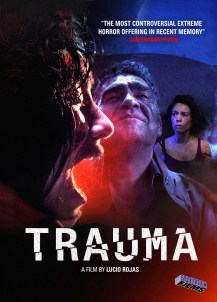 Incest! Necrophilia! Rape! Graphic murder! Have I got your attention yet? Because as a fan of Extreme Cinema the Chilean film Trauma certainly got mine. Some movies barely cross the line into Extreme Cinema territory, then there are others that grab the line by the fucking throat as they run past it. Trauma is certainly the latter, with certain scenes even echoing some of the most disturbing content from the legendary shocker A Serbian Film. Yet, at least at this point, this film isn’t talked about with anywhere near the same frequency. Hopefully that will change, because love it or hate it, Trauma is certainly a film that deserves to be watched and discussed.
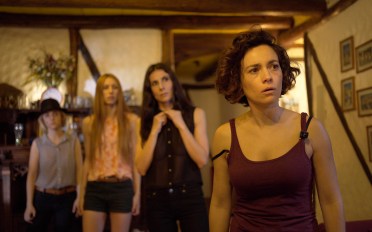 When viewing Trauma, it is important to have an understanding of where it’s inspiration comes from to truly appreciate what the film is trying to say. While the exact details of the story and the specific characters may not have actually occurred, the film is steeped in Chile’s modern history and very representative of a significant cultural issue that still impacts life today. In the real world, Chile’s democratically elected government was overthrown in 1973 in a brutal coup that resulted in Augusto Pinochet seizing power as the country’s iron-fisted dictator. During this period the country experienced an unfathomable amount of death and real world horror that left it irrevocably changed. This is important to know because at its core, this film is really about the country’s brutal and traumatic past still rearing it’s head in the modern world, and not simply another violent home invasion thriller.
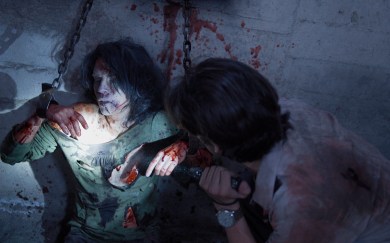 Another similarity between these films is the fact that they are all very well made, which is also what allows them to be so effectively disturbing. Writer/director Lucio A. Rojas has done an incredible job creating a living, breathing world thanks to gorgeous cinematography, top-notch gore effects, and realistic, believable characters. Speaking of characters, while I do want to make special note of the villainous perfection that Daniel Antivilo brings to his psychopathic character Juan, everyone across the board does an absolutely incredible job.
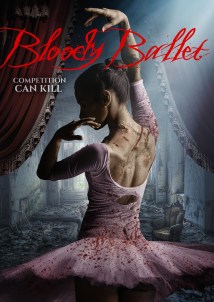 Bloody Ballet (aka Fantasma) certainly starts off promisingly enough. Snow falls heavily in the night sky as approaching police cars begin to illuminate the solitary figure of a young girl standing still, unmoved by the cold and completely unresponsive. The haunting score swells as the slow motion scene unfolds to reveal the bodies of her brutally murdered parents and I am officially hooked. Of course, it’s one thing to get the audience’s attention and quite another to actually hold it.
 The demonic possession sub-genre of horror is one that ebbs and flows in popular consciousness but never truly disappears. Perhaps this is because the idea of losing control to a powerful unseen force is something that can have the ability to instill a profound sense of dread within us, at least when it’s executed properly. Whether or not it factors in a heavy dose of religious anxiety, as they usually do, the general concept of demonic possession is a well that’s been dipped into many times and with the success of recent films like Hereditary, you can expect that trend to be on an upward swing. This means that for films on this topic to stand out, there needs to be more to their plot than a by-the-numbers rehashing of The Exorcist and today we’ll see if Luciferina has what it takes to stand out from the crowd.
 When you have a total runtime of under five minutes you have to pack a lot of content in to create a memorable experience. Fortunately Not in My Mouth does just that and is able to do a lot with it’s micro story in just a few short minutes. Set against a delightfully discordant and aggressive score by White Gardenia and Geimhreadh, the film is directed by (and stars) Poison Rouge, director of the newest American Guinea Pig film, Sacrifice.
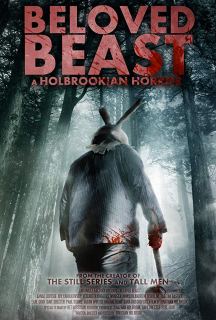 Writer/director Jonathan Holbrook’s new film Beloved Beast is his latest example of what has come to be known as ‘Holbrookian Horror’ following his excellent 2016 feature Tall Men. The term is apt because much like that film, Beloved Beast is imbued with the director’s signature style, one that successfully channels the surreal Americana of David Lynch, while maintaining it’s own unique flavor. In both cases, the viewer gets the feeling of slipping into a cozy nightmare, one that you want to envelop you as you willingly slide into the depths of its subtly surreal world.
  Ahhh, the found footage sub-genre, staple of the independent filmmaker. Some entries are notable and utilize that technique for innovative storytelling, but many others are simply trying to cover up low production values and a lack of budget. Ever since The Blair Witch Project exploded onto the horror scene in 1999, and raked in a quarter of a billion dollars on a $60,000 budget, filmmakers have been trying to capture a piece of that low-cost, high-profit magic.
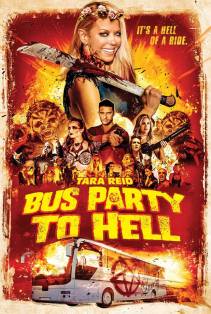 When a movie is titled Bus Party to Hell and features a masterclass thespian such as Sharknado alum Tara Reid, you have a pretty good idea what you’re in for. Of course, there’s nothing wrong with an over-the-top film that doesn’t take itself too seriously, provided it’s actually enjoyable to watch. There’s a surprisingly thin line between outrageously fun and irritatingly stupid and today we’ll see if BPtH falls more along the lines of the campy, gory fun of Father’s Day or the interminable slog that is Kudzu Zombie.
 If you’ve only seen one film by the brilliant Japanese auteur Takashi Miike, then it was probably Audition. Not only is it Miike’s most well known film outside of Japan but it is also his most accessible. That’s not to say of course that it’s something that’s easily digested by the mindless masses, it is still a Miike film after all, and if it didn’t have some incredibly violent, disturbing scenes I wouldn’t be reviewing it here. Although, it’s not the violence alone that makes this film interesting, what really sets it apart is the brutal sucker-punch it gives the audience.
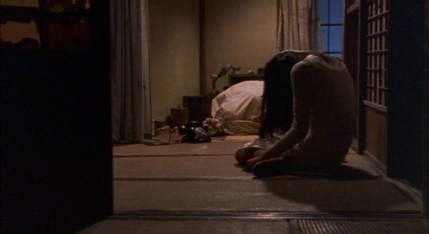 What really makes Audition work is that even with the tonal shift, the two halves of the film never feel like disparate ideas awkwardly stitched together but instead function as one cohesive story that is purposefully and methodically laid out. The dramatic, character-focused beginning fleshes out who these people are and makes the viewer truly invested in their fate. The fact that the violence is intense but used sparingly also gives it a far greater impact when it’s shown.
