Typically in short films it’s best to dive right into the action and Forced Entry does just that as it plunges you into the world of psychotic drifter duo Arthur Maddox (Tom Lodewyck) and Donovan Hatche (James Bett Jr). The film follows the pair on a brutal killing spree over the course of a couple of days and was inspired by real life murderers Lawrence Bittaker and Roy Norris who raped and killed five young women in 1979. Even though brief footage of the real killers is shown at the end, the connection they have to the film probably wouldn’t have been clear to anyone who didn’t have the luxury of reading the highly detailed press kit. Even so, the shots do still serve to illustrate the point that our real world is filled with brutal, sadistic violence that usually occurs without much motive or rational explanation.
The story here is definitely pretty bare bones as most of the twenty-four minute runtime is taken up with extended scenes of mean-spirited violence. That’s not at all a bad thing in this case though, because even without a more robust narrative, the film still manages to be highly compelling with some truly impressive practical gore effects and excellent performances from the victims. It also makes sense given the fact that K.M. Jamison (who co-wrote/co-directed with James Bett Jr) said in a statement that the film is intended to function as a kind of showcase for what will hopefully be turned into a feature someday. In that regard it’s highly successful and I’m very on-board to see this nasty little story get fully fleshed-out in all its blood-soaked glory.
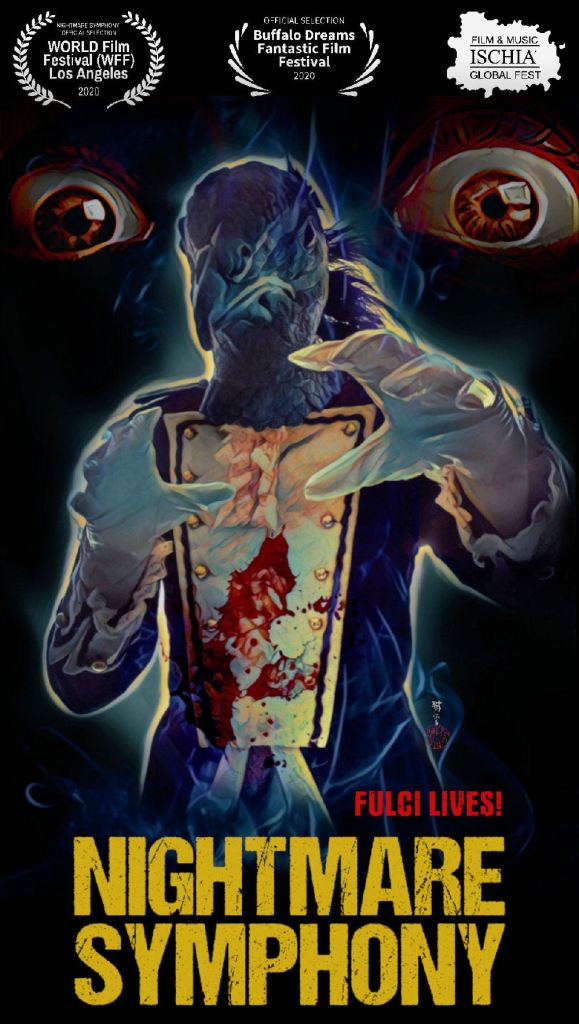
It’s interesting that the review for Nightmare Symphony would come directly after my review of Undergods since both films play with ambiguity and surreal imagery but achieve nearly opposite results. In this case, the Giallo-inspired film takes a big swing at meta commentary and the nature of reality with its story of an American director Frank (Frank LaLoggia) who goes to Italy to finish the edit of his film. Before long people all around him seem to be dying at the hands of a mysterious killer in a bird mask, who leaves no trace behind other than a peacock feather as their calling card.
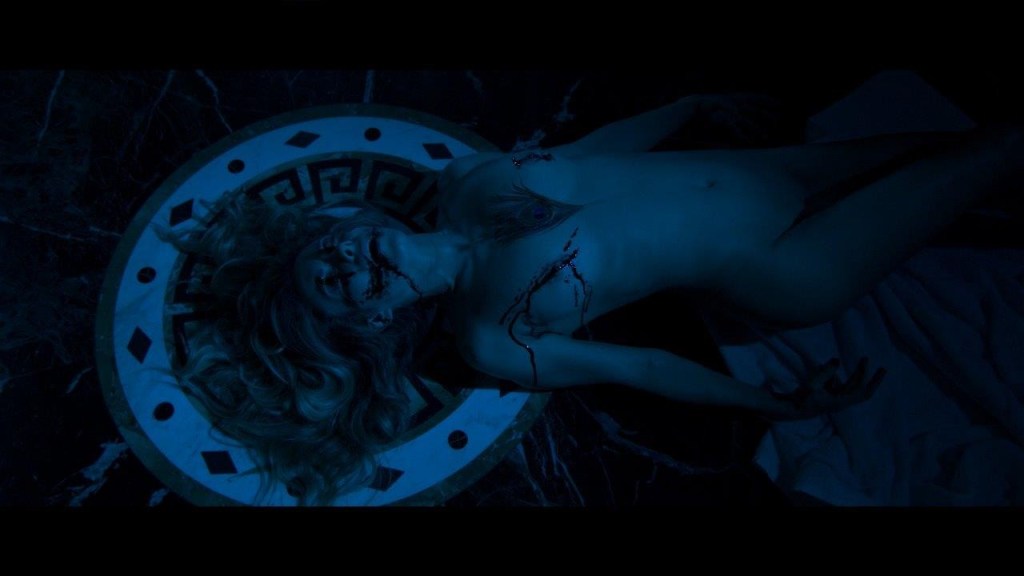
Clearly this film is a love letter to Giallo itself, which is apparent long before the dedication to Lucio Fulci during the closing credits. On this front it succeeds wonderfully and the color-saturated scenes where the bird masked killer slashes up their victims with a straight razor to a pulsating synth score are a thing of beauty. In fact, I want to especially shout out all the FX work on this film because it is far and away the best part of the entire experience and every gory scene that features it is a work of brutal, bloody art.
What’s less successful is the story itself, as well as LaLoggia’s lackluster performance which never quite rings true, especially when paired with some of the actors in minor roles that are really bringing their A-game. It’s frustrating because I can see what writer Antonio Tentori (Cat in the Brain, Demonia) is trying to do but it simply does not come together. The ending (which I won’t reveal here) attempts to be very clever with a big meta reveal but falls utterly flat due to the fact that the preceding story in no way supports it.
Ambiguity in films can be a great thing, but a story that actively contradicts itself and feels like there are key scenes missing isn’t the same as not understanding a surreal film that’s filled with metaphor and symbolism. If you are going to play with the concept of reality itself in a film then you need to clearly establish what the reality of the world is and really understand when and how you are breaking with those conventions.
In this case Nightmare Symphony feels as confused as the viewer but attempts to cover its plot holes with stylized theatrics that it hopes will somehow congeal into meaning. Still, the film has a lot of style and a few carefully crafted re-shoots might be all it takes to fill in the missing pieces and tie the ending to the film that preceded it.
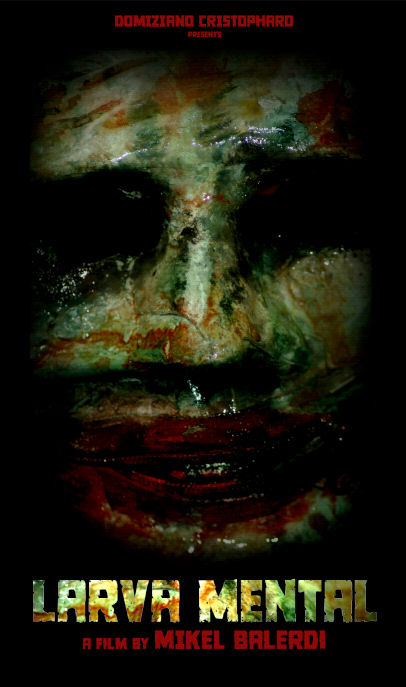
Larva Mental is a difficult film to talk about. For a lot of people this would be due to the extremely grotesque and graphic content, the mere mention of which is enough to nauseate and horrify the average viewer. I of course am not the average viewer and as someone who revels in the twisted grotesqueries found in the darkest corners of cinema, the content itself is no problem for me. Instead I find it difficult because I am of two minds about this film; one that thoroughly appreciates and champions the use of profoundly disturbing imagery and taboo performance-art and one that views the movie by the caliber of the filmmaking and the quality of the storytelling.
There are only two credited actors in the film, but since neither is given a character name, I will refer to them as The Father (Mikel Balerdi) and The Daughter (Daieri Gadna). Balerdi also wrote and directed, and the special FX make-up is credited entirely to him and Gadna, so clearly it’s a very DIY project. There’s certainly nothing wrong with that but the quality of the footage as well as the reliance on slightly shaky hand-held and static shots makes it very apparent that this was made without the assistance of a professional crew.
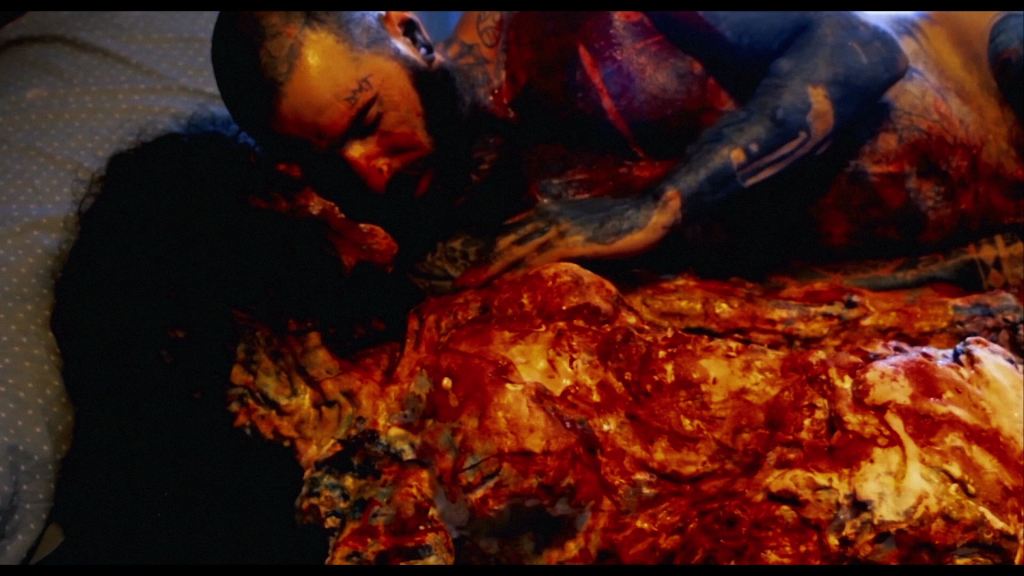
There is almost no dialogue in the film but the story is about a father and daughter who seem to have shared a trauma (and have an “interesting” relationship that involves sleeping naked together in the same bed). One day, The Father puts on a collar shirt goes away on what seems to be a business trip (although what business he works in with those face tattoos is unclear) leaving The Daughter at home to snoop around his computer. When she finds an intensely depraved video of him (that really must be seen to be believed) and some sketchy masks hidden away, she is so upset that she brutally kills herself. Upon discovering the body, he is so distraught that it sends him into a spiral of heroin shooting, self harm, and some good old fashioned corpse fucking.
The main draw of this film is clearly the spectacle of the various depraved scenes, but there is so much of them crammed into the short runtime that it starts to feel like a series of internet shock videos strung together with only a vague semblance of a story filling in the cracks. The rough video quality and down-n-dirty feel work well in service of the unsimulated shock scenes and reinforce the fact that this is indeed an example of legit extreme underground filmmaking at its nastiest. Conversely, the seams start to show a bit more when practical effects are involved. The corpse here doesn’t have the same level of high quality realism found in other films that are light on plot but heavy on gruesome body violence like AGP: Bouquet of Guts and Gore or Aftermath, which give the scenes with it significantly less impact.
Speaking of impact, the shock factor of the scenes would be higher if there weren’t so many of them back to back. Early scenes also ramp up the extremity quite high which results in them taking the wind out of the sails of those that follow and dulls their effectiveness. I would have greatly preferred that story and character development were given priority and that the level of depravity escalated gradually throughout to give it a stronger impact. With a runtime of just over an hour, there is plenty of room to weave the same amount of disturbing footage into a well established character arc that would give the scenes far more bite.
Based on the information I could find, this appears to be Balerdi’s first feature length film, but I hope we see more of him in the future. From a performance art standpoint, this film is able to go to levels that are exceedingly daring and bold and if Balerdi is able to put that same fearless, unflinching energy into a more well realized narrative, he could create some dark art that really shakes things up in the world of Extreme Cinema.
When The Blair Witch Project exploded onto the scene in 1999 it forever changed the world of horror cinema. In its wake, the once novel concept of a “found footage” film established by Cannibal Holocaust in 1980 quickly became ubiquitous within the market to the point of oversaturation. In the intervening years many filmmakers have used the audience’s willingness to embrace the rougher, naturalistic aesthetic of the style as an excuse for low production value as they churn out countless versions of the same basic story.
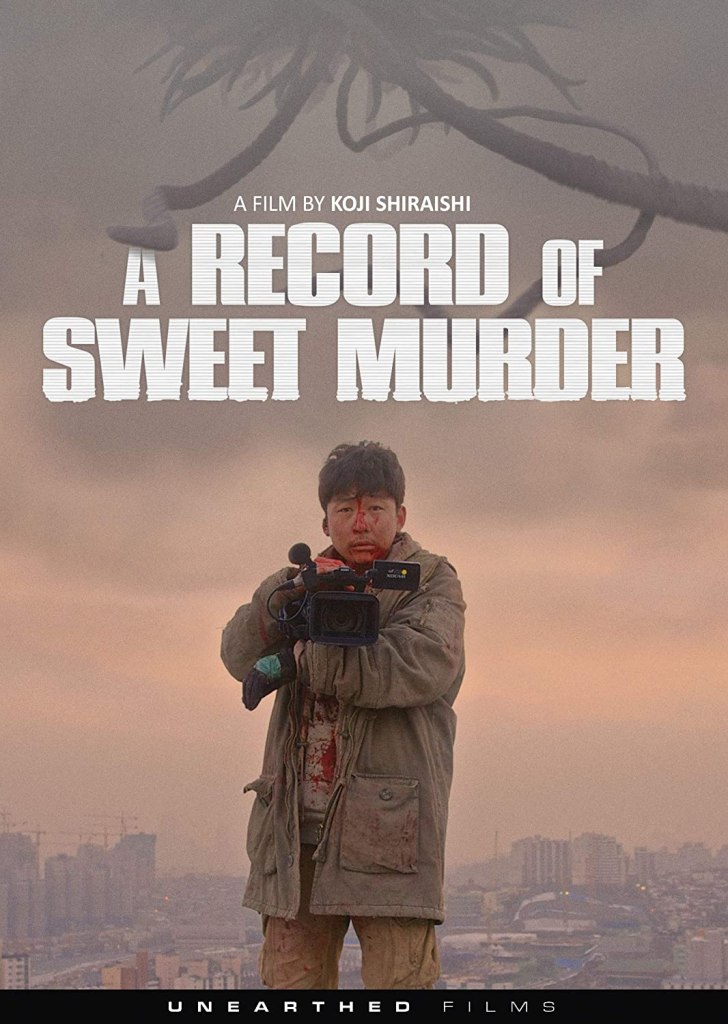
Thankfully, innovative filmmakers have also made their mark on the subgenre and films like Rec, Creep, and more recently Host (to name just a few) have elevated the style by taking it in new and creative directions. Innovation within the subgenre is rare enough but A Record of Sweet Murder is wholly unique as it dares to combine the found footage aesthetic with the rarest of cinema tropes, the single take film. By all conventional wisdom, an idea this ambitious could never work, but writer/director Kôji Shiraishi (Grotesque) pulls it off with results that are nothing short of mind-blowing!
The story centers around investigative reporter Kim Soyeon (Kim Kkobbi) who receives a call from Park Sangjoon (Je-wook Yeon), an escaped fugitive wanted for numerous murders. Park offers her an exclusive interview if she will meet him in a secluded location and bring along a Japanese cameraman. Since Kim and Park share a childhood connection, she believes that they will not be in any danger, but once they arrive it becomes clear that Park has a much larger plan in which they are to play an integral role.
To be clear, this film isn’t a true one-shot film like Russian Ark, but since everything but a few quick scenes at the end was done in a single take it’s still an incredible feat of filmmaking. It isn’t just the fact of doing it in a single take that is impressive, it’s what they are able to accomplish within the massive shot that is truly mind-blowing. Brutal fight scenes, multiple locations, numerous characters, realistic special effects, and an engaging storyline all work in concert to produce a thoroughly unique, mesmerizing experience. Even without the novelty of the single take this would be an incredible, well acted, and engaging film but the fact that Shiraishi goes the extra mile with a ground-breaking concept really puts it over the top.
It’s truly a cinematic travesty that such an innovative, brilliant film has gotten such little attention since its release yet Hitchcock’s faux one-shot film Rope is still talked about with such reverence after more than seven decades. I know that the cameras of the time limited the production to shooting it in a series of ten minute takes but Hitchcock’s blatant cutaways do absolutely nothing to preserve the illusion of an unbroken shot in that overrated “classic”. Despite this (and the fact that it felt more like watching a one-act play than a one-shot film) Rope was still innovative for its time and innovation should always be appreciated. To that end I’m hard pressed to think of many films in recent memory that have innovated more than ARoSM and here’s hoping that someday its style-blending brilliance will be appreciated for the unique achievement that it is.
For the uninitiated, vorarephilia (more commonly shortened to vore) refers to the fetishistic desire to be consumed or to consume another, typically for sexual gratification. As the opening text of this film clarifies, this has less to do with a cannibalistic desire to eat human flesh and more to do with the fanciful desire to be consumed by a much larger entity (human or otherwise), often swallowed whole. There are different types of vore, but as the title Vore Gore implies, this film focuses specifically on hard vore with a series of nine separate shorts all relating to gruesome, oral consumption of some kind.
In an apparent nod toThe Rocky Horror Picture Show the segments are introduced via disembodied lips, which imbue each title with a subtly salacious inflection. It’s the perfect framing device for a collection like this and the fact that the lipstick thematically ties to each film is an excellent touch. Though all segments do relate to the central concept, there is a wide variety of styles and approaches at play here, each reflecting the unique vision of their creators.
While Mouth, The Egg, and Infernal Gluttony 2 all take an abstract, experimental approach, other segments like Please, Not in My Mouth and Italian Ladies do it Better are more narrative focused horror shorts that bring their story arcs to a clear resolution. Other segments like Sweet as Honey, Finger Licking Good and Stretching take a more meditative (although no less gruesome) approach that falls somewhere in the middle. As I’ve now come to expect with anything relating to the band White Gardenia, their segment Yummy Fur belongs in a category wholly unto itself, but more on that in a moment when I delve into the individual segments in a little more detail.
It can be hard to maintain consistent quality when featuring a collection from various directors, but fortunately the segments in Vore Gore deliver high quality pretty much across the board, with each one bringing something interesting and different to the table, albeit with occasional mixed results. For instance, at first I wasn’t sure how I felt about relatively cheap looking special effects and seemingly simple concept behind Infernal Gluttony 2, but in the end, was won over by the sheer audacity of the engaging, surreal spectacle it created. Conversely, Finger Licking Good stood out as an incredible piece of work with its deliberate pacing and gloriously gruesome effects, but eroded some of the goodwill it achieved by tacking on an ending that feels like a bit of an unnecessary cop-out.
While there were a few minor missteps in some of the films, the only one that overall just didn’t work, was Italian Ladies do it Better. I hate to call out a single film like this, but in addition to having the least to do with the subject of vore itself, the highly telegraphed ending of the rather ludicrous plot simply doesn’t deliver in any kind of satisfactory way. The film also has trouble adhering to the rules of the world it creates and would have benefited from putting the script through another draft (or two). Stretching, on the other hand, was a highly satisfying and meticulously crafted piece of filmmaking that did an excellent job visually articulating the emotional experience of having a fetish. Though strikingly different in tone, another standout was Please, Not in My Mouth, a fun, nasty little film that I actually reviewed on its own back in 2018 but thoroughly enjoyed and was more than happy to revisit.
Speaking of films I’ve reviewed, anyone who has read my review of XXX: Dark Web knows that the film contains a segment in which Daniel Valient, of the band White Gardenia, completes an act of gruesome performance art that is fearless, shocking, and brutally real. In Yummy Fur, it’s Daniel’s turn to step behind the camera as the woman who filmed his segment in XXX: Dark Web (Cher Nevin) takes the spotlight for her own piece of hardcore performance art that threatens to outdo even that incredibly shocking scene. This is an amazing thing to witness, and my only complaint is that a unique, irrevocable act like this deserves really thorough and precise coverage to ensure no part of it is lost. Still, the erratic hand-held camera and occasional loss of focus actually work quite well with ambient music and cosmic-themed voice-over to give an unsettling, surreal quality to the segment.
Vore Gore may have a couple of chinks in the armor, but overall remains an overwhelmingly positive experience that I could continue talking about for pages. This is an excellent example of bold, unfiltered Extreme Cinema by a collection of brave artist who dare to push the boundaries of the medium in creative and provocative ways. Connoisseurs of authentic underground cinema take note, this is one twisted treat you’ll definitely want to devour.
The great thing about the vampire mythos is that it’s malleable and as such we get to have numerous artistic interpretations of it. As one of the most popular mythic creatures, vampires have been represented in a wide variety of ways from a subtle and abstract metaphor for addiction in Ganja & Hess to the bloodthirsty monsters in 30 Days of Night and countless other creative iterations. Because of this there really is no wrong way to represent a vampire (except when they sparkle in the fucking sunlight)so director Mickey Reece’s highly unconventional take on the classic bloodsuckers is just as valid as any other interpretation, even if the end result is a bit of a mixed bag.
Climate of the Hunter tells the story of Wesley (Ben Hall), a writer who returns to the states after a 20 year absence abroad due to a significant deterioration in his wife’s mental health that requires her to be institutionalized. While staying in the nearby vacation town in the quiet off season he reconnects with a pair of sisters Alma (Ginger Gilmartin) and Elizabeth (Mary Buss) whom he had known years earlier. As Wesley’s wife sits catatonic in a mental hospital he spends a significant amount of his time flirting with both sisters, causing tension and jealousies to rise between the ladies. Alma’s own mental health also comes into question, especially as her suspicions mount that not only is Wesley no longer the man she once knew but has in fact turned into a malevolent supernatural creature.
Once you start this film it doesn’t take long to realize that the story Reece is telling is far from a conventional vampire tale. Instead CotH is a slow-burn and increasingly surreal journey that is intended to make the audience question the reality of what they see unfolding. The aesthetic here plays a big part in that and the authentically degraded footage makes it feel like a found relic that was actually filmed in 1977 rather than just taking place during that time. The surreal tone is further bolstered by the fact that the numerous vintage meals that are featured in the film always start with an insert shot of the food and an unknown female narrator’s introduction.
From start to finish the film feels strange, off kilter (and dare I say, even Lynchian) with the subtly surreal world that is brought to life by the exceptional performances of the cast. This aspect works incredibly well and made me want to spend more time in the weird world Reece created. The fundamental problem here is that the world isn’t quite weird enough and I was quite disappointed to see that so much of the beautifully strange footage from the trailer was relegated to dream sequences rather than being incorporated into the story in a more meaningful way.
Since Alma’s sanity is in question from the start, Reece’s intention is clearly to create an ambiguous reality that will keep the audience guessing whether what they are seeing is real or simply part of her delusions. If he had more successfully blurred the lines of reality and incorporated a more palpable sense of menace and dread the end result would have been something truly exquisite. As it is, the series of odd meals the characters share start to feel stagnant and repetitive as Wesley once again waxes poetic while the women cut each other down with barbs and snide comments. Ultimately this results in an interesting and unusual film that’s good but remains frustratingly close to actually being great.
It’s always a bold move to try adapting a piece of classic literature, especially one that has been done numerous times before. A director has to be very confident that their particular take on the subject matter has the chops to stand out from the other iterations and prove that there’s a reason for the story to be told yet again. Even though Edgar Allan Poe’s 1843 short story has already been adapted to film over a dozen times, director McClain Lindquist still felt that there was something unique that his take could offer and frankly, I’m damn glad he did.
The story of a caretaker (Sonny Grimsley, credited here as “The Narrator”) who is driven to murder because of his hatred for his elderly employer’s one blind eye is told within a modern setting but with some novel tweaks. The Narrator himself seems to be a man out of time (the cops themselves note that he “talks like he’s in an old movie”) but this eccentricity works wonderfully well and justifies the preservation of much of the original language from the story. Despite its modern setting Lindquist adheres to the soul of the source material and although the violence is significantly more graphic than what is merely hinted at in the original text, it perfectly fits within the style of this adaptation.
The film is exquisitely executed with incredible camera work and special effects that visually guide The Narrator’s rapid descent into madness. There is also some excellent practical effects work and the judicious use of occasional graphic violence further enhances the horror elements of the story. Speaking of effects, I did find Lindquist’s choice to use prosthetics to age-up the actor playing the old man by about fifty years rather than hiring someone age appropriate a bit confusing but this may have simply been an issue of actor availability. Don’t get me wrong, the prosthetics themselves are excellent and very convincing but like pretty much every aged-up actor they end up ultimately residing in the uncanny valley.
Of course effects are only one ingredient here and it’s Grimsley’s mesmerizing performance that really steals the show. Although the performances of the officers opposite him fall a bit flat by comparison, they are still serviceable and Grimsley’s bombastic character is sure to draw the viewers’ attention regardless. Minor issues aside, this is an excellent adaptation that really leans into the horror and creates a unique experience that fully justifies the retelling of this classic tale. In fact, I would go so far as to say that this should be considered the definitive take on the material and certainly the first place any fan of the story should look.
Horror films like to play with our sense of vulnerability by showing characters in a weakened or disadvantaged state, whether it’s due to being trapped somewhere out of their element, trying to fight off supernaturally strong enemies, etc. When a character has a disability that already puts them at a physical disadvantage, it can be an opportunity to crank the tension up even further as their fight for survival becomes even more difficult. We saw this concept play out to great effect in 2016’s Hush, so I was curious if this version of the single-disabled-woman-being-terrorized-in-her-own-home-by-a-sadistic-killer story would work as well in Blind.
At the start of the film we see Faye (Sarah French), a Hollywood actress still trying to adjust to her new life a year after a botched Lasik procedure caused her to lose her sight and her career along with it. As difficult as her life has become, things get considerably worse for her when a deranged killer in a Ken doll mask begins terrorizing her and murdering her friends.
First of all, I’d like to point out that to date there has never been a reported case of a patient losing their sight as a direct result of a Lasik procedure, so that pretty much deflates the central concept right from the start. Regardless, I was more than willing to move past that as I watched the beautifully shot scenes unfold and waited for the horror to kick in. Turns out I would be waiting for what felt like an eternity as the first third of this film is almost entirely devoted to watching Faye wallow in depression, attend group therapy, and start up an awkward will-they-won’t-they relationship with her mute friend Luke (Tyler Gallant).
Any well-made film should be able to establish an empathetic protagonist in a short amount of time and if you need to spend thirty minutes just trying to make the audience care about your characters while the central conflict remains jammed in neutral, then you’ve already lost them. There are some decent kills to be had once things get rolling but the film lacks any kind of real tension which makes the majority of it feel boring rather than engaging.
Part of the issue may be that Faye spends so much time being completely oblivious to the killer lurking around her house that he no longer feels threatening. It just kept bringing Hush to mind for me since that film had such a similar concept yet was able to keep things tense and exciting the whole time. I also cared a lot more about those characters with far less time devoted to trying to force me to do so and none of the melodramatic love story crammed in.
The strangest thing about Blind is that it has all the ingredients of a film that should work, they just fail to come together. The acting is solid all around, there’s great sound design, and there is no question that the film is beautifully shot. I like the look of the killer “Pretty Boy” and there is one scene in particular where he is sitting there in his doll mask and blood-soaked white tux that is truly iconic. Director Marcel Walz is clearing aping Nicolas Winding Refn’s style a bit with his use of red and blue saturation and dreamy 80s style synth but has nevertheless created a piece that is very visually appealing. I’m sure that with a tighter, more horror focused script he could create something that is truly great.
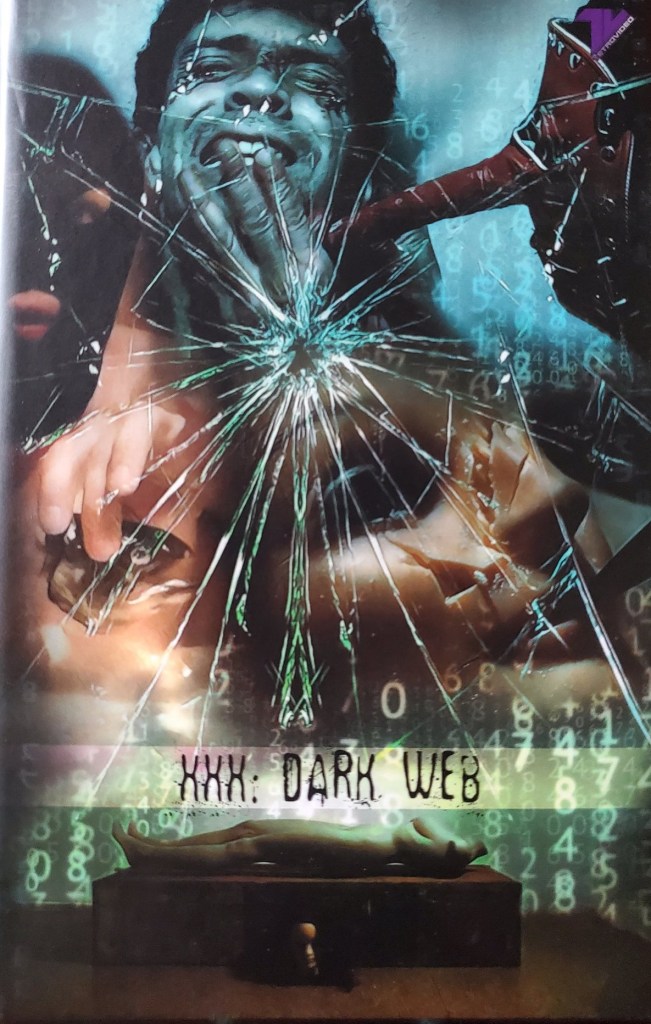
When you’ve seen as many extremely fucked up films as I have, you start to feel like you’ve seen it all. After watching A Serbian Film, Atroz, Cannibal Holocaust, all the Guinea Pig films, and countless others, what can an extreme film bring to the table that I truly haven’t seen? Well, that’s where XXX: Dark Web comes in and with a name like that, it’s already setting the expectations quite high. No, Vin Diesel isn’t taking his impotent, PG-13 action franchise in a bold new direction; what we have here is far more interesting (although I am now more than a little curious about what that would look like). Rest assured fellow sick fucks, this is a legitimate underground film and the very definition of a piece of truly Extreme Cinema. There’s even a scene toward the end that blew my mind and showed me something shocking that I’d definitely never seen in a film before, but more on that in a minute.
The film utilizes a standard anthology format with five separate segments, each by a different director, plus a wrap-around story to tie it together. The framing device here is a nameless young man (Franz Dicarolo) who is searching the Dark Web for twisted shit to jerk off to and each segment is a different video he clicks on. It’s a clever format for a film like this and pays homage to the inherently voyeuristic role the audience itself is playing as we wait for the next shocking segment to come on and try and outdo the depraved insanity we just witnessed. This also adds an ingenious layer of discomfort for the viewer as we see the audience surrogate eventually taking on a more interactive role in the twisted entertainment he is consuming.
There isn’t a lot of “story” to speak of within this film as each segment plays out with little to no narrative in service of moving along the gruesome visuals as quickly as possible. That’s not a knock against it though because by its very nature, the Torture Porn subgenre tends to be pretty light on story and at no point did I really feel like I needed more character development to keep my eyes glued to the screen in rapt anticipation of what would happen next. In fact, even for seasoned veterans of Extreme Cinema, this is perhaps the most squirm-inducing film I’ve ever had the twisted pleasure of sitting through.
Graphic, unsimulated sex and gruesome Guinea Pig-style evisceration is just where the depravity starts and before you know it you’re seeing dicks being bitten off and sewn back on, vomit blowjobs, knives in bloody assholes, nutsacks full of needles, people jerking off to pics of (probably) real mutilated corpses and so much more. Obviously the bulk of the film is made up of well constructed and convincing special effects (otherwise you’d have to find it on the real Dark Web) but the final segment brings it in a whole other direction with a bit of gruesome reality.
In it we see a real video of musician Daniel Valient (of the band White Gardenia, who also do the music for the scene) and a young woman with black lipstick (Allison Simon) engaging in actual cutting and drinking of each other’s blood. From there we see Daniel turn it up to 11 in a scene that I don’t want to spoil but suffice to say it blew my fucking mind! It would be disturbing either way but the fact that it is 100% real (trust me, I looked into it) officially makes it one of the craziest things I have ever seen in a feature film.
Clearly, this movie has a lot going for it in terms of being an effectively shocking piece of underground cinema. Still, there were a couple of minor tweaks that I wish had been made to really bring it home. There are a few instances where characters speak in another language or text appears on screen but there is no subtitle translation option, which is unfortunate because I was really curious about what was being said. Also, the actual title of Daniel’s blood drinking segment is “Allison’s Mouth fills up with Blood and Semen” and despite seeing his blood-soaked boner, the actual blowjob is more implied than explicit. Not a big deal but given the segment title and the precedent already set of explicit sex, it felt like a situation where edgy material should have been leaned into rather than shied away from if it was to be presented at all.
Regardless, this is an incredible piece of dark art with brilliant, realistic performances and special effects punctuated by moments of visceral reality. It really is some of the most brutal and disturbing footage you’re going to see outside of a real world shockumentary like Traces of Death and frankly, real death compilations are nothing but cheap, artless, shock-value trash anyway. I’d take the brilliant special effects work and hardcore performance art of XXX: Dark Web any day!
I love horror anthology films and while we may not be getting as many these days as we did during the resurgence of their popularity in the early to mid 2010s, it’s good to see that they are still popping up occasionally. Typically these films will feature the collaboration of multiple directors and are a great way to showcase various talents within a single project. The structure allows the audience to be a little more forgiving of the overall film as stronger entries can sometimes redeem the goodwill lost by weaker ones. Ultimately though, the finished film is still a sum of its parts and today we’ll see if A Night of Horror: Nightmare Radio serves as a suitable distraction during these troubled times.
Every good anthology film needs a solid framing device to tie things together and in this case it comes in the form of a radio DJ named Rod (James Wright) telling scary stories during his show. There’s a good variety within the stories themselves as Rod spins tales of murder, revenge, and the supernatural. The cold open of the film shows a story of a vengeful ghost while the next deals with the very real and very creepy Victorian era practice of photographing the dead. Subsequent stories involve a sinister stylist, cruel and unusual prison punishment, a Spanish dancer with strange stomach pains, and a child who makes a frightening discovery in the kitchen. The final two stories involve a hunter with very unusual prey and a woman hearing odd noises while she is home alone. Rod’s story also follows its own arc and builds towards a satisfying and interesting twist that nicely caps off the preceding tales.
Fortunately there aren’t any entries that are simply bad but there are definitely some that are more successful than others. One of the standouts was the entry about the prisoner which managed to be morally complex and the degree to which viewers find it cathartic or disturbing is sure to vary depending on the person. Another highlight was the postmortem photography entry which had excellent structure and pacing, delivering a very complete, concise, and chilling story in just a few short minutes. I also want to give credit to the final story (and arguably scariest entry in the anthology) which does an incredible job expanding upon the unnerving sense of foreboding one can get while alone in their own house at night.
The only parts that don’t work here are a couple of times where the story didn’t quite come together as well as it should have. Unfortunately, the opening vignette suffers from this the most as the engaging visuals are undercut by a muddled story that fails to make any fucking sense whatsoever and seems more like a disparate collection of ideas than an actual narrative. Similarly, the hunter segment works well on its own but its introduction throws an unnecessary layer of confusion into the character motivations and inherent logic within the story itself.
These are ultimately minor quibbles though, because as a whole, Nightmare Radio is incredibly successful and every segment is exquisitely shot, well acted, and showcases brilliant special effects. This is definitely one to keep an eye out for and something that fans of horror anthologies will certainly want to tune into.











 I love horror anthology films and while we may not be getting as many these days as we did during the resurgence of their popularity in the early to mid 2010s, it’s good to see that they are still popping up occasionally. Typically these films will feature the collaboration of multiple directors and are a great way to showcase various talents within a single project. The structure allows the audience to be a little more forgiving of the overall film as stronger entries can sometimes redeem the goodwill lost by weaker ones. Ultimately though, the finished film is still a sum of its parts and today we’ll see if A Night of Horror: Nightmare Radio serves as a suitable distraction during these troubled times.

