
 The demonic possession sub-genre of horror is one that ebbs and flows in popular consciousness but never truly disappears. Perhaps this is because the idea of losing control to a powerful unseen force is something that can have the ability to instill a profound sense of dread within us, at least when it’s executed properly. Whether or not it factors in a heavy dose of religious anxiety, as they usually do, the general concept of demonic possession is a well that’s been dipped into many times and with the success of recent films like Hereditary, you can expect that trend to be on an upward swing. This means that for films on this topic to stand out, there needs to be more to their plot than a by-the-numbers rehashing of The Exorcist and today we’ll see if Luciferina has what it takes to stand out from the crowd.
The film centers around a young nun named Natalia (Sofía Del Tuffo) who must return home after a sudden “accident” leaves her mother dead and her father catatonic. Once home she is reunited with her troubled sister Angela (Malena Sánchez) who insists she join her and her friends on a trip to an isolated island where a shaman is going to perform an Ayahuasca based cleansing rite on them. Concerned about Angela’s safety in the presence of her abusive boyfriend, Natalia agrees to join them on the trip and, this being a horror film, it’s no surprise that things quickly take a turn for the worse.
At the heart of any film are the characters themselves and the fact that Luciferina really takes its time to effectively develop them into real people rather than stereotypes pays off, as it makes the story significantly more engaging. I wasn’t even thinking about the fact that the plot could essentially be described as a group of young, attractive people being terrorized in an isolated location the woods because it feels worlds away from schlock like Dark Forest and the myriad of others more typically associated with that general plotline.
Of course developed characters are only one piece of the puzzle but thankfully Luciferina is also able to deliver superb, realistic performances and some great, bloody, practical effects. The story is also unconventional and interesting and boasts some genuinely chilling moments and unpredictable turns. Still, there are some points where the story line itself can feel a little muddled and a few scenes that would have benefited from a bit more clarity, but not enough to significantly detract from the overall experience. As long as films of this kind are bringing this level of quality to the sub-genre, then demonic possession will remain a horror staple for years to come.

 When you have a total runtime of under five minutes you have to pack a lot of content in to create a memorable experience. Fortunately Not in My Mouth does just that and is able to do a lot with it’s micro story in just a few short minutes. Set against a delightfully discordant and aggressive score by White Gardenia and Geimhreadh, the film is directed by (and stars) Poison Rouge, director of the newest American Guinea Pig film, Sacrifice.
 Writer/director Jonathan Holbrook’s new film Beloved Beast is his latest example of what has come to be known as ‘Holbrookian Horror’ following his excellent 2016 feature Tall Men. The term is apt because much like that film, Beloved Beast is imbued with the director’s signature style, one that successfully channels the surreal Americana of David Lynch, while maintaining it’s own unique flavor. In both cases, the viewer gets the feeling of slipping into a cozy nightmare, one that you want to envelop you as you willingly slide into the depths of its subtly surreal world.
  Ahhh, the found footage sub-genre, staple of the independent filmmaker. Some entries are notable and utilize that technique for innovative storytelling, but many others are simply trying to cover up low production values and a lack of budget. Ever since The Blair Witch Project exploded onto the horror scene in 1999, and raked in a quarter of a billion dollars on a $60,000 budget, filmmakers have been trying to capture a piece of that low-cost, high-profit magic.
 When a movie is titled Bus Party to Hell and features a masterclass thespian such as Sharknado alum Tara Reid, you have a pretty good idea what you’re in for. Of course, there’s nothing wrong with an over-the-top film that doesn’t take itself too seriously, provided it’s actually enjoyable to watch. There’s a surprisingly thin line between outrageously fun and irritatingly stupid and today we’ll see if BPtH falls more along the lines of the campy, gory fun of Father’s Day or the interminable slog that is Kudzu Zombie.
 If you’ve only seen one film by the brilliant Japanese auteur Takashi Miike, then it was probably Audition. Not only is it Miike’s most well known film outside of Japan but it is also his most accessible. That’s not to say of course that it’s something that’s easily digested by the mindless masses, it is still a Miike film after all, and if it didn’t have some incredibly violent, disturbing scenes I wouldn’t be reviewing it here. Although, it’s not the violence alone that makes this film interesting, what really sets it apart is the brutal sucker-punch it gives the audience.
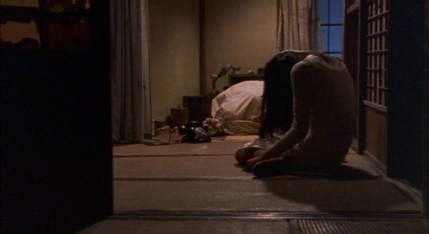 What really makes Audition work is that even with the tonal shift, the two halves of the film never feel like disparate ideas awkwardly stitched together but instead function as one cohesive story that is purposefully and methodically laid out. The dramatic, character-focused beginning fleshes out who these people are and makes the viewer truly invested in their fate. The fact that the violence is intense but used sparingly also gives it a far greater impact when it’s shown.
 Horror and Alternative Cinema Reviews