
 The idea that alternate realities could simultaneously exist in the universe is certainly an interesting one and a concept that has become ever more pervasive in the popular consciousness of late.
However, much like the concept of time travel, it can also become somewhat of a quagmire for writers seeking to apply logical explanations to a concept that defies conventional logic. Regardless of it’s setting though, good storytelling is always king and the films that maintain a compelling, character-driven core while exploring unusual concepts are the ones that are really worth your time. Conversely, films that don’t, will simply collapse under the weight of their facile ideas and today we’ll see where Parallel falls on that spectrum.
After formally meeting at a party, co-workers Heather (Faye Sewell) and Neil (David Magowan, also the screenwriter) begin their seemingly perfect relationship. After a chance meeting with a self-proclaimed psychic named Machlis (Brian Carter) the couple soon finds themselves voyeuristically peering into a parallel version of their lives, to see what much darker versions of themselves are up to.
The very concept of this film is based upon the idea of there being “light and dark” versions of each of our lives playing out in simultaneous timelines, which is exactly the kind of intellectual quagmire I was referring to earlier. The very idea that there could be a “good” reality and a “bad” one is the kind of thing that sounds cool at first and then completely unravels as soon as you start to think about it. Sure, you can show a few isolated characters with alternate versions of themselves engaging in more morally questionable behavior, but what about the world at large? The implication seems to be that the protagonists exist within our normal reality, not some kind Utopian version, so are we supposed to swallow the idea that we live in the good version!? At this point I would like to introduce Magowan to a little thing called the news….
Despite all the real world horrors that plague our planet, it makes just as little sense to say we are collectively an amalgamation of all the worst versions of all the people who have ever lived. The concept of infinitely branching parallel universes is interesting but the idea that they could be distilled down to two oversimplified versions is just ridiculous. Frankly, it takes a very privileged perspective to look around at the world we have and think “wow, what if there was a bad version of this….”
Now, concept is a big factor but so is execution and in the case of this film the results are varied. Overall, the most positive aspect of the production is the acting. Carter especially shines as the somewhat put-upon psychic who may have more up his sleeve than he initially reveals. Sewell also does a very solid job with the material she is given and handles her character’s emotional range skillfully. From a technical standpoint, the film is decently shot but does run into some the classic pitfalls that plague inexperienced filmmakers such as occasionally clumsy edits and some noticeably bad instances of sound design.
Those issues aside, the film as a whole does a decent job of holding your attention, especially as the more debaucherous elements start to come into play. It’s a creative concept with a decent execution that simply suffered from a series of rough edges through all aspects of production. A few tweaks to the central concept, some more natural dialogue, and a smoother edit and this could have been a very interesting film indeed. Too bad we don’t have that cut of the movie, maybe it exists on a separate timeline.

 When determining how well a film works it’s important to first understand the type of film the director is trying to make and judge accordingly. Dreaming Purple Neon wasn’t released by Troma but given the copious amounts of low budget gore, nudity and general cheesiness, it’s something that could’ve fit right into their catalog. That is to say this is not a film that seeks to astound you with mesmerizing acting or a profound storyline but instead hopes to entertain with over-the-top visuals. This is a perfectly valid position for a film to take and one that is harder to successfully achieve than you’d think. So the real question becomes, does it pull it off?
 It wasn’t that long ago that horror anthology films were far less common than they are today. They never went away entirely of course but once the 90s rolled around they were pretty much relegated to cheap, straight-to-video cash grabs, most of which have been deservedly forgotten. That all changed with the success of modern anthology horror like Trick ‘r Treat and The ABCs of Death which revitalized a subsection of films that seemed destined for irrelevancy. As someone who is a big fan of anthology films, I couldn’t be happier with the unprecedented quality and abundance of these films today. Of course not all films are created equal and today we’ll see if The Forces of Horror Anthology feels more like a product of the modern anthology renaissance or a throwback to the dark days of the ’90s.
 It takes an unbelievable amount of work to make a feature length film and of course the longer your film, the more work it requires. This is why it’s unusual to see films venture past the standard ninety to a hundred five minute window, and downright rare for scrappy indie productions to attempt it. But this is exactly what writer/director (Jakob Bilinski) did with his ambitious and, uh, interestingly titled Three Tears on Bloodstained Flesh. Now, ambition is good, but it’s only half the battle so the real question here is, “how well does he pull it off?”
 Creating a film that inspires a genuine sense of dread and tension, with a small cast and limited locations, is no easy task. There is no sure-fire recipe for success with this, but there are two components that are required if a film is to have even a remote chance of working. The first is a genuine sense of realism, regardless of how fanciful the story, and the second is characters you can truly connect to as human beings so you are invested in their struggle. It sounds simple yet it’s amazing how rarely it’s pulled off effectively. So, does director Corin Hardy (great name btw) manage to succeed with his Irish folktale inspired film, The Hallow? Well, let’s discuss.
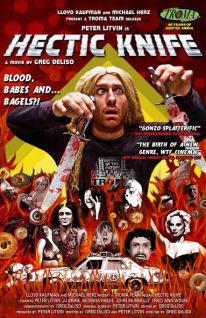 Some films throw logic and reason right out the window and subscribe only to the bizarre new reality they have created. Films like that can be difficult to critique because the acting, continuity, special effects and even the plot itself are so askew that you can’t judge it’s success or failure by any standard measurement. As someone who loves unconventional, surreal cinema, I’ve seen a lot of films in this category and have found that they inevitably fall to one side of the quality spectrum or the other. Either a film succeeds wildly as an innovative, daring work of creative brilliance or it quickly becomes clear that the filmmaker has simply slapped together a bunch of nonsensical images without any meaning or intention. So, where does the utterly surreal insanity that is Hectic Knife fall on that scale? Well, let’s discuss.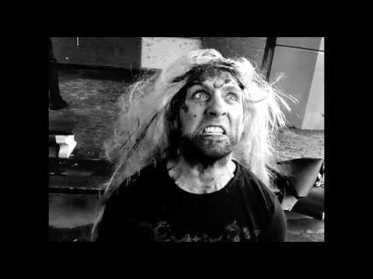
 From the small things like the living room couch that’s inexplicably vertical, the deliberately strange and repetitive dialogue, a character stopping in the middle of a fight to do a stand-up comedy routine complete with a laugh track, this entire experience feels like a stream of consciousness dream that only kinda obeys the laws of reality. One of my favorite scenes is when this black and white movie pulls out to reveal a random couple in full color watching and disparaging it. They in turn have their own scene that is just as intensely bizarre and violent as the rest of the film, but otherwise serves no purpose but to add yet another level of insanity to the experience.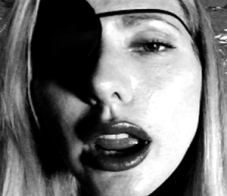
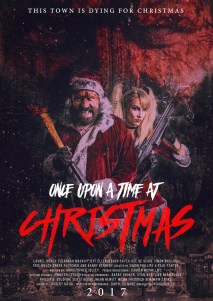 When a horror movie has a holiday-themed premise, especially holidays other than Halloween, that’s often a sign that the audience is in for a campy ride that is going to play up the novelty to extreme proportions. Of course, that’s not always the case and some notable exceptions include the well-crafted, emotionally developed slasher Silent Night, Deadly Night as well as the incredibly creative and bizarre Rare Exports. Today, I discuss whether or not Once Upon a Time at Christmas falls into the category of holiday classics or if it’s just another poorly crafted product that falls apart almost immediately.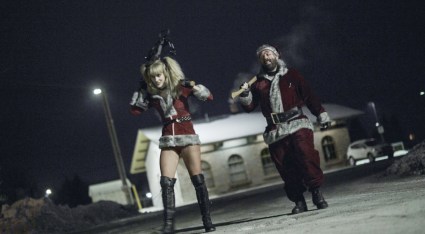


 One of the defining films of the New French Extremity movement, Martyrs, is a brutal endurance test that is not even remotely concerned with appealing to mass audiences or casual horror fans. Inspired in part by American Torture Porn films of the time like Hostel and Saw, writer/director Pascal Laugier has also credited the severe depression he was experiencing at the time he wrote this for its incredibly dark and nihilistic tone. While the raw, visceral depictions of suffering on display mean that Martyrs easily earns its Extreme Cinema stripes, the more important question is, of course, how well it actually works as a film.
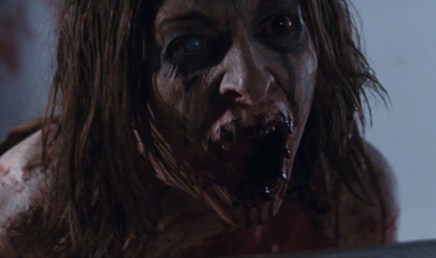 Although represented as a separate entity, the film does eventually make it clear that she is a manifestation of Lucie’s internal pain and Lucie’s desire to be rid of her is the central driving force for her to murder those responsible for her abuse.
 This is all within the structure of a brilliantly crafted script, which boldly bucks the conventions of a standard narrative, to keep you on your toes as the unpredictable plot develops. It even goes as far as (remember, spoiler alert) shifting protagonists halfway through, a risky move that completely pays off. The script also features one of the best sucker-punches in cinema history when the normal, affluent family is brutally gunned down by Lucie, seemingly out of nowhere. This is an outstanding example of a filmmaker carefully establishing a sense of safety and normalcy for the viewer, only to shatter it in the most jarring way.
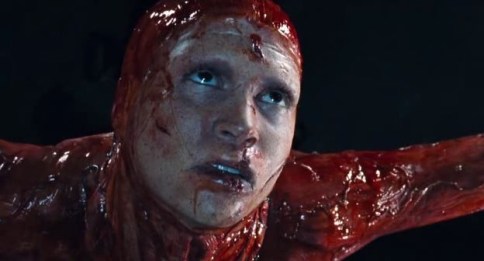 There is just so much to unpack here, especially when it comes to the secret society; their quest for transcendent knowledge through extreme suffering, the casual way they inflict violence like it’s a routine job, and of course the brilliant end when the matriarch is so rattled by knowledge of what is actually awaiting us in death, that she takes her own life. Suffice to say, this film is a unique, complex and exquisitely crafted piece of highly disturbing art that ranks among the most brilliant horror films ever created.
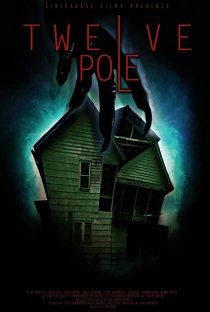 A good opening scene that grabs the viewers attention is very important for setting the tone of your film, especially in a horror movie. Conversely, when the opening of your film is so misguided that the audience is already rolling their eyes at minute one, you’re not off to a great start. Unfortunately, this is the case for Twelve Pole, which makes an incredibly lame attempt to be edgy by opening the film with a voice-over, warning the viewer about how graphic the movie is. Problem is, actual warnings like that aren’t a thing! Legitimately hardcore films don’t bother with such gimmicks, and for a film that doesn’t even qualify as Extreme Cinema, they’ve got some nerve pretending that a warning is required. Still, you can’t judge an entire film by a single misstep in the beginning, so let’s see how well the film itself holds up.
 Establishing the proper tone for a film can be very difficult to get just right, especially when your film incorporates elements of black comedy as well as horror. When it works it can be a very entertaining blend of genres that properly balances both, and when it doesn’t, it quickly devolves into a confused mess that serves neither. Today we’ll see if Murder Made Easy is able to strike the right balance with its modern take on an Agatha Christie style murder mystery.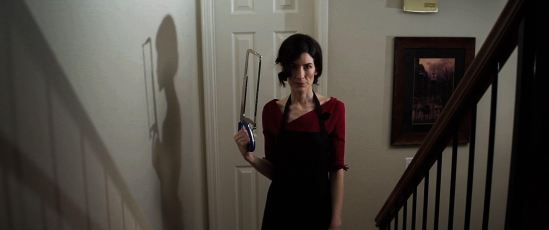
 While I can see why the overall plot itself was structured the way it was, the very device of having sequential guests show up does make much of the general plot rather predictable, and even a bit repetitive. Fortunately, as more of the larger story is revealed most of the characters have enough substance and variety to keep the interactions entertaining throughout…..with the notable exception of Cricket (Emilia Richeson). While most of the other characters are represented as slightly heightened archetypes, Cricket is full-blown New Age stereotype and her segment is the film’s most overt (and misguided) attempt at comedy, and a clear low point in the overall film itself. Had she simply been rewritten as a slightly more realistic character, her segment would have worked far better.
 Horror and Alternative Cinema Reviews