Atroz (2015)

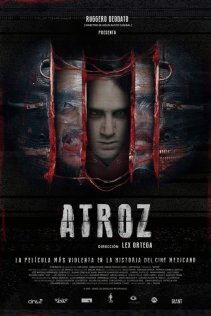
atrozAtroz, the Spanish word for atrocious and certainly an indication to the viewer that this experience is going to be anything but lighthearted. True to its title, the debut feature from Mexican director Lex Ortega is a harrowing journey indeed. Its style channels August Underground and its violent depravity reaches Human Centipede 2 levels of intensity. Much like A Serbian Film though, this movie plays out as more of a gruesome drama than a horror film but is so horrifying that it more comfortably fits into the Horror category than anywhere else. So, clearly its qualifications as an extreme film are indisputable but still, the most important question remains: “is it any good?”
After two men are arrested at the scene of a car accident that claims the life of a pedestrian, the police find a video camera in the car that contains a horrific video of them torturing a transgender prostitute to death. The film then alternates between the brutal interrogation of the primary suspect Goyo (Lex Ortega) and the graphic crimes on tapes that the police find during the investigation.

What instantly stands out about this film, aside from the extremely disturbing content, is the acting. The amount of commitment and realism that the actors bring to this project would be impressive for any film but the fact that this was a micro-budget production made for the $7,000 that Ortega and the producers crowd-funded really takes it to the next level. Even down to the smallest part, the actors really deliver in this film but Ortega himself truly stands out with his portrayal of the hulking, depraved monster that is Goyo.

Another key part of this film is the gore effects, which are very well done, especially considering the budget. Now, any would-be filmmaker can put gore into a movie but what makes the film so effectively disturbing is the fact that Ortega knows how to work within the limitations of his budget. Instead of attempting to create elaborate scenes and special effects that become laughable when done on the cheap, he wisely sticks to gritty, realistic violence and very upsetting concepts. Graphic genital mutilation, rape, incest, shit eating, bloodplay and various kinds of torture are all presented in unflinching detail.

While I enjoy seeing so much horrific imagery in a film, in this case it does work to its detriment a bit as well. Since the film is a little light on narrative, the extended scenes of violence do have a bit of a numbing effect without a more substantial storyline to support them. Still, the aforementioned acting quality and gore effects do a lot to elevate the overall film beyond the status of a run-of-the-mill Torture Porn making this a relatively minor issue.

A larger issue is the fact that the film falls into the standard found footage trap where characters are recording even at times where it makes no sense to do so. It is logical to think that the killers would be recording their crimes for their own sick pleasure. However, the fact that some of the transitional scenes, as well as large parts of what occurred in Goyo’s old home movie, were recorded is a bit of a stretch. I can certainly understand why Ortega included them as they were essential to the story itself but a bit more justification, like the camera already being on for a different reason, would have helped rationalize the fact that they were being recorded in the first place.

Truly, the only time Ortega completely breaks with the reality he’s created is during a playback of one of the tapes that suddenly cuts to an interior shot of the person’s ass who is being raped with the barbwire dildo (that’s right, you heard me). Certainly a cool effect but doesn’t make sense within the found footage context.

Minor structural criticism aside, this is an incredible film. Not only does it go to levels of darkness rarely achieved in cinema but it also provides powerful social commentary. The film opens with a statistic that 98% of 27,500 murders in Mexico are unsolved which sheds a light on the reality of the real world conditions the filmmakers must contend with. In the behind-the-scenes featurette producer Abigail Bonilla talks about the climate of fear and hopelessness felt by so many residents of Mexico City and how the film represents the violence and horror they see all around them. To properly understand and appreciate this film it is necessary to remove yourself from the initial gut reactions to the horrific images and realize that this is an artistic expression of the rage and fear that so many people feel from living in a dangerous environment. The movie also accurately reflects the fact that monstrous humans aren’t created in a vacuum but in most cases are the result of abuse and a lack of understanding.

A must-see for fans of extreme cinema and those looking for a film that delivers a legitimately hardcore horror experience. Atroz claims to be the most graphic and goriest film ever made in Mexico and ya know what, I would absolutely believe it. But let’s hope that it doesn’t stop there and perhaps this will encourage other daring filmmakers to push the boundaries and create art that resonates on such an intense, visceral level.

4-stars-red

Dark Forest (2015)

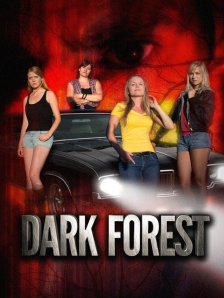
dark-forest“Are you ready for this? I’ve got a concept that’s going to blow your fucking minds! A bunch of attractive college kids go camping in the woods and then….get this….are killed by a deranged murderer! What’s that? It’s been done!? Impossible! What……how many times? Too many to count!? Well…..fuck it, let’s roll anyway!”
That’s how I like to imagine the conversation went down at Zell-Koj Studio when they decided to roll out the most well-worn concept in horror filmmaking as their debut feature. Okay, so obviously that’s not how it was but any time I hear that plot line being dusted off again it fills me with the same skepticism as when I hear someone is making another zombie film. But to be fair, there is a lot room within those basic structures to incorporate some very interesting and unique ideas. Films like Wyrmwood and You’re Next are a testament to that. So, does Dark Forest flex it’s creative muscles to bring us a fresh and interesting take on a tired subgenre or does it sink into a sea of mediocrity along with countless other forgotten slashers? Well, let’s discuss.

The story follows Emily (Laurel McArthur) who goes on a camping trip with her three friends to relax, reconnect and to temporarily escape from her abusive boyfriend Peter (Dennis Scullard). When Peter learns that she has gone away without him for an entire weekend he flies into a murderous rage and quickly heads off to the woods to exact his horrible revenge on Emily and her friends.

According to Zell-Koj Studio’s own press release, this was made as an 80’s inspired slasher but I take issue with low-budget horror films that simply try to co-opt that identity in order to justify campy acting and low production values. Even though the film employs the same plot devices that have been in use since Friday the 13th, the rap/techno soundtrack, prevalence of smartphones and a music video style bikini montage give it a distinctly modern feel. Stranger Things this is not.

For the most part though, the acting is serviceable for what it is and Scullard’s portrayal of the psychotic Peter does stand out as a highlight even though he isn’t given much to work with from a character standpoint. I am certainly willing to overlook a lot when it comes to the practical shortcomings of a micro-budget film but what is particularly aggravating in this case is that the film doesn’t even aspire to be anything more than a generic Hollywood slasher with a fraction of the budget. Nothing about the film even hints at attempting to be original and even a best case scenario version of this would have been nothing more than soulless entertainment.

Speaking of entertainment value, most of the kills are solid and appropriately bloody, even if the blood itself looks distractingly fake in some scenes. Unfortunately, they are presented without any suspense or tension as Peter seems to teleport around as required to kill off the expendable characters. Now, to it’s credit, the film is competently shot but then again so is Hollywood garbage like Transformers and Big Momma’s House. Competently shot should not be the single bar that a film aspires to clear.

My hope is that Zell-Koj will branch out into more innovative directions with future projects that at least attempt to break some kind of new ground. At a time when we have a virtually endless supply of genre films to watch, filmmakers need to bring something new to the table instead of just showing up with a pale version of something we are already tired of seeing.

1-5-stars-red

964 Pinocchio (1991)

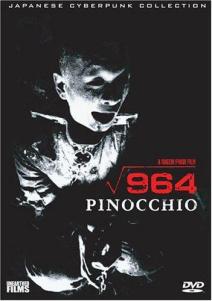
964-pinocchioWatch out, people, there’s a lobotomized sex-cyborg on the loose! Yes, the insane premise of 964 Pinocchio (a.k.a Screams of Blasphemy) does certainly hold a lot of potential for a Tetsuo-style journey into another gloriously bizarre living nightmare. But the real question becomes “can it actually deliver on the same level as that mind-fuck masterpiece?” Well, let’s discuss.
Obviously, when a cyborg sex-slave that suffered a memory-wiping lobotomy (otherwise known as a Pinocchio) isn’t able to perform to the client’s satisfaction it runs the risk of incurring their wrath. Such is the fate of #964, (Haji Suzuki) a Pinocchio who is tossed out onto the street by a female client when he fails to maintain an erection during a threesome. However, it’s not long before he is taken under the wing of a homeless amnesiac named Himiko (Onn-chan) after literally falling into her lap. When 964’s owner/pimp learns he is missing he quickly sends his men looking for him, terrified that his underground cyborg sex ring will be discovered. Can 964 regain his memory and uncover the real truth about who (or what) he really is before he is found?

While this all may sound delightfully nuts, my chief complaint about 964 Pinocchio would actually have to be that it’s not weird enough. In fact the first thirty minutes play out a bit more like an offbeat love story than a Japanese splatter film. To be fair, after that the film does take a sharp descent into creative madness with bizarre imagery that ranges from the stomach-churning to the sublimely bizarre, all of which really has to be seen to be believed.

Even so, the strange and interesting scenes the film creates are frequently undermined by slow pacing and repetition causing them to become more of a source of fatigue than fascination. This is a shame because the final third incorporates much more of the fast-paced, gleeful insanity that was in short supply in the previous sections. While it does build to a satisfyingly deranged climax, there is still an overwhelming feeling of “too little too late”. Even at ninety-seven minutes it feels long and would have been more successful as a tightly-paced short rather than a feature.

Ultimately, this film tried to have it both ways, attempting to provide an experience that was both a Splatter Cinema mind-trip and a character-driven story. It would have been better to commit fully to one direction or the other because the unexplained random madness occurs too frequently for a drama and too infrequently for a wild ride in the vein of Tetsuo. Certainly an interesting (and Alternative-as-fuck) film and one that should be seen by anyone interested in Japan’s most bizarre cinematic experiences. However, if you are expecting a trip on the level of the aforementioned metal-morphing classic, or even the more recent examples of unbridled insanity like Helldriver and Tokyo Gore Police, this is sure to come up wanting.

3-stars-red


The Laughing Mask (2014)

laughing-maskLet me start by saying that The Laughing Mask is actually not a horror movie in the traditional sense, more of a dark thriller with horror elements. That being said, it is certainly an alternative, indie film that remains relatively obscure, like so many other micro-budget titles. So, the question is “Is this film a hidden gem that deserves to be uncovered or just another run-of-the-mill low budget flick drowning in a sea of it’s peers?” Well, let’s discuss.

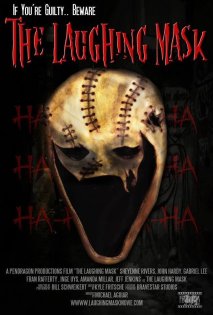
The plot centers around the exploits of a mysterious vigilante killer known as “The Laughing Mask”. Jake Johnson (John Hardy) is a writer who’s wife was murdered and daughter abducted by said vigilante and has now written an inflammatory book on the subject in hopes of drawing him out into the open. Homicide detective Katherine O’Malley (Sheyenne Rivers) is also relentlessly pursuing the Mask in hopes of stopping his onslaught of murders as well as figuring out the deeper connection between them.

There are certainly a lot of things to like about this film. The Laughing Mask himself is an interesting character, a well-dressed psychopath with a creepy mask and a penchant for depression-era music. I also enjoyed his lair where he doled out his own brand of vigilante justice to guilty people who have skirted legal ramifications, via elaborate punishments based on their crimes. In addition, the use of creepy, old timey cartoons intercut into a few scenes actually works quite well as does the early twentieth century music that plays throughout. The film also doesn’t shy away from brutality and features numerous bloody kills.

Unfortunately, these positive elements are overshadowed by large, fundamental problems with the film itself. The most glaring issue here is the acting. Hardy actually stands out as the only one from the principal cast able to really deliver a believable performance. Most of the other actors sound like they are doing their first ever table read of a script and their stilted performances destroy any chance for the audience to suspend disbelief. This problem is only made worse by scenes where writer/director Michael Aguiar attempts to inject humor or snappy dialogue into the script, which inevitably fall flat. I also had some big issues with the flawed ending but going into further detail would require revealing major spoilers.

There is definitely some fun to be had with this film but ultimately with pacing that drags far more than it should and a lack of realistic characters to engage with, this film falls far short of what it might have been. With some more attention given to the script, as well as the casting, a very different outcome could have been produced. As it is, I don’t see The Laughing Mask breaking out of it’s obscurity to become a cult hit any time soon.

2-stars-red

Rare Exports: A Christmas Tale (2010)

rare-exportsWhen creating a Christmas-themed horror film there are certainly a lot of different approaches you can take. Perhaps the most interesting and unconventional though, is the storyline for the Finnish film Rare Exports: A Christmas Tale, which goes far beyond the standard Santa-themed slasher to bring you a story that is relentlessly bizarre and incredibly engaging.
High in the Korvatunturi mountains a foreign company unearths the ancient, frozen body of the original Santa Claus. However, this creature is a far cry from the jolly, westernized version of the endlessly generous elf that we’ve all come to know. This Santa doesn’t just give presents, he also demands the blood of the children who have misbehaved and with his army of creepy elves at his command he’s sure to get it. Now, it’s up to a young boy (Onni Tommila) and a small band of reindeer hunters to try and save Christmas, and the world, from Santa Claus.

While the idea of Santa as a demonic, otherworldly creature that rewards good children and severely punishes the bad may seem strange to many American moviegoers it certainly wasn’t created in a vacuum. The film itself was actually preceded by two shorts by writer/director Jalmari Helander Rare Exports Inc. (2003) and The Official Rare Exports Inc. Safety Instructions (2005). It also draws inspiration from classic figures of European Christmas mythology such as Joulupukki and Krampus.

Right from the opening scene it’s clear that this is a well-made film. Despite the very modest budget of 1.8 million Euros it boasts gorgeous cinematography, flawless performances and high production values. As the wonderfully strange story unfolds, Helander immerses the audience in the bizarre and surreal world he has created with well-defined, unconventional characters and an unpredictable plot that will hold your attention throughout. This is a clear example of an artist-driven project that was created without the kind studio tampering so prevalent in Hollywood films, which is why this is far more entertaining than the cheap clutter that litters much of the American box offices year after year.

Now, I should mention that this is by no means a straight horror film but rather a bloody, genre-blending mix of horror, fantasy, thriller and comedy elements that make for a unique experience that is well worth the time. So, strap on your kengät and put the Reikäleipä in the oven because it’s time to indulge in some quality entertainment from the land of reindeer. A rare export indeed.

4-stars-red

Silent Night, Deadly Night (1984)

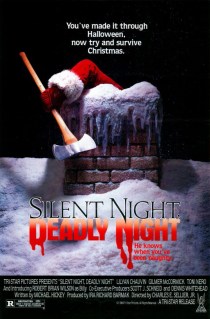
silent-night-deadly-nightWhen it comes to generating controversy, you’re unlikely to see a Christmas-themed horror film that ever stirs up as much as Silent Night, Deadly Night did upon it’s 1984 release. Despite the fact that a very similar film, Christmas Evil, had come out just four years earlier with little fanfare, groups of self-imposed arbitrators of morality fought hard to get this Santa-themed slasher pulled from theaters as quickly as possible. Even though they were successful at this and the film was removed shortly after it’s release, that didn’t stop it from crushing the box office while it was there. Despite the controversy, or more likely because of it, the film saw profits that more than tripled the original budget, even outmatching the seminal slasher A Nightmare on Elm St which was released the same week. Ya know, the film where a disfigured man’s restless spirit murders teen in their sleep with his razor-fingers. Apparently that was far less shocking to some than a killer with a fake beard and a red suit.
The plot follows the sad, tragic life of Billy Chapman who is put into an orphanage after witnessing his parents’ murder on Christmas Eve by a criminal in a Santa suit when he was five. As he grows up with the memory of that horrifying event repressed deep inside him, his trauma is further exacerbated by the abuse he suffers in the orphanage at the hands of the stern Mother Superior. Although he is able to hold on to his sanity through his late teens, a series of events finally trigger his psychotic break causing him to go on a murderous rampage dressed as Saint Nick.

Even though the plot may sound a bit silly out of context, the film plays it surprisingly straight. One of the things I was most impressed with is how well it sets up and justifies events in the story. In situations where lesser movies would simply throw an event in to move the story along SNDN really goes the extra mile to make sure that actions are logically grounded and explained. For instance, the original Santa killer doesn’t just appear out of nowhere, he is established in a previous scene as are the series of events that lead to Billy’s mental snap.

The film also takes a very interesting and unusual perspective in the way it is presented, which undoubtedly added to the controversy. Rather than having the killer be the mysterious antagonist hiding in the shadows to strike at unsuspecting teens, he is front and center as the protagonist which is a perspective that makes audiences far more uncomfortable. In addition, he is also a very sympathetic victim of horrible circumstances and the scenes of his tragic childhood are truly sad and upsetting. However, rather than dwelling on long scenes of exposition SNDN provides just enough information to build the story to it’s inevitable outcome and doesn’t get bogged down in filler that slows the momentum.

The film also gives you a great sense of the characters who all feel like real, fleshed-out people rather than two-dimensional stereotypes, regardless of the size of their roles. This adds more dramatic weight to the kills when they occur and keeps the story far more interesting. Also, the kills themselves are brutal and pulled off incredibly well, especially the classic antler-impalement scene that is not only iconic, but chillingly beautiful in it’s execution.

All in all, an excellent addition to any horror fan’s Christmas list and well deserving of annual viewing to really get you in the mood for the season of mall Santas and commercial excess.

4-stars-red

Helldriver (2010)

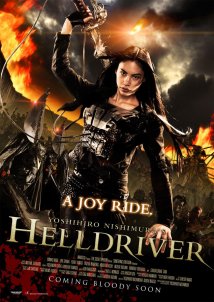
helldriverHelldriver is less a “movie”, more an unbridled ride through the cinematic insanity that is Japanese Splatter Cinema. Much like Tokyo Gore Police, this is another film that you are going to need to strap the fuck in for because this visual roller coaster is an example of unhinged, creative brutality at it’s finest.
The plot is as crazy as the visuals but I’ll do my best to distill it. When a freak meteor falls from the sky it releases a mysterious black ash that turns millions of Japanese residents into zombies. Now it is up to badass zombie slayer Kika (Yumiko Hara) to save Japan from the epidemic by going after the zombie queen herself….her mother Rikka (Japanese Splatter legend Eihi Shiina)

So, there it is in very broad strokes but that doesn’t even begin to describe the utter madness of this film. Right from the opening scene that sees a physics-defying truck spinning through the air like a toy and Kika pole-dancing on a zombie’s elongated neck (that’s right, you heard me) it is clear this is a film that is not taking itself too seriously. But that’s okay in this case and this kind of glorious madness is exactly what we’ve come to expect (and crave) from the Japanese Splatter subgenre.

The film is clearly on a mission to start out crazy and just get crazier…..and mission fucking accomplished! Zombie babies are swung on umbilical cords like weapons, severed heads fly through the air to devour people, a working car is made entirely out of severed body parts and much, much more! It all culminates in a battle in space so insane that it practically defies description.

The film is also violent, really, really violent. Torture, cannibalism and endless geysers of blood all play out onscreen in incredibly graphic detail despite the film’s shockingly low budget. Naturally, many of the effects have the sort of low budget aesthetic you’d expect in Japanese Splatter but the sheer creativity on display here more that makes up for it and just add to the campy fun.

And campy fun is really the key here because that is certainly the intention of director/co-writer Yoshihiro Nishimura. There is definitely a very different tone here than the grim torture-porn films like Grotesque and despite all the bloodshed, it never loses it’s sense of careless fun amid the carnage. For some, it would be easy to dismiss such a film as meaningless visual stimulation but the fact is that it knows exactly what it wants to be sticks with it a hundred percent. The characters are actually very well defined and solid and even with a two hour running time the film never feels drawn out or boring.

So if you think you can handle taking a trip through a world of gruesome, next-level insanity then grab a few beers and hitch a ride with Helldriver, you won’t be sorry you did!

4-stars-red

Cannibal Holocaust (1980)

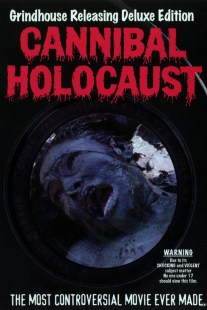
cannibal-holocaustTruly, no discussion of the most notorious, disturbing films of all time could possibly be complete without the inclusion of Cannibal Holocaust. Even thirty-six years later, the film remains banned in a number of countries and was so controversial upon it’s initial release that director Ruggero Deodato was arrested shortly after the 1980 premier in Milan. However, the charges were eventually dropped once he was able to prove that this was not an actual snuff film and all the actors involved were in fact still alive. So, does the film that many have dubbed the most controversial of the 20th Century live up to it’s reputation and still manage to be shocking decades later? Well, let’s discuss.

In addition to being notorious for it’s graphic content, Cannibal Holocaust is also credited as being an early pioneer in utilizing the “found footage” technique that has become such a prevalent part of modern horror, which is itself a very worthy contribution to the genre as a whole. The story centers around anthropology professor Harold Monroe (Robert Kerman) who goes deep into the Amazonian jungle in search of a missing documentary crew that was making a film about mysterious cannibal tribes in the rain forest. But instead of the documentarians, he is only able to recover their footage which he brings back to an American TV station that wants to broadcast it. Monroe however has serious reservations once he discovers the truth about what is actually contained on those reels.

As the other reviews on this site will indicate, I am certainly no stranger to disturbing cinema and in fact have made it my mission to track down and review all of the most twisted, fucked up films ever made. I couldn’t possibly be a more ardent defender of free speech and have thoroughly praised controversial movies like A Serbian Film, The Human Centipede and others for their bold, inflammatory filmmaking. However, there is a very important difference between Cannibal Holocaust and most other controversial films which is also at the center of the ongoing controversy surrounding it…the real, unsimulated killing of animals on film.

Now, one thing I do want to clarify is that this film was made in 1980 and in the decades preceding that the practice of really killing animals onscreen was surprisingly commonplace and did not carry with it the incredible stigma that it does today. Even mainstream movies like Thunderball, Patton, Apocalypse Now, Cool Hand Luke and many others featured scenes of animals actually killed onscreen in service of the storyline. Despite this, the abundance of animal deaths, as well as the incredibly graphic ways that they are killed, make Cannibal Holocaust stand out as exceptionally brutal and cruel. So much so that years later Deodato himself even expressed regret for his actions.

More than anything else I have reviewed, this film really provides an opportunity to discuss the question “Is there a such a thing as going too far when creating art?” For me, the answer really comes down to one simple word…..consent. Consent is everything when deciding what can and cannot be shown. Consent is the difference between sex and rape and the difference between a boxing match and an assault.

I am a very firm believer in the idea that anything people want to express in art can and must be allowed to be expressed but with the important stipulation that if it is violent or sexual, it occurs between consenting adults. If all parties do not (or cannot) consent to what is happening, than what is happening is not okay. This is why filming actual instances of rape, murder, child sexual abuse and animal cruelty is rightfully illegal but fictional depictions are not only acceptable but an important part of coping with the real life horrors we face in the world every day.

People often cite A Serbian Film as the most disturbing film of all time primarily because of the depictions of children being sexually abused. While this idea is in fact disturbing, as it was intended to be, it is also still simply an idea, a fictional depiction. This also goes for other disturbing imagery such as the graphic rape scene in I Spit on Your Grave or the violence depicted in pretty much every horror movie ever made. As horror fans, we enjoy the depictions of violence because we are able to know in the backs of our minds that what we are seeing is simply an illusion and no real harm is being done. On the other hand, anyone who revels in the genuine suffering of others has truly lost their humanity.

Featuring actual cruelty also undercuts any kind of statement you are trying to make with the art itself. The underlying messages of the cruelty of a “civilized society” that feels entitled to abuse indigenous people and nature itself in this film is completely deflated by the fact that the film itself is responsible for such abuse. Beyond this, I also find real violence to be a cheap tactic to illicit a visceral response. Any asshole can shock you by killing an animal and filming it but when a film is able to horrify you to your core simply by creating a realistic illusion that is something to be admired.

To be fair though, there is a lot more in this film beyond the few scenes of animal cruelty and I wanted to see how effective it was as a whole. The special edition DVD actually offers a version where the animal deaths are removed so to compare it I watched both that and the uncut version. Without those scenes the film is still incredibly disturbing and more than most people could handle. Aside from numerous scenes of graphic rape there is also a lot of brutal carnage. The infamous scene of the impaled woman is a gorgeously realized effect as is the scene of the man’s cock being viciously cut off.

Despite my feelings for the unsimulated violence in this film, I do not advocate for it’s censorship and (like the apologetic warning before the film) view this as an historical document depicting a bygone era that hopefully won’t be repeated. This is the only time I would actually recommend watching a cut version of a film but if you do, you will see a movie that is surprisingly well acted, holds your interest and features a great film score. However, you are also sure to notice some shoddy ADR work, weak character development and a plot that is noticeably thin when not propped up with the shock-value of real death. Ultimately, without the use of the cheap shock effect of animal cruelty, the film would never have earned the level of controversy it did or it’s notorious place in film history. On the other hand, it would have still been a disturbing piece of art who’s message wouldn’t have been drowned out by it’s own hypocrisy.

2-5-stars-red


Trick ‘r Treat (2007)

trick-r-treatA lot of movies take place on particular holidays but a true ‘Holiday Movie’ really steeps itself in every aspect of the day it’s representing. In general I find that Christmas movies are the best example of this as they are so often packed to the gills with festive imagery and (gag) “heartwarming” sentiment. Well, for those of you looking for a film that honors a darker holiday with the same level of detail and enthusiasm you’d be hard pressed to find one that does it better than Trick ‘r Treat.

The movie consists of four interwoven stories that all occur in the same suburban town on Halloween night: A murderous school principal (Dylan Baker) struggles to hide his victim’s body; A young woman (Anna Paquin) tries to find the perfect guy for her “first time”; A group of kids explore the site of a child massacre and a grouchy old man (Brian Cox) contends with a very unusual trick ‘r treater.

There are certainly different ways to present an anthology film but if you are going to have interconnected stories this is the way to do it. The stories flow into each other seamlessly as opposed to feeling awkwardly forced together like in some anthologies. The characters also cross over into each others’ stories in significant ways rather than just with token appearances.

This fluidity can be largely attributed to the fact that Michael Dougherty wrote and directed the entire film instead of giving each segment to a different director. While I do like the collaborative nature of anthologies made by multiple artists, it can also backfire when the styles are too at odds with each other. In this case, Dougherty’s slick, cohesive production is proof positive that he was up to handling the task solo.

But cohesion aside, without a solid story, a film has no chance of holding your interest. Luckily, Trick ‘r Treat easily delivers in that aspect as well with a storyline that is fun, engaging and surprisingly dark. The film certainly doesn’t shy away from violence or disturbing subject matter and will keep you on your toes with an unpredictable plot where no one is guaranteed to make it out alive. In addition, the film delivers on some solid moments of black comedy (especially from the principal, that wacky child murderer) that add levity without bringing you out of the world of the film.

The entire production also feels incredibly professional with solid acting across the board and a sleek, polished look. In essence, a film that has the production value of a Hollywood movie with an unconventional indie storyline, which is the combination you’re always hoping for but rarely get. When you toss in the fact that the film is packed with wall to wall Halloween imagery, you get a movie that not only properly honors the occasion but deserves to be put on the annual viewing list with other holiday classics.

4-stars-red

Tales of Halloween (2015)

tales-of-halloweenAs someone who loves horror anthology films, I’ve been glad to see that they have become far more commonplace recently. From films like The ABCs of Death and V/H/S (which have both spawned sequels) to stand-alone titles like The Theatre Bizarre, Trick ‘r Treat and others, the past decade has seen a resurgence in such anthologies. But they aren’t just more plentiful, they are in fact better than ever and the short film format allows filmmakers the freedom to take even more creative risks than they would in a feature and can make for some very interesting watching. So, in keeping with this month’s Halloween-themed reviews I figured what better time than now to break out Tales of Halloween and see how it stacks up against the other anthologies.

Any time you have a collection of shorts there is bound to be a variation in quality but the important question is “does the overall experience work?” In the case of Tales of Halloween, there are ten short films all from different directors and there are certainly highs and lows to be found throughout. Some segments like ‘Ding Dong’, which is a contemporary spin of sorts on the Hansel and Gretel mythology, simply fall flat and come off as far too cartoony to be scary or engaging. On the other hand, the segment ‘Trick’ in which a group of adult friends are terrorized by a gang of violent trick ‘r treaters is not only delightfully gruesome but also features the most genuinely shocking twist in the anthology and is without a doubt the darkest entry. Also on a positive note, the segment ‘Friday the 31st‘ really goes for the throat with a gruesome, balls-out entry that features aliens, a deformed killer and a whole lotta wonderful carnage.

Some entries start off one way and finish on an entirely different note. ‘The Night Billy Raised Hell’ about a kid in a devil costume meeting the devil himself feels a bit too silly throughout but then is saved by a solid twist at the end. Conversely the entry ‘Grim Grinning Ghost’ about a young woman stalked by a malevolent ghost as she walks at night does an amazing job building tension and dread throughout but is undercut by a weak final reveal. The rest of the segments fall somewhere in the middle but overall are fun, entertaining and bloody enough to keep you watching.

Now, if you are having trouble figuring out the title of the particular short you are watching or even differentiating one from the next, don’t be surprised because aside from the opening title sequence there is absolutely no information given about the name of the segment that’s playing. At first this seemed a bit odd for an anthology but then it became clear that they were doing the film in the same style as Trick ‘r Treat where the separate stories all flow together into one cohesive narrative. However, this film was less successful in that regard and it still feels like isolated stories that occasionally feature cameos from other segments but don’t really flow together as one solid piece. If they had kept them more clearly separated like The ABCs of Death it would have been more successful.

In the end, there are certainly differences between the stories but they all to play at about the same tone. Unlike The Theatre Bizarre which would sometimes delve into territory that was hopelessly dark and dismal (my favorite parts of course) Tales of Halloween stays relatively light-hearted and doesn’t really push the envelope far enough to be genuinely horrifying. That being said, the reoccurring theme of children being abducted that plays throughout many of the stories is itself a very horrifying concept, even if it is mostly played for laughs in this film. Bottom line, this is an entertaining collection that may have some flaws but is certainly a worthwhile way to pass the time as you crack open a few seasonal beers.

3 Stars Red