I Spit on Your Grave (1978) vs I Spit on Your Grave (2010)

I Spit on Your Grave

What separates the I Spit on Your Grave films from most other movies in the genre is that the primary source of horror is derived from rape rather than other forms of violence. While the rape/revenge subgenre certainly does exist within the genre as a whole, it is not utilized nearly as often as others, most likely due to the fact that it is so difficult to strike the proper balance when presenting the subject matter. The ideal depiction of a rape scene on film is one that acknowledges the horrific nature of the act without overly sexualizing it or downplaying the severity of it’s impact on the character. I Spit on Your Grave is generally cited as the quintessential rape/revenge horror film, but which version is able to more effectively explore what is easily one of the most taboo subjects in film? For that matter, does either version depict the central act properly? Well, let’s discuss.

Before I start, I do want to mention there are some spoilers regarding the plot so if you have not seen these films, I would recommend doing so prior to reading this. Okay, all set now? Let’s continue then. Both films follow the same basic plot structure in which novelist Jennifer Hills rents an isolated cabin in a rural town to focus on writing her book. Before long she is brutally raped and beaten by a group of men and left for dead. Once she physically recovers she seeks her gruesome revenge.

Considering the fact that the remake sticks very closely to the story of the original, it is almost baffling how different the final results are. Although, once you start examining the details, it becomes very apparent why the original is able to be a harrowing portrayal of sexual violence that is still genuinely disturbing nearly forty years later and why the modern version is the kind of trite piece of shit that makes people hate remakes in general.

Let’s start with the most important part of the story in both films: the rape scene. In the original the event unfolds in real time, only using time-lapse cuts when characters are traveling between locations. In this version, writer/director Meir Zarchi forces the viewer to bear witness to every horrific moment of the progressively brutal violation without reprieve. There is also a palpable sense of dread, not only before but during the act as Jennifer is clearly hoping the ordeal will be over after each assault, only to have it begin again. In this way Zarchi doesn’t let the viewer off the hook but forces them to confront every moment of the horror she has to experience.

Far from being an exploitative tool to titillate the viewer, this realistic, unflinching depiction shows rape for the vile act it truly is. I’ve always said “horror should be horrifying” and when disturbing subject matter like rape is explored, it should be done so in a way that actually disturbs the viewer, not simply presented like a sex scene that’s designed to excite. This is why there is far more cultural value in the realistic way the original, and films like Irreversible, depict sexual violence than films that sanitize it. It is an important reminder that rape in the real world is a horrible thing and one that should be taken seriously.

The remake on the other hand delivers the standard version of what Hollywood thinks passes for edgy and realistic but is, in reality, playing well within the established safe space of the average viewer’s comfort zone. It is still disturbing but comes nowhere near the unrelenting brutality of the extended, punishing realism of the original. It also self-sabotages by only showing two of the men actually committing the rape and merely implying the involvement of the others. I can’t think of any reason for this other than a misguided attempt to spare the delicate sensibilities of the viewer, despite the fact that all of them being involved is a key part of the story.

Speaking of misguided, the choice in the remake to have Jennifer disappear into the river after the rape and then start stalking the men with borderline supernatural abilities, like she’s fucking Jason Voorhees, was an utterly terrible decision. It took the film from the gritty realism of its source material and plunged it deep into mediocre Slasher territory. By doing so, it also cuts out what is perhaps the most poignant and devastating part of the original which is Jennifer dealing with the aftermath of the crime. This, along with the lingering shots of her in between assaults, is important because it further humanizes her and reinforces the traumatic fallout this event is causing her life.

Another aspect of the original that is a key part of delivering the emotional impact is the excellent performances. Camille Keaton’s fearless and emotionally raw portrayal of Jennifer is an essential component of the original’s success.

That point is reinforced in the remake, as it is very clear that Sarah Butler is not up to the task and her stilted performance never lets you forget that you are watching someone trying to act. Although that can really be said for pretty much the entire cast of the remake, who all feel like poorly sketched stereotypes straight out of central casting. Even the initially goofy depiction of the simple-minded Matthew in the original is made all the more chilling when he proves that, despite his initial reluctance to participate, he is just as willing to indulge in his darkest base desires as the rest of the men.

There are also so many brilliant, subtle points in the original that are completely lost in the remake, seemingly because director Steven R. Monroe couldn’t grasp their significance. For instance, the fact that the men in the original mock and destroy her writing towards the end of the ordeal, as though they are trying to make their domination and destruction of her complete by also emotionally violating and destroying her. In the remake it is thrown in as a relatively inconsequential afterthought before the rape begins.

Another important point in the original is that her sexuality, the very reason they targeted her in the first place, is a key tool in her revenge, a fact that is almost completely excised from the remake. In the original, it is also made clear that the men are not just mad at her but actually blame her for the fact that they felt compelled to violate her. This is a subtle but very important commentary on the kind of mindset that perpetuates rape culture in our society and one that is totally glossed over in the remake.

The original also adds a layer of complexity by efficiently establishing the fact that, despite being capable of horrific crimes without regret, the lead rapist Johnny is also a loving and attentive father. This doesn’t excuse his actions, but it does serve as reminder that other innocents will suffer the fallout if he is served with his well-earned comeuppance. There is an attempt in the remake to invoke a similar familial tie with the character of the sheriff (who was invented for the remake) but it is belabored to the point of rendering it ineffective.

To be fair, the gore itself in the original, while creative, does look quite dated by today’s standards. Even though the effects are updated in the remake, and overall do look good, they are simply the same run-of-the-mill post-Saw set pieces we have seen in pretty much every horror film since the beginning of the millennium. In the end, this is one of the most clear cut examples of how no amount of slick production values can justify the existence of a remake that doesn’t preserve the aspects that made the original great in the first place.

Winner I Spit on Your Grave 1978

Night Kaleidoscope (2017)

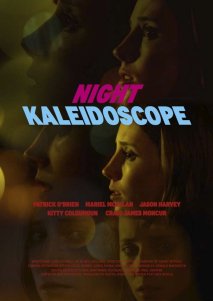
Night KaleidoscopeSome movies are created with an emphasis of style over substance, a deliberate attempt by the filmmaker to craft a compelling and surreal world that does not adhere to a standard narrative format. Suspiria, Lost Highway and Beyond the Black Rainbow are just a few examples of when this artistic gamble really pays off and pulls viewers into a compelling, living nightmare that brings you along for the ride, even if it’s not always clear where that ride is taking you. Conversely, when not done properly a lack of narrative only succeeds in creating frustration and quickly bores the viewer with a series of meaningless images. So, where does a film with a hallucinatory, dream-like style like Night Kaleidoscope fall on the spectrum? Well, let’s discuss.

The plot (such as it is) centers around Fion (Patrick O’Brien) who uses his hereditary psychic abilities (along with the unknown mystical drug he smokes) to help solve crimes. His current case involves a vampire couple that are responsible for a series of murders in the city slums. He is soon joined by Isobel (Mariel McAllan) a mysterious young woman who seems to have a personal stake in wanting to defeat the vampire couple.

First of all, I want to acknowledge the style of this film and the fact that director Grant McPhee effectively uses a variety of techniques to create an authentically surreal, dream-like experience. Quick edits, single-color saturation scenes, deliberate out-of-focus shots and a purposely shaky handheld camera all work together to deliver a fluid sense of movement that is disorienting and nightmarish in the best possible way. The pulsating and ominous 80’s style synth score that’s underlaid throughout adds to the hallucinatory effect of the film and perfectly compliments the striking visual style.

However, one key aspect that separates this film from other surreal classics like those I previously mentioned is the fact that it doesn’t commit fully to the surreal tone it establishes. Swirling, disorienting montages are broken up by scenes with more standard structure and pacing. That’s not necessarily a bad strategy in general as you don’t want to burn out your viewer with images that risk becoming repetitive and meaningless, plus it can be a good time to communicate key plot information. But, in the case of Night Kaleidoscope, this is where it comes up short because unlike films where the whole plot is up to interpretation, this one has a pretty straightforward narrative, it’s just got some holes in it.

For instance, the fact that there is clearly meant to be a greater significance to the character of Isobel but it is never properly established in the plot. This leaves unanswered questions about her connection to the vampires that feel more like an oversight than a deliberate omission. Similarly, plot threads involving Fion’s employer who suddenly wants him off the case and his “psychic drug” supplier’s motivations are not properly fleshed out. This adds to an overall feeling of characters and plot points being introduced without the filmmakers having a clear understanding of how these elements work in the context of the story as a whole.

In general, the world the film creates is certainly strange. It’s a world where there don’t appear to be any mythic creatures other than the vampire couple but their existence is instantly and unquestioningly accepted. It’s a world where psychic detectives are commissioned by mysterious clients when a murder needs to be solved and actual police never appear regardless of the amount of bodies that pile up. In most cases, people in this world also seem very complacent when faced with the threat of death from the vampires but that fact does also lead to an interesting interpretation of this film as an allegory for drug use. Although, it remains unclear if that was the filmmakers’ intention as other aspects of the plot don’t necessarily support it.

Narrative issues aside, I really can’t overstate just how accomplished this film looks visually and the fact that it was made for the astoundingly low price tag of under $5,000 makes it all the more impressive. It also shows a tremendous amount of raw talent for visual flair on the part of McPhee who is a director that one would do well to keep an eye on. In the end this makes for an experience well worth having if you can let nagging concerns about plot melt away and embrace the mesmerizing surreal imagery. Indeed, this is the kind of film that is best when consumed late at night and slightly under the influence.

3-stars-red


Flytrap (2015)

FlytrapPsychological horror is often the best route to take for micro-budget films as it places more emphasis on creating an atmosphere of dread rather than elaborate set pieces. That being said, it can still be difficult to execute properly because without the gory spectacle to entertain viewers there is a greater importance placed upon the performances and the quality of the script to keep the audience engaged. The smaller the cast and fewer the locations the more important the acting and story become. So, does Flytrap, a film with one primary location and a very small cast have what it takes to provide an hour and a half of quality entertainment? Well, let’s discuss.
The story follows James Pond (Jeremy Crutchley) an English Astronomer who drives cross-country from New York City to California to take a teaching job at UCLA. He has nearly arrived when his car breaks down in the suburbs and with no cell signal to be found he is forced to knock on the nearest door and ask to use the phone. He is graciously welcomed in by the home’s beautiful but strange occupant Mary Ann (Ina-Alice Kopp) but soon finds leaving much more difficult as he becomes ensnared in a sinister plot that could effect the human race itself.

The first thing I want to say is that I think the concept itself is solid and there’s no reason that a great film couldn’t be made using it….but this is not that film. It starts off promisingly enough with an intriguing voice-over and great cinematography but after about five minutes the dialogue begins and the film takes a hard nosedive and never stops plummeting. I’d like to believe that given a better script and direction the actors here could be capable of decent performances but the writing is just so irredeemably poor that it’s honestly hard to tell. What we are left with is awkward, stilted performances that don’t portray anything resembling authentic characters and quickly become a chore to watch.

I do want to point out that I know that the performances are supposed to be somewhat off because Mary Ann and her comrades are in fact aliens disguised as humans. However, even for that, they severely missed the mark and Crutchley’s awkward performance makes him unintentionally come off as the most alien of all. What is clearly intended to come off as charmingly befuddled comes across as cringingly awkward and socially dense. Oh, and don’t worry, the extraterrestrial revelation isn’t a twist that I spoiled, it’s something that’s clumsily introduced very early in the film when Mary Ann blurts out that they’re from….(sigh) Venus. Okay, here’s a free tip for writer/director Stephen David Brooks; if you’re going to pick a home planet for aliens don’t pick one that we already fucking know can’t support life!

However, this may have been one of the film’s many failed attempts to inject comedy into the production, an ill-conceived move that proved to be the biggest detriment to it’s success by far. The attempts at humor are relentless and fall completely flat every time making for an unbearably irritating experience. Most baffling of all is the fact that so many of the “jokes” involve references to Gilligan’s Island (!). Apparently, Brooks thinks this target audience will be primarily made up of fans of bad sitcoms from half a century ago.

I also take issue with this film in any way even associating itself with the term “horror”. This is at best a weird comedy/drama with elements of a thriller that provides absolutely no tension or dread and primarily focuses on a Stockholm Syndrome induced romance between characters you will hate. And truly, this is a real shame because all this terrible, awkward dialogue is delivered in scenes that are surprisingly well lit and competently framed. This adds to the feeling that this was an enormous missed opportunity that could have had a very different outcome if Brooks had ditched the “comedy” and workshopped the script more before shooting.

I think it’s fitting that this film is posted after Romeo’s Distress on my site because they represent opposite ends of the spectrum for how a micro-budget film can turn out. I wasn’t given information on the budget of this one but it couldn’t possibly have been lower than the $2,500 spent on Romeo and that film managed to be fascinating, engrossing and highly watchable. In other words, the complete opposite of this, which can best be described as a really shitty version of Misery…..with aliens.

half-star-red

Mexico Barbaro (2014)

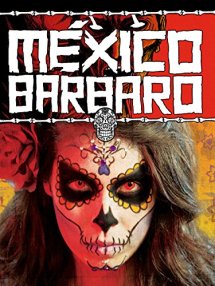
mexico-barbaroAnthology films can be a great way to showcase the talents of under-represented filmmakers and provide an avenue for short films to actually be commercially distributed. Typically, they will feature a common theme or wraparound story and in this case, Mexico Barbaro uses Mexican folklore as a unifying factor for the segments. As with any anthology some entries will outshine others, but what’s most important is the overall quality of the collection itself.

There are a total of eight entries, half incorporating supernatural elements into the stories and half focusing on themes of real-world horror. The first segment, Tzompantli, is an example of the latter and tells the story of a journalist who takes a dangerous meeting with a member of the Narcos to get information about the disappearance of a group of youths. This entry has particular real-world resonance as 43 Mexican college students did in fact go missing the same year this film was released. As far as the entry itself, it is not only well done and effectively bloody, but also draws interesting parallels between modern day cartel activity and ancient Aztec sacrifices. My chief complaint would actually be that it ends too abruptly and feels more like the beginning of a feature-length film than a stand-alone short.

On the supernatural side, the segment Jaral de Berrios delivers the most effective paranormal chills with a story of two old west bandits who hide out in a cursed building. This is the one entry that is most likely to instill you with a genuine sense of fear and is helped tremendously by excellent sound design and some very creepy atmosphere. Drain, on the other hand, does provide a decent amount of dread but falls a little short on delivering legitimate fear with it’s story about a teenage girl who’s blackmailed by a demon into doing an unsavory task.

Dolls was the only segment I felt an actual sense of disappointment with. It lacked creativity and originality compared with the other entries and brought up weird questions in the process. For instance, “Why cook a severed arm with a rubber doll? Are you eating the doll too? What the fuck is happening here!?” That being said, the fact that the filmmakers incorporated an incredibly creepy real-world location from Mexico, Island of the Dolls, for the short was very cool to see. On the flip side, the segment That Precious Thing delivers a very well-structured story about a teenage girl who goes to a cabin in the woods with her boyfriend to lose her virginity. It also incorporates some great 80’s style goo effects with some surprisingly dark subject matter.

What’s not surprising was the fact that the stand-out entry was from none other than Lex Ortega, who would unleash his gloriously brutal feature-length debut Atroz the following year. His segment about a little girl who’s scared of a local homeless man titled What’s Important is Inside is not only brilliantly conceived but also definitively plunges the entire collection deep into Extreme Cinema territory. But in addition to brutal gore effects and a storyline that couldn’t possibly be more disturbing, the segment also features some excellent social commentary, the real-world implications of which are far more horrifying than the short itself.

As far interesting concepts go, the segment Seven Times Seven delivers in a big way with it’s story about a man who goes to extreme supernatural lengths to seek his revenge. A truly fascinating entry with a well-crafted story that works perfectly as a stand-alone short. The final segment, Day of the Dead, may not be heavy on subtext but nonetheless closes out the film with a pitch-perfect blood-bath that is immensely cathartic and satisfying.

Despite the fact that Mexico Barbaro delivers a well-crafted anthology that utilizes many different styles of horror, it has been frequently maligned by many viewers and maintains a pretty mediocre overall rating online. I could spend time speculating on theories of inherent cultural bias and the impatience that Western audiences have for subtitles but I think there is a more fundamental reason for the lack of enthusiasm. This is, at times, an incredibly disturbing film and far more extreme than what you generally find browsing through Netflix. This can be a problem for casual genre fans that are unable to handle it when horror movies are truly horrifying. But if you have the cajones, do yourself a favor and strap the fuck in for this twisted pleasure from south of the border.

3-5-stars-red

Romeo’s Distress (2016)

romeoRomeo’s Distress is a film that isn’t easy to classify as it does not fit neatly into a single genre. It’s not horror but more of a drama that’s heavily laden with dread and intrigue but also does get into more horrifying territory as it approaches the climax. As with any micro-budget film it’s success is going to be dependent on the level of innovation and creativity it brings to the table rather than high production values. So, is this film that was made for the shockingly low price tag of approximately $2,500 and shot well outside the studio system in New York state create an experience worthy of devoting eighty minutes of your time to? Well, let’s discuss.

The story follows James, (Anthony Malchar) an eccentric young man that spends his time taking pictures in graveyards, playing his ukulele and trying to dodge ass beatings from an angry jock named Bobby (Adam Stordy). When he isn’t going to court-mandated therapy or taking care of his senile grandmother, he gratefully escapes into his idyllic dreams of Jane (Kimberely Peterson) the girl he professes to love. Is he just a nice, misunderstood outsider….or is there something more sinister going on?

That’s about as much as I want to reveal of the plot because this is truly a film that is best viewed through fresh eyes. From very early on, writer/director Jeff Frumess establishes a sense of underlying menace and the feeling that there is much more to these characters than initially meets the eye. Indeed, the real fun here comes from seeing where the story will go as more and more information about who these people really are and the true nature of their relationships is slowly revealed.

Romeo also succeeds where many indie films fail by virtue of the fact that it doesn’t feel cheap. In fact, Frumess’ clever use of camera technique and color palette show an advanced sensibility and serve the story very well. The film is primarily shot in black and white with a few choice scenes, such as the dreams, bursting into vibrant color. Using black and white is certainly an artistic gamble but in this case it pays off beautifully and the film would not have worked nearly as well without it. The same can be said about the camerawork which utilizes close-ups and occasional high-contrast lighting to effectively give the film a tone that is subtly surreal.

Despite one or two weak links in the casting, the performances are generally very solid and well beyond what can normally be expected from a film of this budget. Malchar, for one, does an excellent job embodying a character that is quirky and eccentric while simultaneously being filled with sad desperation and rage. The real standout in this film however is Jeffrey Solomon who brings tremendous gravitas to the role of Jane’s father, Dale. He subtly and effectively communicates a genuine sense of menace and repressed emotional anguish that is simply mesmerizing to watch.

Now, despite the numerous positive aspects of this film, it does also have the unfortunate distinction of being one of those movies that continues past the point where it should have simply stopped. I of course won’t spoil it for you with the details but suffice to say the ending only works to the detriment of the overall story. It’s not a deal breaker by any means, but if the film had simply faded out two minutes sooner it would have immensely strengthened the overall production. But don’t let that deter you because, if you can find it, this is a cinematic journey worth taking and an experience that is well worth your time.

3-5-stars-red

New Feature: Extreme Cinema

I have created a new Extreme Cinema category under the main menu where you will now be able to find the reviews of the darkest, weirdest and most fucked up films that I’ve reviewed.  New films that fit this criteria will go directly to this category from now on rather than the regular Reviews category.  

My Bloody Valentine (1981) vs My Bloody Valentine 3D (2009)

my-bloody-valentine-final-version

What better way to celebrate Hallmark’s manufactured love holiday than with the heart-ripping fun of the My Bloody Valentine films! In the same way that films like Black Christmas, Halloween (and yes even Uncle Sam) fully embraced their respective holidays, the MBV films truly own February 14th and integrate it as a central part of the story. The original is undoubtedly a significant early slasher but does it still hold up after thirty-six years? Conversely, the remake has the advantage of treading down a well-worn path with a story already laid out, but is it a worthy update? Well, let’s discuss.

The original takes place twenty years after Harry Warden, the lone survivor of a mining accident, takes his bloody vengeance on those he deemed responsible for causing it. He also blames the Valentines Day dance the men were hurrying to get to and demands that it never be held again. However, after two decades the incident has been relegated to the status of an urban legend and the townspeople no longer heed the warning as they prepare to resurrect the dance once again. As you can imagine, bloody mayhem ensues.

The remake follows the plot of the original pretty faithfully in some ways but also makes some significant changes in others. In this version we see Harry wake from a year-long coma following the accident to go on a bloody rampage that culminates with an attack on a large group of teens partying in the opening of the mine. After he is shot and believed to be dead the film then jumps to ten years later and focuses primarily on the survivors of the attack as the killings begin once again.

The original was not only known for being a landmark film in what many consider the golden age of slashers but also an infamous casualty of the censorship from the morality police known as the MPAA. After being severely cut for content an “extended” version was released in 2009 to coincide with the remake but bafflingly only has three of the nine excised minutes restored. Still, what was put back in was good and we are treated to a much gorier version than the previous R release. Being that the remake was released almost thirty years later, it naturally has slicker visuals and more graphic violence. However, the filmmakers also opted to present the remake in 3D which may have been an interesting novelty if watched in theaters or on a 3D TV but on a standard screen simply draws more attention to some unrealistic CGI effects. Those shots aside though, the remake does deliver copious amounts of blood and a lot of nice, gory kills.

Now, blood and gore is all well and good but when it comes to determining the quality of a film it really comes down to the story, the characters and the acting. Both films features characters returning to the town after a long absence, TJ (Paul Kelman) in the original because he couldn’t hack it in the “real world” and Tom (Jensen Ackles) in the remake, a survivor of the attack that inherited the mine from his recently deceased father. In both cases, their return is the source of significant tension for the characters as they reconnect with their ex-girlfriend (named Sarah, in both versions) who is now in another relationship. However, it is also a source of a melodramatic low point for both films as the men take a lengthy scene to have a heart-to-heart with Sarah and not the kind that involves it being torn from someone’s chest and put in a candy box like it does in so many other scenes. Overall though, the acting in both films falls into the realm of serviceable for the story but nothing particularly spectacular.

One difference between the versions is that the original features a few more scenes of grating comic relief which, thankfully, were absent from the remake. More significantly, the fact that while the original does present a solid, straightforward slasher, the remake is actually able to keep the plot more tense and engaging. This goes beyond gore and production value and really comes down to twists, red herrings and questions about who is really behind the killing that keep you wondering until the climax.

Being a Hollywood remake coming out decades after the original (and presented in 3D no less) everything about this screamed “cheap cash-in” to me at first. But in this case, director Patrick Lussier actually took the time to make sure the remake was done effectively, and it shows. So, if you are going by historical significance (as well as the nostalgia factor) then of course the original would take it, but in reality, that is always the case when comparing remakes and originals. Remakes tend to have the advantage visually with modern techniques and sleeker production values but usually fuck up the story and end up being worse overall. That didn’t happen in this case and if it comes down to a question of which delivers a better experience when you put it on today, I would have to go with the remake, and yes I’m as surprised as you.

my-bloody-valentine-2009

Atroz (2015)

atrozAtroz, the Spanish word for atrocious and certainly an indication to the viewer that this experience is going to be anything but lighthearted. True to its title, the debut feature from Mexican director Lex Ortega is a harrowing journey indeed. Its style channels August Underground and its violent depravity reaches Human Centipede 2 levels of intensity. Much like A Serbian Film though, this movie plays out as more of a gruesome drama than a horror film but is so horrifying that it more comfortably fits into the Horror category than anywhere else. So, clearly its qualifications as an extreme film are indisputable but still, the most important question remains: “is it any good?”

After two men are arrested at the scene of a car accident that claims the life of a pedestrian, the police find a video camera in the car that contains a horrific video of them torturing a transgender prostitute to death. The film then alternates between the brutal interrogation of the primary suspect Goyo (Lex Ortega) and the graphic crimes on tapes that the police find during the investigation.

What instantly stands out about this film, aside from the extremely disturbing content, is the acting. The amount of commitment and realism that the actors bring to this project would be impressive for any film but the fact that this was a micro-budget production made for the $7,000 that Ortega and the producers crowd-funded really takes it to the next level. Even down to the smallest part, the actors really deliver in this film but Ortega himself truly stands out with his portrayal of the hulking, depraved monster that is Goyo.

Another key part of this film is the gore effects, which are very well done, especially considering the budget. Now, any would-be filmmaker can put gore into a movie but what makes the film so effectively disturbing is the fact that Ortega knows how to work within the limitations of his budget. Instead of attempting to create elaborate scenes and special effects that become laughable when done on the cheap, he wisely sticks to gritty, realistic violence and very upsetting concepts. Graphic genital mutilation, rape, incest, shit eating, bloodplay and various kinds of torture are all presented in unflinching detail.

While I enjoy seeing so much horrific imagery in a film, in this case it does work to its detriment a bit as well. Since the film is a little light on narrative, the extended scenes of violence do have a bit of a numbing effect without a more substantial storyline to support them. Still, the aforementioned acting quality and gore effects do a lot to elevate the overall film beyond the status of a run-of-the-mill Torture Porn making this a relatively minor issue.

A larger issue is the fact that the film falls into the standard found footage trap where characters are recording even at times where it makes no sense to do so. It is logical to think that the killers would be recording their crimes for their own sick pleasure. However, the fact that some of the transitional scenes, as well as large parts of what occurred in Goyo’s old home movie, were recorded is a bit of a stretch. I can certainly understand why Ortega included them as they were essential to the story itself but a bit more justification, like the camera already being on for a different reason, would have helped rationalize the fact that they were being recorded in the first place.

Truly, the only time Ortega completely breaks with the reality he’s created is during a playback of one of the tapes that suddenly cuts to an interior shot of the person’s ass who is being raped with the barbwire dildo (that’s right, you heard me). Certainly a cool effect but doesn’t make sense within the found footage context.

Minor structural criticism aside, this is an incredible film. Not only does it go to levels of darkness rarely achieved in cinema but it also provides powerful social commentary. The film opens with a statistic that 98% of 27,500 murders in Mexico are unsolved which sheds a light on the reality of the real world conditions the filmmakers must contend with. In the behind-the-scenes featurette producer Abigail Bonilla talks about the climate of fear and hopelessness felt by so many residents of Mexico City and how the film represents the violence and horror they see all around them. To properly understand and appreciate this film it is necessary to remove yourself from the initial gut reactions to the horrific images and realize that this is an artistic expression of the rage and fear that so many people feel from living in a dangerous environment. The movie also accurately reflects the fact that monstrous humans aren’t created in a vacuum but in most cases are the result of abuse and a lack of understanding.

A must-see for fans of extreme cinema and those looking for a film that delivers a legitimately hardcore horror experience. Atroz claims to be the most graphic and goriest film ever made in Mexico and ya know what, I would absolutely believe it. But let’s hope that it doesn’t stop there and perhaps this will encourage other daring filmmakers to push the boundaries and create art that resonates on such an intense, visceral level.

4-stars-red

Dark Forest (2015)

dark-forest“Are you ready for this? I’ve got a concept that’s going to blow your fucking minds! A bunch of attractive college kids go camping in the woods and then….get this….are killed by a deranged murderer! What’s that? It’s been done!? Impossible! What……how many times? Too many to count!? Well…..fuck it, let’s roll anyway!”

That’s how I like to imagine the conversation went down at Zell-Koj Studio when they decided to roll out the most well-worn concept in horror filmmaking as their debut feature. Okay, so obviously that’s not how it was but any time I hear that plot line being dusted off again it fills me with the same skepticism as when I hear someone is making another zombie film. But to be fair, there is a lot room within those basic structures to incorporate some very interesting and unique ideas. Films like Wyrmwood and You’re Next are a testament to that. So, does Dark Forest flex it’s creative muscles to bring us a fresh and interesting take on a tired subgenre or does it sink into a sea of mediocrity along with countless other forgotten slashers? Well, let’s discuss.

The story follows Emily (Laurel McArthur) who goes on a camping trip with her three friends to relax, reconnect and to temporarily escape from her abusive boyfriend Peter (Dennis Scullard). When Peter learns that she has gone away without him for an entire weekend he flies into a murderous rage and quickly heads off to the woods to exact his horrible revenge on Emily and her friends.

According to Zell-Koj Studio’s own press release, this was made as an 80’s inspired slasher but I take issue with low-budget horror films that simply try to co-opt that identity in order to justify campy acting and low production values. Even though the film employs the same plot devices that have been in use since Friday the 13th, the rap/techno soundtrack, prevalence of smartphones and a music video style bikini montage give it a distinctly modern feel. Stranger Things this is not.

For the most part though, the acting is serviceable for what it is and Scullard’s portrayal of the psychotic Peter does stand out as a highlight even though he isn’t given much to work with from a character standpoint. I am certainly willing to overlook a lot when it comes to the practical shortcomings of a micro-budget film but what is particularly aggravating in this case is that the film doesn’t even aspire to be anything more than a generic Hollywood slasher with a fraction of the budget. Nothing about the film even hints at attempting to be original and even a best case scenario version of this would have been nothing more than soulless entertainment.

Speaking of entertainment value, most of the kills are solid and appropriately bloody, even if the blood itself looks distractingly fake in some scenes. Unfortunately, they are presented without any suspense or tension as Peter seems to teleport around as required to kill off the expendable characters. Now, to it’s credit, the film is competently shot but then again so is Hollywood garbage like Transformers and Big Momma’s House. Competently shot should not be the single bar that a film aspires to clear.

My hope is that Zell-Koj will branch out into more innovative directions with future projects that at least attempt to break some kind of new ground. At a time when we have a virtually endless supply of genre films to watch, filmmakers need to bring something new to the table instead of just showing up with a pale version of something we are already tired of seeing.

1-5-stars-red

964 Pinocchio (1991)

964-pinocchioWatch out, people, there’s a lobotomized sex-cyborg on the loose! Yes, the insane premise of 964 Pinocchio (a.k.a Screams of Blasphemy) does certainly hold a lot of potential for a Tetsuo-style journey into another gloriously bizarre living nightmare. But the real question becomes “can it actually deliver on the same level as that mind-fuck masterpiece?” Well, let’s discuss.

Obviously, when a cyborg sex-slave that suffered a memory-wiping lobotomy (otherwise known as a Pinocchio) isn’t able to perform to the client’s satisfaction it runs the risk of incurring their wrath. Such is the fate of #964, (Haji Suzuki) a Pinocchio who is tossed out onto the street by a female client when he fails to maintain an erection during a threesome. However, it’s not long before he is taken under the wing of a homeless amnesiac named Himiko (Onn-chan) after literally falling into her lap. When 964’s owner/pimp learns he is missing he quickly sends his men looking for him, terrified that his underground cyborg sex ring will be discovered. Can 964 regain his memory and uncover the real truth about who (or what) he really is before he is found?

While this all may sound delightfully nuts, my chief complaint about 964 Pinocchio would actually have to be that it’s not weird enough. In fact the first thirty minutes play out a bit more like an offbeat love story than a Japanese splatter film. To be fair, after that the film does take a sharp descent into creative madness with bizarre imagery that ranges from the stomach-churning to the sublimely bizarre, all of which really has to be seen to be believed.

Even so, the strange and interesting scenes the film creates are frequently undermined by slow pacing and repetition causing them to become more of a source of fatigue than fascination. This is a shame because the final third incorporates much more of the fast-paced, gleeful insanity that was in short supply in the previous sections. While it does build to a satisfyingly deranged climax, there is still an overwhelming feeling of “too little too late”. Even at ninety-seven minutes it feels long and would have been more successful as a tightly-paced short rather than a feature.

Ultimately, this film tried to have it both ways, attempting to provide an experience that was both a Splatter Cinema mind-trip and a character-driven story. It would have been better to commit fully to one direction or the other because the unexplained random madness occurs too frequently for a drama and too infrequently for a wild ride in the vein of Tetsuo. Certainly an interesting (and Alternative-as-fuck) film and one that should be seen by anyone interested in Japan’s most bizarre cinematic experiences. However, if you are expecting a trip on the level of the aforementioned metal-morphing classic, or even the more recent examples of unbridled insanity like Helldriver and Tokyo Gore Police, this is sure to come up wanting.

3-stars-red