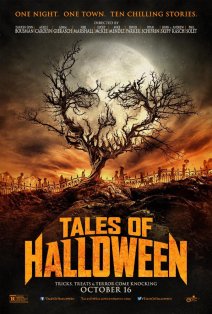
 As someone who loves horror anthology films, I’ve been glad to see that they have become far more commonplace recently. From films like The ABCs of Death and V/H/S (which have both spawned sequels) to stand-alone titles like The Theatre Bizarre, Trick ‘r Treat and others, the past decade has seen a resurgence in such anthologies. But they aren’t just more plentiful, they are in fact better than ever and the short film format allows filmmakers the freedom to take even more creative risks than they would in a feature and can make for some very interesting watching. So, in keeping with this month’s Halloween-themed reviews I figured what better time than now to break out Tales of Halloween and see how it stacks up against the other anthologies.
Any time you have a collection of shorts there is bound to be a variation in quality but the important question is “does the overall experience work?” In the case of Tales of Halloween, there are ten short films all from different directors and there are certainly highs and lows to be found throughout. Some segments like ‘Ding Dong’, which is a contemporary spin of sorts on the Hansel and Gretel mythology, simply fall flat and come off as far too cartoony to be scary or engaging. On the other hand, the segment ‘Trick’ in which a group of adult friends are terrorized by a gang of violent trick ‘r treaters is not only delightfully gruesome but also features the most genuinely shocking twist in the anthology and is without a doubt the darkest entry. Also on a positive note, the segment ‘Friday the 31st‘ really goes for the throat with a gruesome, balls-out entry that features aliens, a deformed killer and a whole lotta wonderful carnage.
Some entries start off one way and finish on an entirely different note. ‘The Night Billy Raised Hell’ about a kid in a devil costume meeting the devil himself feels a bit too silly throughout but then is saved by a solid twist at the end. Conversely the entry ‘Grim Grinning Ghost’ about a young woman stalked by a malevolent ghost as she walks at night does an amazing job building tension and dread throughout but is undercut by a weak final reveal. The rest of the segments fall somewhere in the middle but overall are fun, entertaining and bloody enough to keep you watching.
Now, if you are having trouble figuring out the title of the particular short you are watching or even differentiating one from the next, don’t be surprised because aside from the opening title sequence there is absolutely no information given about the name of the segment that’s playing. At first this seemed a bit odd for an anthology but then it became clear that they were doing the film in the same style as Trick ‘r Treat where the separate stories all flow together into one cohesive narrative. However, this film was less successful in that regard and it still feels like isolated stories that occasionally feature cameos from other segments but don’t really flow together as one solid piece. If they had kept them more clearly separated like The ABCs of Death it would have been more successful.
In the end, there are certainly differences between the stories but they all to play at about the same tone. Unlike The Theatre Bizarre which would sometimes delve into territory that was hopelessly dark and dismal (my favorite parts of course) Tales of Halloween stays relatively light-hearted and doesn’t really push the envelope far enough to be genuinely horrifying. That being said, the reoccurring theme of children being abducted that plays throughout many of the stories is itself a very horrifying concept, even if it is mostly played for laughs in this film. Bottom line, this is an entertaining collection that may have some flaws but is certainly a worthwhile way to pass the time as you crack open a few seasonal beers.



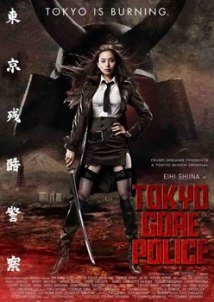 What’s great about a title like Tokyo Gore Police is that it is very clear about the kind of movie you are going to experience. Still, there is no way to truly wrap your mind around this film without watching it for yourself and even then, the uninitiated will be left baffled at what they have witnessed. To those I say “Welcome to Japanese Splatter Cinema, motherfuckers!”
 It should be noted however that this is a very different experience from the mean-spirited gore of Torture Porn films like Grotesque. I’m not saying one style is better than the other, this is simply a different approach to extreme cinema that portrays the violence in an over-the-top, cartoonish fashion, typical of Japanese Splatter films. This actually allows the film to maintain a more lighthearted feeling while simultaneously bombarding you with insane levels of violence in a world where anything can happen. Blood geysers from severed limbs can propel people like rockets, disembodied hands that strangle are shot like bullets, alligator heads grow from severed torsos and so much more!


 Today I drink up Happy Hour, the twisted debut short from director Gavin Thompson. Does this dialogue-free, black and white film have what it takes to deliver a compelling story in under twelve minutes? Well, let’s discuss.
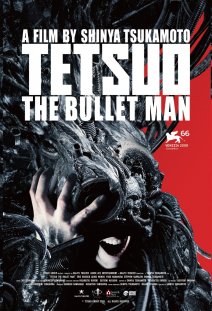 After a seventeen year hiatus from the series, cult director Shin’ya Tsukamoto returns for a third installment of metal-morphing insanity with Tetsuo: The Bullet Man. Given that it was made nearly two decades after Tetsuo 2: Body Hammer, Tsukamoto certainly had enough time to plan a brilliant return to the series that would not only honor the originals but also reinvigorate the concept for a new generation. With significantly more experience as a director, as well as the enormous advances that have been made in filmmaking technology, it should be a foregone conclusion that Tsukamoto knocked it out of the park with this one, right? Well, let’s discuss.
 If you are seeking out the most notorious, disturbing and controversial films of all time, Salo, or the 120 Days of Sodom is a title that’s sure to come up over and over again. The film is legendary for its levels of depravity and for being a kind of an endurance test that weeds out all but the most hardened viewers. It’s something that has been on my radar for years and I decided it was finally time to see what all the fuss was about. I wanted to judge for myself if this this forty-one year old film could in fact still live up to it’s reputation and hold a candle to modern-day examples of extreme horror like A Serbian Film, Human Centipede 2, Martyrs, etc.
 In this review, the underground film production company Ungovernable Films takes it to the streets with their Punk exploitation film The Ungovernable Force. Being that this is the same company that created films with titles like Honky Holocaust and Gay Jesus you have a pretty good idea what kind of film experience you are in for if you are at all familiar with their other work. So the question is “Does this Troma-style film capture the gleeful, grotesque magic of movies like Father’s Day or is it simply an hour and a half of boobs, cheap but explicit violence and porn-level dialogue?” Well, I guess there’s only one way for you punks to find out!
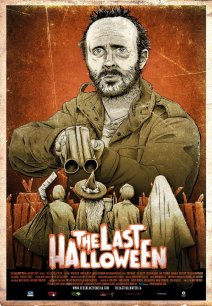 It is still a bit early yet to think about but, believe it or not, Halloween is right around the corner. In the spirit of that horror-themed holiday which is so near and dear to our black hearts, I decided to review the 2013 short The Last Halloween.