Silent Night, Deadly Night (1984)

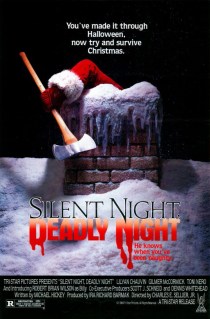
silent-night-deadly-nightWhen it comes to generating controversy, you’re unlikely to see a Christmas-themed horror film that ever stirs up as much as Silent Night, Deadly Night did upon it’s 1984 release. Despite the fact that a very similar film, Christmas Evil, had come out just four years earlier with little fanfare, groups of self-imposed arbitrators of morality fought hard to get this Santa-themed slasher pulled from theaters as quickly as possible. Even though they were successful at this and the film was removed shortly after it’s release, that didn’t stop it from crushing the box office while it was there. Despite the controversy, or more likely because of it, the film saw profits that more than tripled the original budget, even outmatching the seminal slasher A Nightmare on Elm St which was released the same week. Ya know, the film where a disfigured man’s restless spirit murders teen in their sleep with his razor-fingers. Apparently that was far less shocking to some than a killer with a fake beard and a red suit.

The plot follows the sad, tragic life of Billy Chapman who is put into an orphanage after witnessing his parents’ murder on Christmas Eve by a criminal in a Santa suit when he was five. As he grows up with the memory of that horrifying event repressed deep inside him, his trauma is further exacerbated by the abuse he suffers in the orphanage at the hands of the stern Mother Superior. Although he is able to hold on to his sanity through his late teens, a series of events finally trigger his psychotic break causing him to go on a murderous rampage dressed as Saint Nick.

Even though the plot may sound a bit silly out of context, the film plays it surprisingly straight. One of the things I was most impressed with is how well it sets up and justifies events in the story. In situations where lesser movies would simply throw an event in to move the story along SNDN really goes the extra mile to make sure that actions are logically grounded and explained. For instance, the original Santa killer doesn’t just appear out of nowhere, he is established in a previous scene as are the series of events that lead to Billy’s mental snap.

The film also takes a very interesting and unusual perspective in the way it is presented, which undoubtedly added to the controversy. Rather than having the killer be the mysterious antagonist hiding in the shadows to strike at unsuspecting teens, he is front and center as the protagonist which is a perspective that makes audiences far more uncomfortable. In addition, he is also a very sympathetic victim of horrible circumstances and the scenes of his tragic childhood are truly sad and upsetting. However, rather than dwelling on long scenes of exposition SNDN provides just enough information to build the story to it’s inevitable outcome and doesn’t get bogged down in filler that slows the momentum.

The film also gives you a great sense of the characters who all feel like real, fleshed-out people rather than two-dimensional stereotypes, regardless of the size of their roles. This adds more dramatic weight to the kills when they occur and keeps the story far more interesting. Also, the kills themselves are brutal and pulled off incredibly well, especially the classic antler-impalement scene that is not only iconic, but chillingly beautiful in it’s execution.

All in all, an excellent addition to any horror fan’s Christmas list and well deserving of annual viewing to really get you in the mood for the season of mall Santas and commercial excess.

4-stars-red

Helldriver (2010)

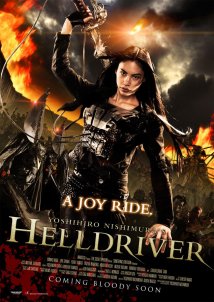
helldriverHelldriver is less a “movie”, more an unbridled ride through the cinematic insanity that is Japanese Splatter Cinema. Much like Tokyo Gore Police, this is another film that you are going to need to strap the fuck in for because this visual roller coaster is an example of unhinged, creative brutality at it’s finest.

The plot is as crazy as the visuals but I’ll do my best to distill it. When a freak meteor falls from the sky it releases a mysterious black ash that turns millions of Japanese residents into zombies. Now it is up to badass zombie slayer Kika (Yumiko Hara) to save Japan from the epidemic by going after the zombie queen herself….her mother Rikka (Japanese Splatter legend Eihi Shiina)

So, there it is in very broad strokes but that doesn’t even begin to describe the utter madness of this film. Right from the opening scene that sees a physics-defying truck spinning through the air like a toy and Kika pole-dancing on a zombie’s elongated neck (that’s right, you heard me) it is clear this is a film that is not taking itself too seriously. But that’s okay in this case and this kind of glorious madness is exactly what we’ve come to expect (and crave) from the Japanese Splatter subgenre.

The film is clearly on a mission to start out crazy and just get crazier…..and mission fucking accomplished! Zombie babies are swung on umbilical cords like weapons, severed heads fly through the air to devour people, a working car is made entirely out of severed body parts and much, much more! It all culminates in a battle in space so insane that it practically defies description.

The film is also violent, really, really violent. Torture, cannibalism and endless geysers of blood all play out onscreen in incredibly graphic detail despite the film’s shockingly low budget. Naturally, many of the effects have the sort of low budget aesthetic you’d expect in Japanese Splatter but the sheer creativity on display here more that makes up for it and just add to the campy fun.

And campy fun is really the key here because that is certainly the intention of director/co-writer Yoshihiro Nishimura. There is definitely a very different tone here than the grim torture-porn films like Grotesque and despite all the bloodshed, it never loses it’s sense of careless fun amid the carnage. For some, it would be easy to dismiss such a film as meaningless visual stimulation but the fact is that it knows exactly what it wants to be sticks with it a hundred percent. The characters are actually very well defined and solid and even with a two hour running time the film never feels drawn out or boring.

So if you think you can handle taking a trip through a world of gruesome, next-level insanity then grab a few beers and hitch a ride with Helldriver, you won’t be sorry you did!

4-stars-red

Cannibal Holocaust (1980)

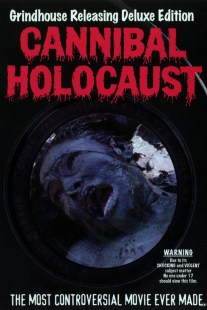
cannibal-holocaustTruly, no discussion of the most notorious, disturbing films of all time could possibly be complete without the inclusion of Cannibal Holocaust. Even thirty-six years later, the film remains banned in a number of countries and was so controversial upon it’s initial release that director Ruggero Deodato was arrested shortly after the 1980 premier in Milan. However, the charges were eventually dropped once he was able to prove that this was not an actual snuff film and all the actors involved were in fact still alive. So, does the film that many have dubbed the most controversial of the 20th Century live up to it’s reputation and still manage to be shocking decades later? Well, let’s discuss.

In addition to being notorious for it’s graphic content, Cannibal Holocaust is also credited as being an early pioneer in utilizing the “found footage” technique that has become such a prevalent part of modern horror, which is itself a very worthy contribution to the genre as a whole. The story centers around anthropology professor Harold Monroe (Robert Kerman) who goes deep into the Amazonian jungle in search of a missing documentary crew that was making a film about mysterious cannibal tribes in the rain forest. But instead of the documentarians, he is only able to recover their footage which he brings back to an American TV station that wants to broadcast it. Monroe however has serious reservations once he discovers the truth about what is actually contained on those reels.

As the other reviews on this site will indicate, I am certainly no stranger to disturbing cinema and in fact have made it my mission to track down and review all of the most twisted, fucked up films ever made. I couldn’t possibly be a more ardent defender of free speech and have thoroughly praised controversial movies like A Serbian Film, The Human Centipede and others for their bold, inflammatory filmmaking. However, there is a very important difference between Cannibal Holocaust and most other controversial films which is also at the center of the ongoing controversy surrounding it…the real, unsimulated killing of animals on film.

Now, one thing I do want to clarify is that this film was made in 1980 and in the decades preceding that the practice of really killing animals onscreen was surprisingly commonplace and did not carry with it the incredible stigma that it does today. Even mainstream movies like Thunderball, Patton, Apocalypse Now, Cool Hand Luke and many others featured scenes of animals actually killed onscreen in service of the storyline. Despite this, the abundance of animal deaths, as well as the incredibly graphic ways that they are killed, make Cannibal Holocaust stand out as exceptionally brutal and cruel. So much so that years later Deodato himself even expressed regret for his actions.

More than anything else I have reviewed, this film really provides an opportunity to discuss the question “Is there a such a thing as going too far when creating art?” For me, the answer really comes down to one simple word…..consent. Consent is everything when deciding what can and cannot be shown. Consent is the difference between sex and rape and the difference between a boxing match and an assault.

I am a very firm believer in the idea that anything people want to express in art can and must be allowed to be expressed but with the important stipulation that if it is violent or sexual, it occurs between consenting adults. If all parties do not (or cannot) consent to what is happening, than what is happening is not okay. This is why filming actual instances of rape, murder, child sexual abuse and animal cruelty is rightfully illegal but fictional depictions are not only acceptable but an important part of coping with the real life horrors we face in the world every day.

People often cite A Serbian Film as the most disturbing film of all time primarily because of the depictions of children being sexually abused. While this idea is in fact disturbing, as it was intended to be, it is also still simply an idea, a fictional depiction. This also goes for other disturbing imagery such as the graphic rape scene in I Spit on Your Grave or the violence depicted in pretty much every horror movie ever made. As horror fans, we enjoy the depictions of violence because we are able to know in the backs of our minds that what we are seeing is simply an illusion and no real harm is being done. On the other hand, anyone who revels in the genuine suffering of others has truly lost their humanity.

Featuring actual cruelty also undercuts any kind of statement you are trying to make with the art itself. The underlying messages of the cruelty of a “civilized society” that feels entitled to abuse indigenous people and nature itself in this film is completely deflated by the fact that the film itself is responsible for such abuse. Beyond this, I also find real violence to be a cheap tactic to illicit a visceral response. Any asshole can shock you by killing an animal and filming it but when a film is able to horrify you to your core simply by creating a realistic illusion that is something to be admired.

To be fair though, there is a lot more in this film beyond the few scenes of animal cruelty and I wanted to see how effective it was as a whole. The special edition DVD actually offers a version where the animal deaths are removed so to compare it I watched both that and the uncut version. Without those scenes the film is still incredibly disturbing and more than most people could handle. Aside from numerous scenes of graphic rape there is also a lot of brutal carnage. The infamous scene of the impaled woman is a gorgeously realized effect as is the scene of the man’s cock being viciously cut off.

Despite my feelings for the unsimulated violence in this film, I do not advocate for it’s censorship and (like the apologetic warning before the film) view this as an historical document depicting a bygone era that hopefully won’t be repeated. This is the only time I would actually recommend watching a cut version of a film but if you do, you will see a movie that is surprisingly well acted, holds your interest and features a great film score. However, you are also sure to notice some shoddy ADR work, weak character development and a plot that is noticeably thin when not propped up with the shock-value of real death. Ultimately, without the use of the cheap shock effect of animal cruelty, the film would never have earned the level of controversy it did or it’s notorious place in film history. On the other hand, it would have still been a disturbing piece of art who’s message wouldn’t have been drowned out by it’s own hypocrisy.

2-5-stars-red


Trick ‘r Treat (2007)

trick-r-treatA lot of movies take place on particular holidays but a true ‘Holiday Movie’ really steeps itself in every aspect of the day it’s representing. In general I find that Christmas movies are the best example of this as they are so often packed to the gills with festive imagery and (gag) “heartwarming” sentiment. Well, for those of you looking for a film that honors a darker holiday with the same level of detail and enthusiasm you’d be hard pressed to find one that does it better than Trick ‘r Treat.
The movie consists of four interwoven stories that all occur in the same suburban town on Halloween night: A murderous school principal (Dylan Baker) struggles to hide his victim’s body; A young woman (Anna Paquin) tries to find the perfect guy for her “first time”; A group of kids explore the site of a child massacre and a grouchy old man (Brian Cox) contends with a very unusual trick ‘r treater.

There are certainly different ways to present an anthology film but if you are going to have interconnected stories this is the way to do it. The stories flow into each other seamlessly as opposed to feeling awkwardly forced together like in some anthologies. The characters also cross over into each others’ stories in significant ways rather than just with token appearances.

This fluidity can be largely attributed to the fact that Michael Dougherty wrote and directed the entire film instead of giving each segment to a different director. While I do like the collaborative nature of anthologies made by multiple artists, it can also backfire when the styles are too at odds with each other. In this case, Dougherty’s slick, cohesive production is proof positive that he was up to handling the task solo.

But cohesion aside, without a solid story, a film has no chance of holding your interest. Luckily, Trick ‘r Treat easily delivers in that aspect as well with a storyline that is fun, engaging and surprisingly dark. The film certainly doesn’t shy away from violence or disturbing subject matter and will keep you on your toes with an unpredictable plot where no one is guaranteed to make it out alive. In addition, the film delivers on some solid moments of black comedy (especially from the principal, that wacky child murderer) that add levity without bringing you out of the world of the film.

The entire production also feels incredibly professional with solid acting across the board and a sleek, polished look. In essence, a film that has the production value of a Hollywood movie with an unconventional indie storyline, which is the combination you’re always hoping for but rarely get. When you toss in the fact that the film is packed with wall to wall Halloween imagery, you get a movie that not only properly honors the occasion but deserves to be put on the annual viewing list with other holiday classics.

4-stars-red

Tales of Halloween (2015)

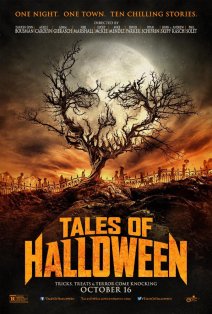
tales-of-halloweenAs someone who loves horror anthology films, I’ve been glad to see that they have become far more commonplace recently. From films like The ABCs of Death and V/H/S (which have both spawned sequels) to stand-alone titles like The Theatre Bizarre, Trick ‘r Treat and others, the past decade has seen a resurgence in such anthologies. But they aren’t just more plentiful, they are in fact better than ever and the short film format allows filmmakers the freedom to take even more creative risks than they would in a feature and can make for some very interesting watching. So, in keeping with this month’s Halloween-themed reviews I figured what better time than now to break out Tales of Halloween and see how it stacks up against the other anthologies.

Any time you have a collection of shorts there is bound to be a variation in quality but the important question is “does the overall experience work?” In the case of Tales of Halloween, there are ten short films all from different directors and there are certainly highs and lows to be found throughout. Some segments like ‘Ding Dong’, which is a contemporary spin of sorts on the Hansel and Gretel mythology, simply fall flat and come off as far too cartoony to be scary or engaging. On the other hand, the segment ‘Trick’ in which a group of adult friends are terrorized by a gang of violent trick ‘r treaters is not only delightfully gruesome but also features the most genuinely shocking twist in the anthology and is without a doubt the darkest entry. Also on a positive note, the segment ‘Friday the 31st‘ really goes for the throat with a gruesome, balls-out entry that features aliens, a deformed killer and a whole lotta wonderful carnage.

Some entries start off one way and finish on an entirely different note. ‘The Night Billy Raised Hell’ about a kid in a devil costume meeting the devil himself feels a bit too silly throughout but then is saved by a solid twist at the end. Conversely the entry ‘Grim Grinning Ghost’ about a young woman stalked by a malevolent ghost as she walks at night does an amazing job building tension and dread throughout but is undercut by a weak final reveal. The rest of the segments fall somewhere in the middle but overall are fun, entertaining and bloody enough to keep you watching.

Now, if you are having trouble figuring out the title of the particular short you are watching or even differentiating one from the next, don’t be surprised because aside from the opening title sequence there is absolutely no information given about the name of the segment that’s playing. At first this seemed a bit odd for an anthology but then it became clear that they were doing the film in the same style as Trick ‘r Treat where the separate stories all flow together into one cohesive narrative. However, this film was less successful in that regard and it still feels like isolated stories that occasionally feature cameos from other segments but don’t really flow together as one solid piece. If they had kept them more clearly separated like The ABCs of Death it would have been more successful.

In the end, there are certainly differences between the stories but they all to play at about the same tone. Unlike The Theatre Bizarre which would sometimes delve into territory that was hopelessly dark and dismal (my favorite parts of course) Tales of Halloween stays relatively light-hearted and doesn’t really push the envelope far enough to be genuinely horrifying. That being said, the reoccurring theme of children being abducted that plays throughout many of the stories is itself a very horrifying concept, even if it is mostly played for laughs in this film. Bottom line, this is an entertaining collection that may have some flaws but is certainly a worthwhile way to pass the time as you crack open a few seasonal beers.

3 Stars Red

Halloween 2 (1981) vs Halloween 2 (2009)

halloween-2

When Rob Zombie remade Halloween, his version was clearly outclassed by the original, but to be fair, he wasn’t that far off the mark and there were certainly things to be appreciated about his adaptation. This time he doubles down and tries his hand at reinterpreting Halloween II because, apparently, he just wasn’t ready to leave Haddonfield yet. So, does this version beat out the original sequel or is he once again outmatched by a classic? Well, let’s discuss.

The plot of the ’81 version is very straight forward and picks up exactly where the original left off, continuing the events of that fateful Halloween night. Michael Myers continues his bloody quest through Haddonfield to find and kill Laurie Strode (Jamie Lee Curtis) and eventually tracks her to the hospital she was taken to. As Dr. Loomis and the police search frantically all over town for him, Michael begins brutally dispatching staff in the sparsely populated hospital as Laurie tries desperately to evade him.

Over the years I had heard a lot of negative criticism of Zombie’s version of the sequel and when I finally sat down to watch it, I was surprised and frankly wondered what everyone’s fucking problem was. It seemed to be a pretty faithful adaptation that followed Michael on his bloody quest to finish off Laurie (Scout Taylor-Compton) in the hospital. The fact that it was true to the source material but featured top-notch, contemporary gore effects and a great visual style meant it was shaping up to be very stiff competition for the ’81 version. But of course Zombie just couldn’t leave well enough alone and about thirty minutes in…..everything changed.

Alright, spoiler warning here but just as the action in the hospital is really building in intensity, Zombie decides it’s time to pull out the most cliched device in filmmaking……it was all a dream. Yep, the film cuts to Laurie waking up two years later and it turns out she went to the hospital without incident and everything in the Halloween II remake we had watched so far was just her dream. What….the…FUCK! So, now we throw out everything we’ve seen so far to start an entirely different movie, one where Michael’s body is still unaccounted for, Laurie has PTSD but there is no immediate danger.

Currently, Laurie is living with her surviving friend Annie Bracket (Danielle Harris) and her father Sheriff Lee Bracket (Brad Dourif). The bulk of the remaining film that follows seems to be designed as an endurance test for the audience’s patience as we watch Laurie go to therapy, go to work, have emotional breakdowns….eat pizza, you get the idea. This is of course when we aren’t following around Dr. Loomis on his book promotion tour, a subplot so inconsequential to the storyline that it could have been cut out completely without anyone noticing. Zombie has also seen fit to transform his character from selfless vigilante to self-centered asshole who’s outlandish, rude behavior is supposed to supply some sort of comic relief.

Of course, Michael Myers does start to make an appearance here and there, popping up for some kills that are not at all relevant to the plot but at least provide some gory entertainment amidst the dull melodrama of Laurie’s story. “Where has he been the last two years” you ask? Apparently, just homeless, living in the wilderness and inexplicably killing time instead of people while he waits for his giant beard and Rob Zombie hair to grow out. He is also visited by visions of his mother (Sheri Moon Zombie) who eggs him on to kill although this seems like little more than a ham-fisted way for Rob Zombie to get his wife into more of the movie.

While the remake may be bloated with extraneous plot-lines and melodramatic characters, the ’81 version is the antithesis and presents a tightly paced, tense, engaging slasher that is arguably the best of the entire franchise. Considering how well that film still holds up today, there is really no reason to drastically alter the story and the only logical direction to take with a remake is to maintain the central plot and beef up the production value with slick visuals and modern gore effects. While the remake may have still felt unnecessary, it could have been more successful because gorgeous brutality is where Rob Zombie truly excels.

For all the issues with the story in his version I do have to give him credit for creating a film that is visually stunning, with amazing cinematography and vicious, realistic kills. Honestly, for the amount of sweeping changes he made, it’s confounding that he didn’t just make a completely different movie rather than another Halloween remake. Hopefully, in the future he will stick to creating his own beautifully deranged films and leave the classics alone.


winner-halloween-2-1981

Halloween (1978) vs Halloween (2007)

halloween

I remember back when I first heard that Rob Zombie was doing a remake of Halloween and my initial thought was “How the fuck could anyone remake that?! That movie’s perfect!” However, nostalgia has a way of clouding memory so I was curious to watch them back to back with an open mind and see if the original was in fact as perfect as I remembered it being.

Both films follow the same basic plot in which a young Michael Myers murders his older sister and is subsequently locked away in an insane asylum that he escapes from years later. He is relentlessly pursued by Dr. Loomis, his childhood psychologist, who knows that Michael is returning to Haddonfield to find his other sister and kill anyone who gets in his way. Aside from some scenes in the remake that pay homage to the original that’s pretty much where the similarities end.

Some changes in the remake were relatively small like the fact that Michael is ten rather than six and that in the remake he also kills his sister’s boyfriend as well as his stepfather. Other changes however are so large that they fundamentally alter who he is as a character as well as his storyline as a whole. The biggest of these would certainly have to be the choice to spend multiple scenes establishing Michael’s home life as well as his progression into darkness and his time working with Dr Loomis in the institution. On one hand I respect that Zombie didn’t want to simply do a shot-for-shot remake and was trying to put his own spin on the mythology. On the other hand there were some significant problems with his approach, primarily centering on his interpretation of Myers as a character.

What makes Michael Myers so chilling in the original is that he is a representation of inherent evil, a seemingly ordinary boy that commits a murder for unknown reasons and then never speaks again. Having him be only six at the time makes it that much creepier as well. Zombie tries to establish him as more of a troubled, angry kid who is bullied (both at school and at home) and starts killing animals on his way to becoming a full fledged murder. We don’t know much about Michael’s childhood in the original but the fact that it seems to be a very ordinary, middle-class upbringing without any indication of abuse or trauma makes his sudden murderous turn and subsequent psychosis far more frightening and mysterious.

Furthermore, if Zombie is trying to sell Michael’s traumatic childhood as the reason for his psychotic behavior (a perfect storm as Loomis puts it) then we should have seen a far worse childhood than we did. Sure, his stepfather’s a dick but more of just an angry bully than anything else and nothing we see indicates he is actually physically or sexually abused. He also isn’t completely neglected since he has a mother that cares deeply for him. Truly there are people with far worse childhoods who don’t become murders and if you are going to approach it from that angle you really need to commit to it, not take a half-measure.

Now, I am no expert on mental health and I haven’t sat down and read the DSM from cover to cover but I do know enough to know that the remake presents a grossly inaccurate portrayal of what a true sociopath is. If he was an actual sociopath, he would be completely devoid of empathy and compassion at all times not just when it was convenient for the plot. In other words, the way he was presented in the original.

Speaking of the original I did happen to notice a few chinks in the armor this time around. It is of course an undisputed classic and a very important, influential horror film but that doesn’t mean there aren’t some areas where there is room for improvement. For instance, in the original Michael jumps into a car and is able to immediately drive it. He was six when he was put away and the throw-away line Loomis gives about someone at the institution probably teaching him doesn’t even come close to justifying his ability to do that or make any sense whatsoever. Neither does the fact that Loomis doesn’t think to report the highly recognizable car that Michael is driving as stolen even though he knows exactly where he is going with it. I would also knock the original for having Michael walking around in broad daylight in his super creepy mask without arousing suspicion but the same thing happens in the remake so I guess that aspect is a wash.

All in all I can’t say that the original is exactly perfect, but it gets the important things right in crafting a creepy, suspenseful slasher that is well acted overall and still holds up nearly four decades later. That’s not to say that there aren’t things to like in Zombie’s adaptation. He is, after all, an amazing showman and his version has enough blood, boobs and slick set-pieces to keep you entertained throughout (even if the scenes between Loomis and Michael as a boy do drag on way too long). So in and of itself the remake is fine for what it is but it’s over-the-top characters and excessive backstory make for a film that is easily outclassed by the haunting menace of the original.

winner-halloween-1978

Tokyo Gore Police (2008)

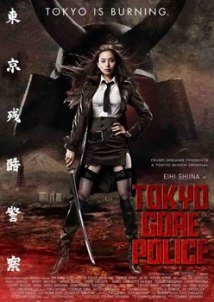
poster_tokyo_gore_police_poster01What’s great about a title like Tokyo Gore Police is that it is very clear about the kind of movie you are going to experience. Still, there is no way to truly wrap your mind around this film without watching it for yourself and even then, the uninitiated will be left baffled at what they have witnessed. To those I say “Welcome to Japanese Splatter Cinema, motherfuckers!”

The film takes place in a world where some criminals, known as “Engineers”, have remodeled their bodies to turn into ferocious monstrosities. Any time an Engineer is found, it is the job of the police force’s most elite Engineer hunter Ruka (Eihi Shiina) to dispense her own brand of brutal justice on them. When a powerful Engineer known as Key Man (Itsuji Itao) starts brutally killing women around Tokyo, it’s up to Ruka to not only try and track him down but also uncover the mystery of her father’s murder that may or may not be connected.

While some might be incredibly repulsed by the extreme violence of films like this, I on the other hand find it’s astounding levels of bizarre and depraved brutality incredibly refreshing. In a world where you constantly hear about films having to be cut down by the fucking MPAA (and other such arbiters of subjective morality) to get an R rating, it’s great to see examples of films that are made with absolutely no concern for being “marketable” for a wide release.

tgp-alligatorIt should be noted however that this is a very different experience from the mean-spirited gore of Torture Porn films like Grotesque. I’m not saying one style is better than the other, this is simply a different approach to extreme cinema that portrays the violence in an over-the-top, cartoonish fashion, typical of Japanese Splatter films. This actually allows the film to maintain a more lighthearted feeling while simultaneously bombarding you with insane levels of violence in a world where anything can happen. Blood geysers from severed limbs can propel people like rockets, disembodied hands that strangle are shot like bullets, alligator heads grow from severed torsos and so much more!

This all makes for an incredibly entertaining viewing experience, which is certainly not surprising. What may actually be surprising to some however is that such an over-the-top film can also handle the transition to scenes with more serious subject matter as well. Scenes of civilian genocide actually carry a legitimate emotional weight and the film as a whole is filled with sharp commentary on authoritarian control, consumer culture, and our own inherent desire for violence. In addition to this, the characters themselves are well crafted with complex motivations and storylines rather than a simplistic portrayal of good versus evil.

I was also impressed by the all too rare use of a legitimately strong female lead. Ruka is solemn, calculating, driven and exudes an authentic strength without ever falling into the hackneyed Hollywood portrayal of an in-your-face-tough-girl. She’s an all around badass that doesn’t fuck around and won’t hesitate to chop your hands off if you grab her ass on the subway. This is yet another stellar performance by Shiina who is also well known for her work on other brilliantly twisted Japanese films like Audition and Helldriver.

tgp-umbrella

Now, I’ll be the first to admit that there are times when the seams show a little on the production and the special effects don’t always stick the landing but really these couple of hiccups just add to the campy and surreal fun of the film. Those looking for an incredibly creative, utterly twisted, fast-paced mind-fuck of Asian insanity need look no further and if you still have yet to plunge into the world of Japanese Splatter Cinema this is a hell of a good place to start.

4-5-stars-red

Pulse (2001) vs Pulse (2006)

pulse-vs-pulse

When it comes to Hollywood mining the world for original films to reappropriate it seems no sub-genre is as over-plundered as the supernatural films of Asia, especially those from Japan and South Korea. In a way, this is somewhat of a curious practice since the remakes tend to fundamentally alter the style and tone of the originals to the point where they bare only the vaguest resemblance to their source material. Now, it’s been about a decade since I’d last seen the Pulse films but, in my recollection, the remake was handled better than most. I figured it was time to revisit these haunting films to see if that impression would still hold up under deeper scrutiny or if the remake would be yet another example of an Asian delicacy watered down for mass consumption.

Right away, there are certainly some areas where the films diverge, starting with the plot itself. The original follows two separate storylines that eventually converge involving a young woman working in a plant shop, Michi Kudo (Kumiko Aso) and college student Ryosuke Kawashima (Haruhiko Kato). After Michi’s friend hangs himself she finds strange, unsettling images on the computer disc he was working on and Ryosuke also sees similar disturbing images on his computer after performing an update. From there, both characters begin to have strange supernatural encounters as more and more people around them die or disappear.

Naturally, the plot of the remake is similar but instead follows college student Mattie Webber (Kristin Bell) in a single storyline. This time it is her boyfriend Josh (Jonathan Tucker) who commits suicide and the disturbing images are found by the tech-savvy loner, Dexter (Ian Somerhalder) who buys Josh’s computer following his death. As with the original, people start dying and disappearing mysteriously and it’s up to Mattie and Dexter to figure out why and to try to stop it if they can.

Despite the fact that these films are similar in terms of story, in other ways they couldn’t be more different and show a pretty clear example of what happens when you Americanize an Asian film. Instead of relying on CGI and jump-scares, the plot of the original unfolds slowing and deliberately, building tension and dread in an incredibly realistic and utterly chilling story. As someone who has seen a lot of horror I can safely say that this is one of the most unnerving and genuinely frightening films I have ever seen, with imagery that will fuck with your head long after the credits roll.

What makes it so effective is the way writer/director Kiyoshi Kurosawa presents the ghosts themselves. Instead of using an overabundance of CGI to try and make them look scary, Kurosawa primarily presents them as regular looking people but with somewhat altered movements, obscures them as shadowy silhouettes, or simply has them be in a place that people should not be. These scenes are also accompanied by haunting, otherworldly sound design that will make the hair on the back of your neck stand up.

By contrast, the remake presents the standard issue horror film ghosts popping out for predictable jump-scares and literally sucking out people’s souls like Shang Tsung in Mortal Kombat. Rather than allowing tension to build slowly like the original, the remake also follows the standard cliched formula of darkly lit “scary” scenes that alternate with brightly lit safe ones that make the scares feel more like a series of set-ups and payoffs rather than something woven naturally into the story. What’s perhaps the most irritating (but not at all surprising) aspect of the remake is the excessive amount of exposition from conveniently placed characters and the need to over-explain every aspect of the plot and the ghosts themselves. The original’s more ambiguous story was far more effective at giving the ghosts a more powerful, ominous presence.

So all in all, the remake wasn’t the exception to the rule that I had remembered it being and was just yet another example of a dumbed-down version with less interesting characters and less effective scares. Any positive aspects of the remake (like the famous water tower suicide) were simply scenes that were done better in the original and despite good lighting and sleek camera work there is just nothing about the remake to recommend it once you’ve seen the original. So if you haven’t done so, track down the original and experience it for yourself because anyone who lets subtitles be a deal-breaker for watching a film is missing out on some of the best and most interesting horror the world has to offer.

winner-pulse-2001

Short Film Review: Happy Hour (2016) Duration: 11 min 48 sec

happy-hour1Today I drink up Happy Hour, the twisted debut short from director Gavin Thompson. Does this dialogue-free, black and white film have what it takes to deliver a compelling story in under twelve minutes? Well, let’s discuss.

The film follows two nameless characters, a young woman (Melanie Jess) who is bringing a young man (David Kim) back to her apartment. However, what appears at first to be a standard night of hooking up takes a turn for the brutal as it becomes clear she has something far more sinister in mind.

The first thing that is of note about this film is that in addition to being black and white it is also utterly without sound other than the boisterous classical music that plays throughout. These are both very bold stylistic choices that can make films come off as incredibly pretentious if not handled correctly. For these choices to work there needs to be a solid thematic reason for choosing them over conventional methods of telling the story otherwise it becomes counter-productive.

I feel like a lot of aspiring filmmakers use B&W in an attempt to emulate the classic notion of indie cinema but what they should know is that those films were primarily shot on B&W stock for practical reasons rather than artistic ones. While Happy Hour does look good in B&W I am unconvinced that it (as well as the music) was used for any other purpose than to try to impose a greater artistic significance on the story. If the story had been complex and nuanced these choices may have carried more weight but as it is it’s very one-note. It (and I feel a spoiler alert is warranted here) gets on one track and stays there without adding any twists, reversals or surprises. The classical music also had a bit of a muting effect on the violence and would have served the film better had it only played during select parts or been turned down so that the screams and sound effects could come through.

I do want to point out though that despite these issues there are also some key things that the film does very well. The actors for one are able to express an incredible amount with only their facial expressions and body language. Both turn in very solid performances but Jess really shines in this regard, allowing her subtle facial expressions to communicate the malevolent feelings underneath.

In addition, the special effects are simple but effective and Thompson wisely chose to stick with gore gags he could convincingly pull off. I also have to give credit for the camera work itself which does a very decent job of guiding the mood of the story through well-conceived shots.

So, all in all a pretty solid short that has some really positive aspects to it but ultimately leaves something to be desired. I do feel that with a more solid storyline in his hands Thompson could be capable of creating something very interesting and worthwhile indeed.

2-5-stars-red