
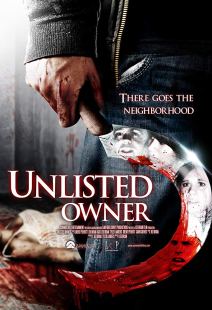
 Ahhh, the found footage sub-genre, staple of the independent filmmaker. Some entries are notable and utilize that technique for innovative storytelling, but many others are simply trying to cover up low production values and a lack of budget. Ever since The Blair Witch Project exploded onto the horror scene in 1999, and raked in a quarter of a billion dollars on a $60,000 budget, filmmakers have been trying to capture a piece of that low-cost, high-profit magic.
With Unlisted Owner writer/director Jed Brian puts a slight spin on the well-worn formula by revealing through on-screen text at the start of the film that the following footage was gathered from five separate cameras and edited together by the police. The footage itself reveals the series of events that took a group of friends from an ordinary camping trip to a harrowing fight for survival inside the house of a recently murdered family.
Initially, I thought that the concept of stating that the footage had been edited together by the cops was a novel way of justifying the fact that there was intercut footage that couldn’t possibly have come from one camera. However, this device creates as many problems as it solves since it leaves the viewer wondering why the police would re-cut evidence in a murder investigation in such a titillating and dramatic fashion. Also, I’m pretty sure that editing down raw footage of a crime into a feature length video isn’t a service that the police provide.
Ultimately, that’s a minor quibble though, because it’s really what’s on the footage that counts. To that end, I did appreciate that Brian made the characters feel as real as possible and realistically captured the shit talking and ball busting that occurs when guys hang out. I also liked that an effort was made to make the characters feel like a group of real people rather than having each of them embody a single cliched character trait.
I always appreciate it when indie directors know their own limitations and play to their strengths rather than trying to recreate a high concept Hollywood production on a fraction of the budget. In this case, Brian wisely sticks to minimal locations and uses tension and practical effects to pull off some solid, bloody kills toward the climax of the film. Once the blood starts being spilled it becomes quite entertaining but the lack of immediate danger throughout most of the lead up makes the pacing suffer a bit.
This brings me to the central issue with the film which is despite a seventy-four minute runtime, the lack of imminent threat to the central characters for much of the movie results in it feeling overly long at times. This is not helped by scenes where characters repeat exposition we’ve just heard, and makes a strong case that, ideally, this could be cut down to a tight thirty minute short. But regardless of the pacing issues, the final result manages to be an entertaining enough way to spend seventy-four minutes.

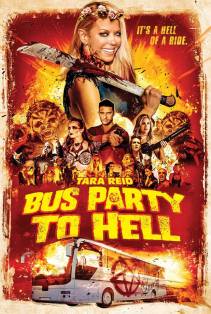 When a movie is titled Bus Party to Hell and features a masterclass thespian such as Sharknado alum Tara Reid, you have a pretty good idea what you’re in for. Of course, there’s nothing wrong with an over-the-top film that doesn’t take itself too seriously, provided it’s actually enjoyable to watch. There’s a surprisingly thin line between outrageously fun and irritatingly stupid and today we’ll see if BPtH falls more along the lines of the campy, gory fun of Father’s Day or the interminable slog that is Kudzu Zombie.
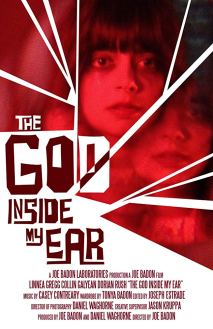 Creating a surreal film that really works is an incredibly difficult feat. In the hands of masters like Lynch and Jodorowsky the final product can be a multilayered work of art with symbolism and subtext that will have people in spirited debate for decades. On the other end of the spectrum are the myriad of films that bombard the viewer with “weird for the sake of weird” imagery, with no inherent meaning or intent, and no subtle clues to decipher what’s going on until we are simply told. Any surreal film is bound to fall somewhere along this line and today we’re going to see how close to the top (or bottom) The God Inside My Ear ends up.
 Some Extreme Cinema films creep up on you slowly, holding back their edgiest material to sucker punch you with later on. Other films announce themselves right from the fucking beginning and, with a sexually explicit scene in the first two minutes, Portraits of Andrea Palmer wastes no time earning its Extreme Cinema cred. That’s not to say that one approach is better than the other however, as a “less is more” approach adds more punch to the shocking scenes you do have.
 The incredible advances in digital technology over the last few decades have made it more possible than ever for aspiring and indie filmmakers to make their vision a reality, or at least attempt to. Freed from the burdens and excessive cost that goes along with shooting on film stock, many indie directors will attempt to replicate the lavish production values of multi-million dollar films with elaborate DIY sets and numerous on-screen characters. This almost always results in a disastrous final product but is still a far more common practice than the more sensible approach of using a small cast and a primary central location.
 If you’ve only seen one film by the brilliant Japanese auteur Takashi Miike, then it was probably Audition. Not only is it Miike’s most well known film outside of Japan but it is also his most accessible. That’s not to say of course that it’s something that’s easily digested by the mindless masses, it is still a Miike film after all, and if it didn’t have some incredibly violent, disturbing scenes I wouldn’t be reviewing it here. Although, it’s not the violence alone that makes this film interesting, what really sets it apart is the brutal sucker-punch it gives the audience.
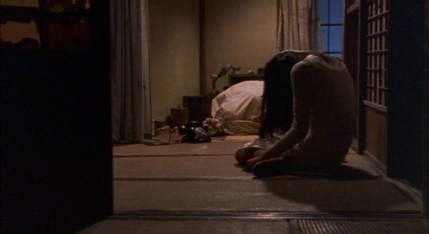 What really makes Audition work is that even with the tonal shift, the two halves of the film never feel like disparate ideas awkwardly stitched together but instead function as one cohesive story that is purposefully and methodically laid out. The dramatic, character-focused beginning fleshes out who these people are and makes the viewer truly invested in their fate. The fact that the violence is intense but used sparingly also gives it a far greater impact when it’s shown.
 To anyone who has taken so much as a cursory glance at my reviews it should be abundantly clear that I am an incredibly strong supporter of free speech. I’ve made it my mission to track down and review the darkest and most fucked up films ever made and I revel in witnessing cinema’s most disturbing creations. This is all to say that it’s extremely rare that I come across a film with parts that even I find problematic, but it does happen. A classic example would be the unsimulated animal killing in Cannibal Holocaust whose artistic value is superseded by the real world suffering caused by their creation. It had been a long time since I’d seen Murder Set Pieces, so I was surprised to find a similar moral predicament as I wondered to myself “Wait, is this a fucking pro-Nazi film?” More on that in a minute.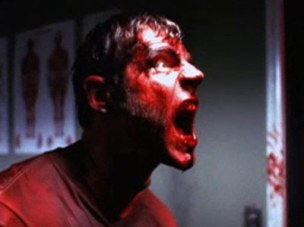
 However, this more generous read of the subject matter is a tough sell considering how the entire film feels like little more than a vicarious indulgence of Palumbo’s darkest fantasies.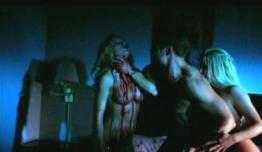
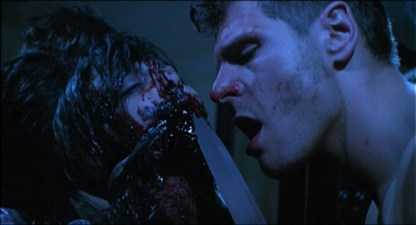 The chainsaw to the head scene stands out as a particular highlight but whether it’s a brutal throat slitting, bathtub drowning or vicious beating each violent scene is filled with a raw, vicious energy that makes the kills much more realistic and disturbing. Throw in some corpse eating, severed head fucking and a brutal on-screen child murder (!) and what you get is a truly unfiltered example of Extreme Cinema that goes well beyond where conventional horror films dare to venture.
 So, in the end there is a lot to like about MSP and if it hadn’t been infested with Nazi propaganda it would be an easy film to recommend to fans of hardcore cinema. Overall I’m left feeling conflicted because as much of a fan as I am of the gorgeous, unhinged violence I just can’t fully endorse a film that seems like it would be a top pick for a neo-Nazi movie night.
 The idea that alternate realities could simultaneously exist in the universe is certainly an interesting one and a concept that has become ever more pervasive in the popular consciousness of late.
 When determining how well a film works it’s important to first understand the type of film the director is trying to make and judge accordingly. Dreaming Purple Neon wasn’t released by Troma but given the copious amounts of low budget gore, nudity and general cheesiness, it’s something that could’ve fit right into their catalog. That is to say this is not a film that seeks to astound you with mesmerizing acting or a profound storyline but instead hopes to entertain with over-the-top visuals. This is a perfectly valid position for a film to take and one that is harder to successfully achieve than you’d think. So the real question becomes, does it pull it off?
 It wasn’t that long ago that horror anthology films were far less common than they are today. They never went away entirely of course but once the 90s rolled around they were pretty much relegated to cheap, straight-to-video cash grabs, most of which have been deservedly forgotten. That all changed with the success of modern anthology horror like Trick ‘r Treat and The ABCs of Death which revitalized a subsection of films that seemed destined for irrelevancy. As someone who is a big fan of anthology films, I couldn’t be happier with the unprecedented quality and abundance of these films today. Of course not all films are created equal and today we’ll see if The Forces of Horror Anthology feels more like a product of the modern anthology renaissance or a throwback to the dark days of the ’90s.
