
 It takes an unbelievable amount of work to make a feature length film and of course the longer your film, the more work it requires. This is why it’s unusual to see films venture past the standard ninety to a hundred five minute window, and downright rare for scrappy indie productions to attempt it. But this is exactly what writer/director (Jakob Bilinski) did with his ambitious and, uh, interestingly titled Three Tears on Bloodstained Flesh. Now, ambition is good, but it’s only half the battle so the real question here is, “how well does he pull it off?”
When a young woman named Lexie (Sidney Shripka) is murdered near her small town home, her last act is to get a letter out to her uncle Dominic (Bill Gobin) asking him for help. Now Dominic, with his unwilling teen daughter in tow, must return to the place he thought he’d left for good and figure out the truth about what happened to Lexie.
The title seems intended to evoke the idea of this as a kind of American giallo. However, this doesn’t so much read authentic giallo to me as just “revenge thriller with a dusting of horror.” Still one thing that’s apparent right from the beginning is that this film has a real visual flair. Some scenes feature quick cuts and use handheld to great effect to give a stylish and authentic sense of movement. Other times the scenes are appropriately stoic and carefully framed but throughout, the film maintains a rich quality image with excellent and inventive use of color.
I also appreciate that this film doesn’t shy away from violence and a couple of scenes in particular that feature graphic disembowelment and fingernail torture stand out as delightfully grotesque. However, for a film so willing to go all in on the blood, it remains perplexingly chaste about the nudity. Despite featuring multiple sex scenes and spending a significant amount of time in a strip club, TToBF never quite manages to get up the courage to bare any flesh, bloodstained or otherwise.
Of course, the amount of nudity in a film is a minor factor, but length and pacing on the other hand are major ones. While there are certainly a lot of positive aspects to this film, the most significant issue it bumps up against is the runtime. Clocking in at a staggering two hours and twenty minutes (!) this is one film that is absolutely begging for an aggressive re-cut. The story itself is interesting and enjoyable to watch unfold, which is why it’s frustrating to see it weighed down by an excessive amount of scenes that are redundant and/or don’t advance the plot in a meaningful way.
Gobin puts in a solid effort as the lead but just isn’t quite able to get to the point of coming across as a genuine character rather than an actor going through the motions. This makes the multiple scenes of emotional torment that Dominic goes through feel more like a chore than a journey and I wish that Bilinski had taken a leaner, subtler approach and trusted the audience more to connect to the story without being led by the hand. In general though, a lot of solid casting choices and Jim Dougherty’s portrayal of the abrasive small town sheriff stands out as a highlight.
Overall, certainly a film worth watching and viewers who do take the journey will be treated to a great visual experience with some satisfying, brutal kills. This is a solid movie with an even better movie buried inside, just waiting to shed it’s fat and come out.

 Creating a film that inspires a genuine sense of dread and tension, with a small cast and limited locations, is no easy task. There is no sure-fire recipe for success with this, but there are two components that are required if a film is to have even a remote chance of working. The first is a genuine sense of realism, regardless of how fanciful the story, and the second is characters you can truly connect to as human beings so you are invested in their struggle. It sounds simple yet it’s amazing how rarely it’s pulled off effectively. So, does director Corin Hardy (great name btw) manage to succeed with his Irish folktale inspired film, The Hallow? Well, let’s discuss.
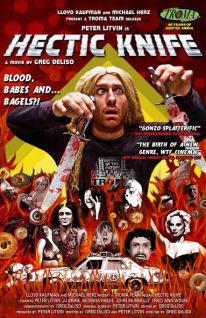 Some films throw logic and reason right out the window and subscribe only to the bizarre new reality they have created. Films like that can be difficult to critique because the acting, continuity, special effects and even the plot itself are so askew that you can’t judge it’s success or failure by any standard measurement. As someone who loves unconventional, surreal cinema, I’ve seen a lot of films in this category and have found that they inevitably fall to one side of the quality spectrum or the other. Either a film succeeds wildly as an innovative, daring work of creative brilliance or it quickly becomes clear that the filmmaker has simply slapped together a bunch of nonsensical images without any meaning or intention. So, where does the utterly surreal insanity that is Hectic Knife fall on that scale? Well, let’s discuss.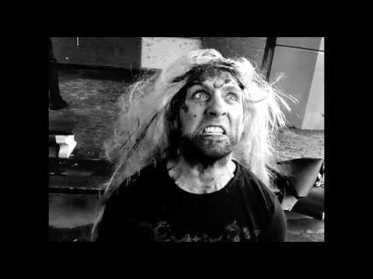
 From the small things like the living room couch that’s inexplicably vertical, the deliberately strange and repetitive dialogue, a character stopping in the middle of a fight to do a stand-up comedy routine complete with a laugh track, this entire experience feels like a stream of consciousness dream that only kinda obeys the laws of reality. One of my favorite scenes is when this black and white movie pulls out to reveal a random couple in full color watching and disparaging it. They in turn have their own scene that is just as intensely bizarre and violent as the rest of the film, but otherwise serves no purpose but to add yet another level of insanity to the experience.
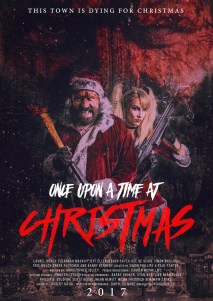 When a horror movie has a holiday-themed premise, especially holidays other than Halloween, that’s often a sign that the audience is in for a campy ride that is going to play up the novelty to extreme proportions. Of course, that’s not always the case and some notable exceptions include the well-crafted, emotionally developed slasher Silent Night, Deadly Night as well as the incredibly creative and bizarre Rare Exports. Today, I discuss whether or not Once Upon a Time at Christmas falls into the category of holiday classics or if it’s just another poorly crafted product that falls apart almost immediately.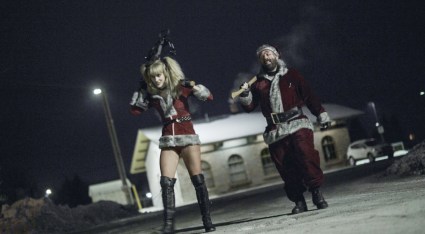


 One of the defining films of the New French Extremity movement, Martyrs, is a brutal endurance test that is not even remotely concerned with appealing to mass audiences or casual horror fans. Inspired in part by American Torture Porn films of the time like Hostel and Saw, writer/director Pascal Laugier has also credited the severe depression he was experiencing at the time he wrote this for its incredibly dark and nihilistic tone. While the raw, visceral depictions of suffering on display mean that Martyrs easily earns its Extreme Cinema stripes, the more important question is, of course, how well it actually works as a film.
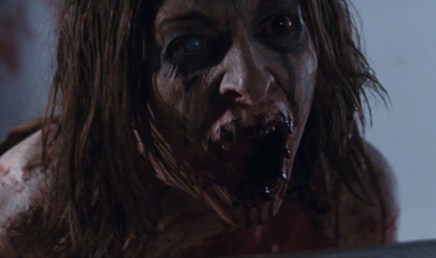 Although represented as a separate entity, the film does eventually make it clear that she is a manifestation of Lucie’s internal pain and Lucie’s desire to be rid of her is the central driving force for her to murder those responsible for her abuse.
 This is all within the structure of a brilliantly crafted script, which boldly bucks the conventions of a standard narrative, to keep you on your toes as the unpredictable plot develops. It even goes as far as (remember, spoiler alert) shifting protagonists halfway through, a risky move that completely pays off. The script also features one of the best sucker-punches in cinema history when the normal, affluent family is brutally gunned down by Lucie, seemingly out of nowhere. This is an outstanding example of a filmmaker carefully establishing a sense of safety and normalcy for the viewer, only to shatter it in the most jarring way.
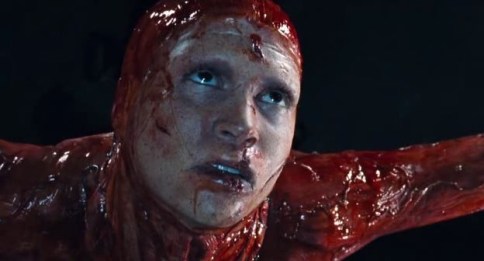 There is just so much to unpack here, especially when it comes to the secret society; their quest for transcendent knowledge through extreme suffering, the casual way they inflict violence like it’s a routine job, and of course the brilliant end when the matriarch is so rattled by knowledge of what is actually awaiting us in death, that she takes her own life. Suffice to say, this film is a unique, complex and exquisitely crafted piece of highly disturbing art that ranks among the most brilliant horror films ever created.
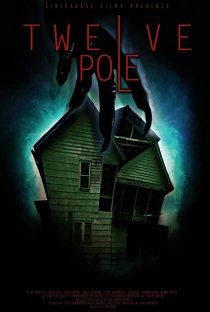 A good opening scene that grabs the viewers attention is very important for setting the tone of your film, especially in a horror movie. Conversely, when the opening of your film is so misguided that the audience is already rolling their eyes at minute one, you’re not off to a great start. Unfortunately, this is the case for Twelve Pole, which makes an incredibly lame attempt to be edgy by opening the film with a voice-over, warning the viewer about how graphic the movie is. Problem is, actual warnings like that aren’t a thing! Legitimately hardcore films don’t bother with such gimmicks, and for a film that doesn’t even qualify as Extreme Cinema, they’ve got some nerve pretending that a warning is required. Still, you can’t judge an entire film by a single misstep in the beginning, so let’s see how well the film itself holds up.
 Establishing the proper tone for a film can be very difficult to get just right, especially when your film incorporates elements of black comedy as well as horror. When it works it can be a very entertaining blend of genres that properly balances both, and when it doesn’t, it quickly devolves into a confused mess that serves neither. Today we’ll see if Murder Made Easy is able to strike the right balance with its modern take on an Agatha Christie style murder mystery.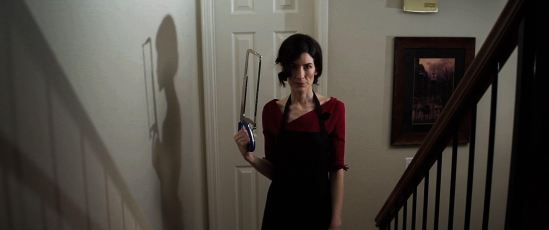
 While I can see why the overall plot itself was structured the way it was, the very device of having sequential guests show up does make much of the general plot rather predictable, and even a bit repetitive. Fortunately, as more of the larger story is revealed most of the characters have enough substance and variety to keep the interactions entertaining throughout…..with the notable exception of Cricket (Emilia Richeson). While most of the other characters are represented as slightly heightened archetypes, Cricket is full-blown New Age stereotype and her segment is the film’s most overt (and misguided) attempt at comedy, and a clear low point in the overall film itself. Had she simply been rewritten as a slightly more realistic character, her segment would have worked far better.
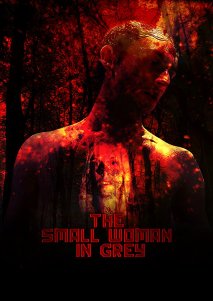 Ahhh the woods, the go to, ready-made set that is the favorite location for countless indie horror films. I understand the practicality of using this as a primary location, but aspiring filmmakers would do well to keep this advice in mind before they start lugging their cameras into the wilderness: If you are going to set your teen-massacring film in the woods, as we’ve seen countless times before, you’d better bring your fucking A game and show us a very creative and interesting twist on the most tired premise in horror. Otherwise, don’t bother showing up. So, even though it’s utilizing the most played out concept in horror cinema does The Small Woman in Grey elevate itself above the masses with a quality script and innovative filmmaking? Well, let’s discuss.
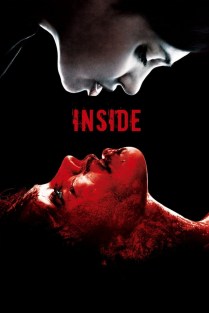 The New French Extremity movement created some incredible and daring films in the early 2000s, one of the most notable being Inside. This film along with Irreversible, Martyrs, Frontier(s) and many others defined the film movement that would give us some of the most extreme, taboo shattering films ever made. Much like The Human Centipede, Inside is a film in which the very concept is enough to make most people’s skin crawl. That alone makes it a must see for Extreme Cinema fans but the most important question is still “is there substance beneath the surface”?
 When you think about the country of Turkey, ‘horror films’ probably isn’t the first thing that pops into your mind, but after the international success of Can Evrenol’s Baskin, that may be changing, at least a little. It certainly isn’t the first horror movie made in Turkey, but it is by far the most successful and just as A Serbian Film did in 2010, it puts an unexpected country into the international horror conversation. Based upon the 2013 short film of the same name, Baskin is a surreal and gruesome journey into a nightmarish world.
