
 Quantum theory, sentient liquid, 80’s synth scores and Alice Cooper. Today I discuss Prince of Darkness which is quite possibly John Carpenter’s strangest film, and that’s saying a lot. By the way, some minor spoilers ahead.
When an old priest belonging to a secret sect tasked with protecting the world from an ancient evil dies, another priest (Donald Pleasence) has to unravel the mystery of what he had been guarding humanity from. He enlists the help of Quantum Physics professor Howard Birack (Victor Wong) and his group of PhD students to try and discover the true nature of the swirling green liquid that the old priest had been guarding before it destroys the world.
Now, the script that Martin Quatermass (aka John Carpenter) created is certainly unique, especially where the antagonist is concerned. The evil, self-aware liquid (that’s right, you heard me) soon forces itself from it’s container and into the mouth of one of the students where it is then transmitted via direct mouth-to-mouth-vomit (!) into the bodies of other students, possessing each of them along the way.
So, credit where credit is due, that is certainly an interesting concept and the film does do a good job in the first act of creating a sense of dread and the feeling of a powerful, otherworldly menace threatening our very existence. In addition to this there were some discussions about quantum theory and the nature of reality itself that I found really interesting. However, that sense of dread and intrigue dissipated as I began to have far too many questions that should have been addressed.
For instance “why doesn’t anyone call the cops when people are blatantly murdered outside in the open or turn into giant piles of living bugs?” I mean, other than the groups of possessed hobos wandering around with Alice Cooper, the “evil” doesn’t appear to affect anyone else outside the abandoned church where the students are conducting the research. Also “why would a group of scientists be so quick to wholeheartedly believe in a bat-shit crazy story about the liquid in the basement being a manifestation of pure evil and Jesus being an alien based on the translated text from one source?” Now, to be fair one of the students does remain highly skeptical but that’s not nearly enough to counter-balance the ridiculous behavior of the others.
I feel like Quatermass (as he sometimes like to be called) is operating under a very vague understanding of how scientific research works. That’s why the so-called scientists of this film can declare an object that could only have been made by modern era humans is seven million years old without having to clarify it with a statement like “but of course that’s impossible!” Or extrapolate a profoundly crazy theory that the liquid is conscious and able to move objects psychically based on nothing more than a fucking seismograph reading!
The situation is not helped by the mediocre performances from the cast complete with some terrible attempts at comic relief that only succeed in exacerbating the inherent lack of realism. I will say that Donald Pleasence certainly does the best job in portraying a convincing character but others (I’m looking at you Dennis Dun) are distractingly bad.
All in all, an interesting and original idea that was poorly executed and not really worth tracking down to watch. A few scenes offer some interesting scares (the man into bugs one was actually incredibly creepy) but there just isn’t enough here to make up for the frustration of the shoddy plot. Maybe that’s why John Carpenter chose to hide behind a pseudonym with an esoteric sci-fi reference in it rather than use his own, highly recognizable, name.

 When it comes to sequels, making one for Shin’ya Tsukamoto’s original cyberpunk masterpiece Tetsuo must rank up there as one of the most difficult to pull off. How to stay true to the unbridled insanity of the original while at the same time taking the story, such as it is, in new and interesting directions? I will say, there certainly were some big changes here. So how did it fair when stacked up against the classic first entry to this insane universe? Well, let’s discuss Tetsuo 2:Body Hammer.
 The Sentinel is a lesser known film that was allegedly created as Universal’s response to The Exorcist which was made four years prior. And while it does in fact have some thematic elements that draw comparisons to that film, it actually seems to garner more inspiration from Rosemary’s Baby. So, the question naturally becomes “does it stand up those monumental horror classics but was unfairly relegated into near obscurity? Or is there a reason why it doesn’t often come up in the conversation when classic religious-based horror is discussed?”
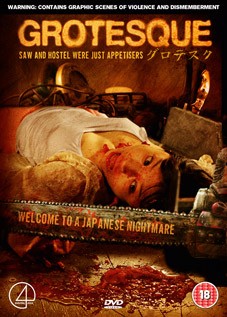 The term “Torture Porn” was first coined back in 2006 by film critic David Edelstein describing the emerging trend of films like Hostel and Saw which featured very graphic scenes of torture and dismemberment. While scenes of graphic violence have been a staple of horror films for decades the new crop of early millennium extreme horror films brought the violence to the next level by dwelling on graphic and explicit carnage to an extent not previously seen in mainstream films. The structure of these types of films also typically mirrors the structure of a porn, hence the name, in that the primary focus of the film is a series of set-ups and titillating, explicit pay-offs. Now, I’ve seen a lot of Torture Porn films, probably all of them, but none in my experience better capture the essential nature of what a Torture Porn film is better than Koji Shiraishi’s exercise in extreme brutality, Grotesque.



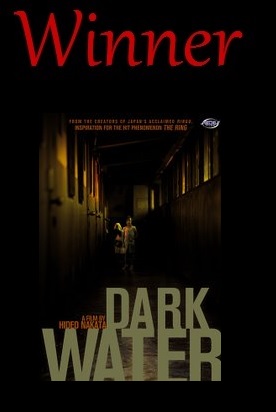
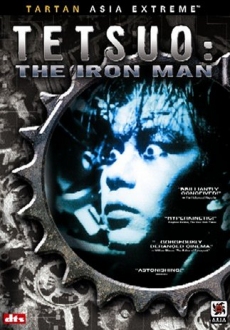 Many films can be bizarre and abstract but few films truly capture the feeling of being in a living nightmare quite so well as Tetsuo: The Iron Man. However, what may seem to more casual viewers like a series of disturbing black and white images simply meant to take you on an insane visual journey, is in reality a film with a strong narrative thread connecting the central characters to a single traumatic event.

 Ah, the zombie film. Is there any horror subgenre more oversaturated these days? Much like the zombies themselves the films seem to be everywhere, shambling along with little change or innovation as the concept is resurrected time and again with similar, diminishing returns. As the zombie subgenre has become more and watered down with mainstream films like World War Z and Warm Bodies (zombie rom-com, seriously?) I’ve started to feel like we’ll never get back to the kind of brutal, badass action that made the zombie films great in the first place. That was until I saw Wyrmwood: Road of the Dead.
