Blood Tastes Like Perfume: The Short Films of White Gardenia (2021)

When watching an experimental film it’s important to meet the movie on its own terms and view it through that lens. There seems to be a knee-jerk impulse in mainstream culture to immediately label films without a conventional narrative as nonsensical, images of violence as gratuitous, and unsimulated sex as pornographic. This kind of thinking is incredibly reductive and limiting, especially when art in other mediums such as paint and sculpture are more frequently praised as “bold” and “daring” for containing similar depictions. Artists should be free to use any item in their toolkit to make a creative expression that is genuine for them and true artistic freedom means anything and everything that happens between consenting adults must be allowed to be expressed. Art that pushes boundaries must be approached with an open mind and a strong stomach and it is with that mindset that I evaluate the unconventional, provocative collection that is Blood Tastes Like Perfume: The Short Films of White Gardenia.

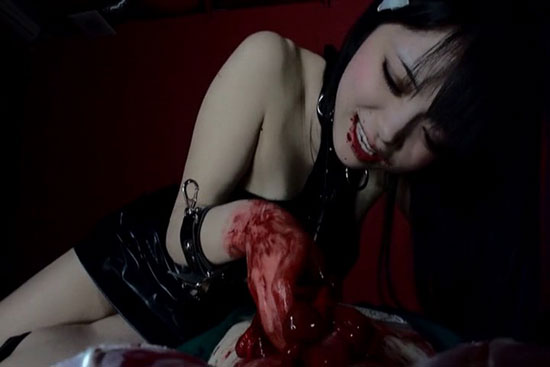
The band White Gardenia is headed by musician Daniel Valient and are well known in certain underground circles for their shocking fetishistic mutilation and blood drinking short films that are underscored with their original music. White Gardenia’s work primarily exists online but has been featured in some films that received a physical media release such as XXX: Dark Web and Vore Gore, both of which were put out by Tetro Video. Blood Tastes Like Perfume marks the first time the band has received a proper home video release on their own (this time courtesy of Bizarre Theatre) and the collection features eight of their videos including Blood is Sweeter than Honey, Akasha Drinking my Blood, and A Perfume Made From Blood and Tears.

The most pertinent question here is how well this collection works as a showcase for the work of White Gardenia. While this is by no means a complete collection of their work, the eight shorts do provide a solid representation of what White Gardenia is all about and gives viewers a glimpse into their twisted world. Still, I was a little disappointed by the omission of their most provocative film (and my personal favorite) A Midnite Snack which was one of the segments featured in XXX: Dark Web. What stuck out the most as a strange choice as far as the Blu-ray release itself goes however was the occasional references to additional White Gardenia videos online that appeared after some films. I understand the thought process here but the biggest problem with the execution (aside from sometimes neglecting to put in the web address) was that the text after one film advised that “full and uncensored” clips can be found online. Given the explicit nature of the scenes that are shown, the film is clearly not censored for content but that message seems to imply that some of the most interesting parts may be missing. Fans shelling out for a Blu-ray release like this should feel like they are getting the definitive collection, not a tease for more info that has to be found through a series of confusing links. It’s not clear at this point if there will be additional volumes released with more of White Gardenia’s output but if this is to be the only physical release then it is a glaring oversight to not include all the best, nastiest content in its full and uncensored glory.

Like any short film collection the quality varies from film to film as some are inevitably more compelling than others. The couple of bondage themed scenes that were included were actually the least interesting part of the collection as the scenes felt quite tepid and restrained for BDSM play and were further weakened by their juxtaposition to the far more intense scenes of real cutting and blood drinking. Even though it may have been a little repetitive I would have still preferred the inclusion of some of their other cutting and blood play videos in lieu of these to have a more cohesive and consistent experience.

Where this collection really shines is in its ability to showcase boundary-pushing art as Daniel and the rest of the performers go to extreme levels to create spectacle that is beyond the limits of what you will find in most films. Aesthetically, there are some strange choices such as including flubs and outtakes that could have been easily trimmed out but they do have a way of adding to the gritty, cinéma-vérité style of the production. The minimum production values of the scenes where shaky hand-held footage reveals genuine mutilation and blood drinking add to the dangerous, provocative feeling of voyeuristically consuming taboo acts that are shunned within mainstream society.

Another thing I really appreciate about this film is that it is far from simply being a collection of shocking content created to illicit a cheap reactionary response. There is a genuine surreal quality to the footage (especially when consumed all in one sitting) that make for an engaging and unique experience. This is thanks it large part to White Gardenia’s experimental and at times wonderfully discordant music and sound design that underscore most of the film. It is also due to some fantastic editing choices that heighten and enhance the scenes in very interesting ways. Probably my favorite moment occurred in Akasha Drinking my Blood when a constructed shot resulted in a scene so minimalist yet so perfectly unsettling that it felt straight out of Lynch’s Inland Empire. So, in the end while it’s not a perfect release, it is still a damn good one and will provide viewers with a unique experience that is provocative, unsettling and legitimately boundary-pushing.

Availability: Limited

Blu-rays can only be purchased through bizarretheater.com while supplies last. Not available to stream.

10 Best Extreme Films You May Not Have Seen (But Definitely Should)

Horror comes in so many flavors. Whether you prefer bloodless psychological thrillers, graphic Torture Porn, or anything in between, the genre’s got you covered. With so many films available at our very fingertips, it can be overwhelming to try and find one that’s really worth your time. For this list I’ve decided to focus on the subgenre that’s nearest and dearest to my black little heart, Extreme Cinema. If you’re reading this then you are probably already aware of the extreme movies that have bubbled up from the depths into the mainstream horror consciousness such as A Serbian Film, Martyrs and The Human Centipede franchise. What you may not be aware of is all the films out there that are lurking in the underground, numerous other hidden gems that show you art willing to push past the boundaries of what’s found in conventional cinema.

These are films that provoke reaction and force us to confront subject matter that many of us would rather turn a blind eye to. It’s the truth within these films that make them such vital and essential pieces of art, whether that truth is based on its creator’s own darkest emotions or simply an accurate depiction of real events. Violence in the real world is horrible, it is disgusting and it does provoke an extreme reaction so the art that reflects it should do the same. As someone who has plumbed the depths of the darkest and most grotesque cinematic art ever made I can confidently say that there has never been anything created in a film that hasn’t had a real-world equivalent which was even worse. Art mirrors the world, not the other way around, but you don’t have to take my word for it, just watch the news on any given day and see for yourself.

Due to the inherent subjectiveness of art and a lack of any kind of standardized rubric for measuring quality, it can be difficult if not impossible to make any kind of list that is able to definitively capture the best in any given genre. What I have compiled here is a list of ten of the best films that not only exemplify legitimate Extreme Cinema at its finest but also may not be as familiar to the average horror fan. Whether you’re looking for a jumping in point to Extreme Cinema itself or are curious about the few films on here that you may have missed, I hope that this list will serve as a helpful guide. As many of these movies can be hard to track down I’ve also included the best places to locate the films themselves, as of the date this article was published. I am of course omitting any ad supported services like Tubi because watching them on there is worse than nothing.

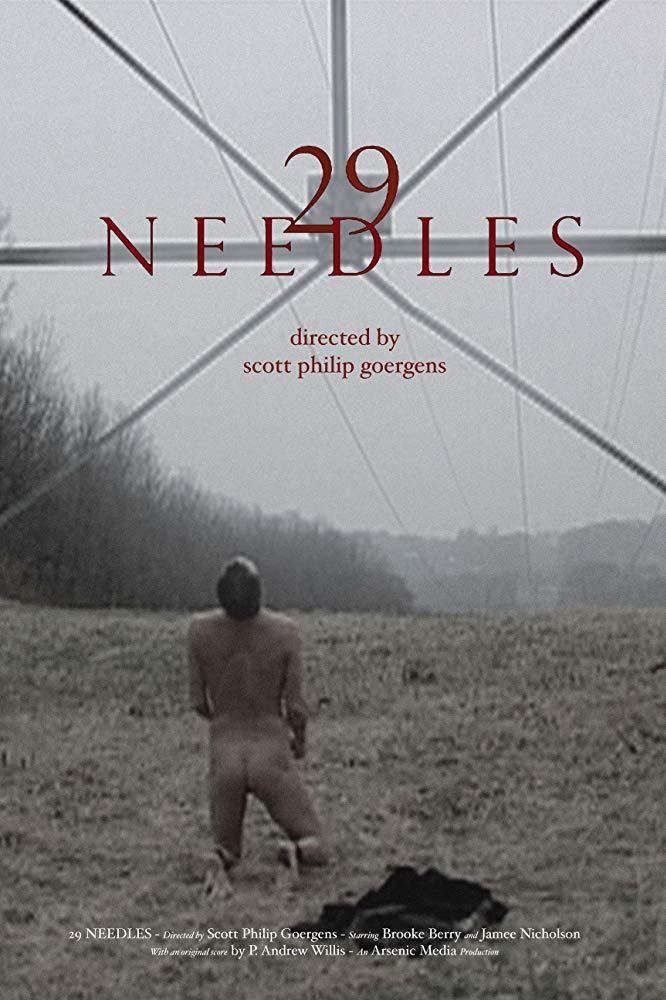
29 Needles (2019):

What it is: Francis Bacon (Brooke Berry) is a troubled man who uses alcohol and pain to try and abate the symptoms of his inner turmoil. As his self-destructive coping mechanisms become less effective and his bizarre hallucinations more prevalent, he is plunged into even more hopelessness and despair. A mysterious young man named Hans (Jamee Nicholson) may have the solution he needs when he offers an invitation to a secret society where there are no sexual limitations. Is this the cure he’s looking for…or just the beginning of a different kind of nightmare?

Why it’s great: 29 Needles is a perfect example of raw, unfiltered cinematic expression that gives no fucks and takes no prisoners. Writer/director Scott Philip Goergens clearly has a vision and that vision includes presenting unsimulated gay sex, mutilation, watersports, and blood-play as well as fetishistic acts that even I had never seen before (eyeball tube anyone?) Beyond the shocking content there is a compelling and harrowing narrative anchored by Berry’s incredible, method performance. Top it all off with some great Cronenbergian practical effects work that bring a giant sentient cock to life and you have a truly unique film experience.

Where to find it: Currently available at unearthedfilms.com on Blu-ray and DVD, diabolikdvd.com on Blu-ray and has been found on eBay. Not available to stream.

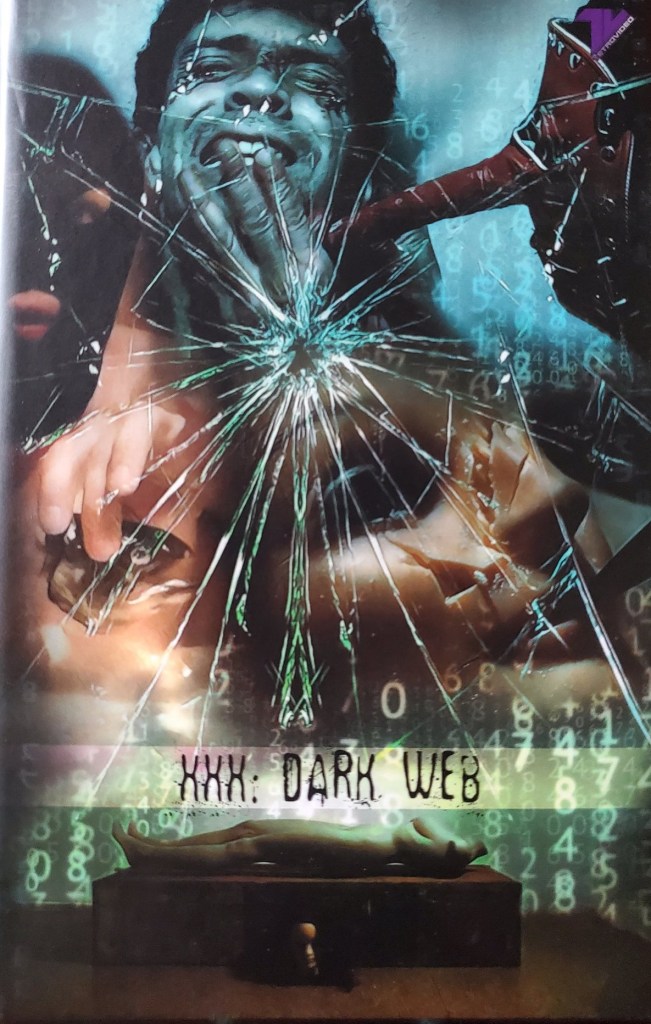
XXX: Dark Web (2019)

What it is: When it comes to salacious and provocative titles XXX: Dark Web really takes the cake. No, Vin Diesel isn’t suddenly taking his lame action franchise in a very bold new direction; what we have here an anthology film that plummets into depths of darkness rarely seen on film. The framing device has the nameless audience surrogate (Franz Dicarolo) searching the Dark Web for depraved jerk-off material and each segment is a video he clicks on.

Why it’s great: While there isn’t a lot in terms of story within each segment, the beautifully gruesome detail in the special effects and brilliant, committed performances do an excellent job of holding the viewers’ attention. Guinea Pig level eviscerations are just where the brutality in this film starts and before you know it you’re seeing graphic genital mutilation, explicit, unsimulated sex and even a scene that went to a level that I had never seen in a film before (which is saying a lot). The scene in question features a real video of musician/cutting performance artist Daniel Valient doing something that I don’t want to spoil but suffice to say it must be seen to believed. If you’ve got a strong stomach and very morbid curiosity then this is a trip you definitely want to take.

Where to find it: DVD sold through tetrovideo.com but is currently out of print. Not available to stream.

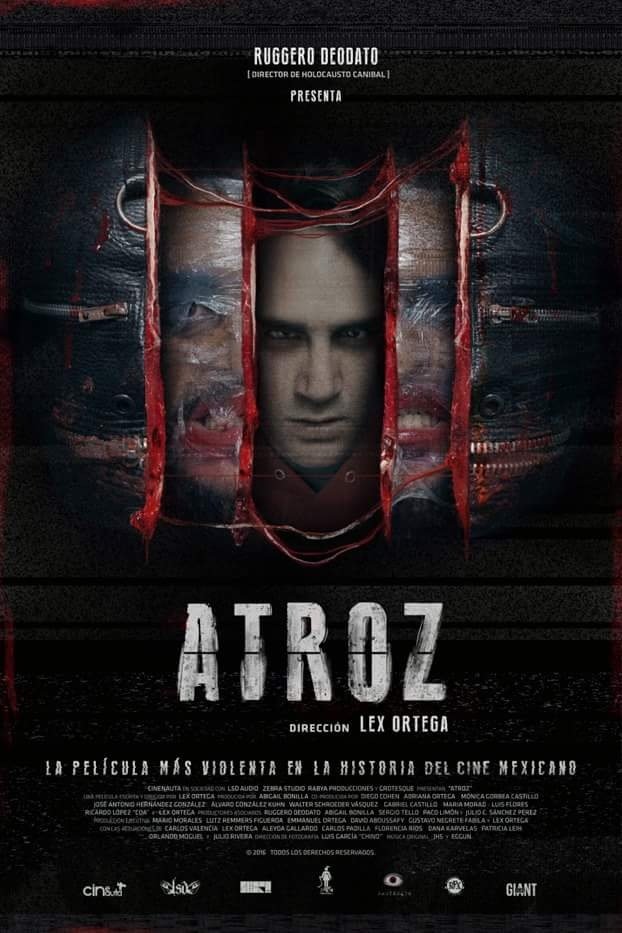
Atroz (2015):

What it is: When an out of control car claims the life of a pedestrian, the two men inside are immediately arrested and taken into police custody. Inside their car the officers find a video camera with a tape that shows them graphically torturing a prostitute to death. The remainder of the film switches between the violent interrogation of the primary suspect in the killing, Goyo (Lex Ortega who also directed) and the graphic content the police find on tapes as the investigation moves forward.

Why it’s great: Atroz is able to achieve a level of disturbing, brutal violence that is rarely seen on film, even within the horror genre. While there are many films out there that showcase graphic gore, few are able to replicate the unflinchingly realistic, vicious, and sadistic ways the murders are depicted here. This can be attributed to the incredibly committed performances from the cast as well as the exceptionally crafted gore effects that are even more impressive given the film’s $7,000 budget. Most importantly, the film isn’t simply a collection of meaningless violence but instead is Ortega’s cinematic representation of the climate of hopelessness and fear that he himself and so many other residents of Mexico City experience on a daily basis. In a city that has an annual murder rate of nearly 30,000 and a conviction rate of less than 2%, that is certainly an understandable feeling.

Where to find it: Available on Blu-ray and DVD through multiple sources including Amazon, unearthedfilms.com, deepdiscount.com, Best Buy, and Walmart and has been found on eBay. Only available to rent or own on streaming through vimeo.com.

Grotesque (2009):

What it is: On their way back from a date, a young couple (Hiroaki Kawatsure and Kotoha Hiroyama) is assaulted and kidnapped by a nameless creep in a van (Shigeo Ôsako). Next thing they know they are being tortured in a room at an unknown location as the man tests their will to live and claims that he will let them go if they can sufficiently excite him.

Why it’s great: Given that Grotesque is light on story and heavy on torture, there are many who would simply dismiss this as a voyeuristic indulgence in suffering. However, there is more at play here as director Koji Shiraishi presents us with a visceral, bold piece of uncensored artistic expression that eschews conventional storytelling and strips down the experience to its raw, base emotional levels. The film itself is a meditation on the experience of watching violent content as it puts us in the position to not only cringe and root for the victims but also indulge in the suffering that the man is inflicting for his own pleasure. The excellent level of realism that both the actors and the SFX team bring to the production really put it over the top and make for a genuinely harrowing experience.

Where to find it: Both the DVD and Blu-ray are currently out of print but have been found on eBay. Available to rent or buy via streaming on iTunes and Amazon Prime.

Trauma (2018):

What it is: The film begins in 1978 as on-screen text lets us know that the movie is inspired by true events. After an incredibly graphic opening scene the bulk of the film takes place in 2011 and follows a group of young Chilean women who rent a vacation home in a remote part of the country. Before long, the events of the past are catching up with them in a very brutal way.

Why it’s great: Gore and violence for its own sake is fun to see in a film but what really pushes it into the category of art is the meaning behind the shocking content. In this case, understanding the environment that it was made in is a key part to understanding what Chilean writer/director Lucio A. Rojas is expressing here. In 1973 Augusto Pinochet overthrew Chile’s democratically elected government and seized power as an iron-fisted dictator. Following that, the country experienced an unfathomable amount of death and suffering and the cruel scars of the past continue to rear their heads in the modern era. Like Atroz and A Serbian Film, this is an unflinching expression of the real world pain and fear that is born from living in a country where violence and horror is very much a reality.

Where to find it: Available on DVD only through Amazon, Target, Walmart and has been found on eBay. Available to rent or buy via streaming on Vudu, Amazon Prime, Google Play, YouTube and Flix Fling.

Inside (2007):

What it is: There are some films (The Human Centipede for instance) where just the very concept is enough to shock and horrify most people. Another such film is Inside which tells the story of Sarah (Alysson Paradis) who is about to give birth to her first child and the mysterious nameless woman (Béatrice Dalle) who will stop at nothing to break into her house and try to cut the baby out of her.

Why it’s great: The New French Extremity movement brought us many great films around the first decade of the new millennium and this one is an excellent representation of the qualities that those movies embody. Like all of the notable films in the movement, this is exceptionally well made and features gorgeous shots, brilliant lighting design, and realistic, visceral gore. The two female leads both do an incredible job with harrowing performances that really bring the film to the next level. If you want a unique horror experience that delivers gruesome thrills and a tightly paced, unpredictable story then this is one you won’t want to miss.

Where to find it: Uncut import Blu-ray can be found on Amazon, Walmart’s website and has been found on eBay while out of print uncut DVD can only currently be found on eBay. The R-rated version is available to rent or buy via streaming through Amazon Prime, Google Play, YouTube, Vudu and The Microsoft Store but you should stick with the uncut. The uncut streaming version can be bought (but not rented) on YouTube and Google Play.

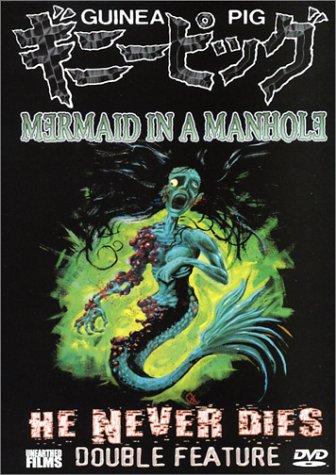
Guinea Pig 6: Mermaid in a Manhole (1988):

What it is: For the uninitiated, the Guinea Pig films are a collection of underground Japanese horror films made between 1985 – 1988 that are notorious for their levels of sadistic violence and cruelty. The frequently bootlegged series gained exceptional notoriety in 1991 when Charlie Sheen (yes, Mr. Tiger Blood himself) watched the 2nd entry (Flower of Flesh and Blood) and reported it to the FBI, thinking it was a real snuff film. The 6th entry is considered by many fans to be the best and most grotesque of the series with its highly unconventional and disturbing story about an artist (Shigeru Saiki) who brings home a living mermaid that he finds in the sewer.

Why it’s great: Each of the films in the series has a self-contained story and as such can be viewed in any order, so if you want to see what the true Guinea Pig experience is all about, I recommend jumping right in on this one. Despite the fact that this story is actually somewhat atypical for the franchise (featuring a man trying to help a female character rather than torture her) it still manages to be the most grotesque and disturbing entry. The revolting body horror is brought to life through excellent practical effects as the artist paints with her multi-colored pus, pulls live worms out of her tumors, and cleans up piles of them from her bloody puke. Gather the family around and watch this one with dinner!

Where to find it: Used, out of print DVDs can be found on Amazon and eBay and box sets of all 6 Guinea Pig films have been found on eBay. Not available to stream.

American Guinea Pig: Bouquet of Guts

and Gore (2014):

What it is: Previously only available via increasingly hard to find VHS copies, the Guinea Pig series was first released to DVD in North America by Unearthed Films. Being a fan of the series himself, the company president Stephen Biro kicked off his own franchise as an homage to the cult classic with his directorial debut American Guinea Pig: Bouquet of Guts and Gore. A spiritual successor to the original series, this film is similar in style to the first two entries as it features a light amount of plot and a focus on the graphic torture of two abducted women.

Why it’s great: Based on the above description of the film, at this point you’re either in or you’re out. For fans of the original series though, this serves as the prefect love letter to the franchise as it captures the gritty, dangerous feel that they invoked and possibly even surpasses it in graphic content. Limbs are laboriously sawed through, eyeballs are slit, and jaws hacked off with amazingly realistic detail and any fans of great practical effects work owe it to themselves to check this out. Like all great underground films this is an example of an uncensored, uncompromising artistic expression that hasn’t been watered down and sanitized for mass consumption. The barometer of what’s considered “acceptable” in art is always fluctuating and it’s content creators like Biro who push out against the edges and keep the doorway open for everyone else.

Where to find it: Available on DVD only through Amazon, Walmart, unearthedfilms.com, deepdiscount.com, fye.com and has been found on eBay. Available to stream only through midnightmoviesociety.com.

Brutal (2017):

What it is: Brutal is a film that definitely lives up to its title. Divided into three sections, the first focuses on a character known only as ‘Man’ (played by the actor known only as Butch) as he gruesomely tortures a group of young women. The next section focuses on ‘Woman’ (played by the similarly mononymous Ayano) as she viciously dispatches men in comparably violent ways. In the third section….they meet.

Why it’s great: What starts off seeming like a run-of-the-mill torture porn ends up evolving into a unique, supremely fucked up love story of sorts with engaging twists and occasional detours into surreal territory. It’s a refreshing change to also see males on the receiving end of the abuse and the film actually has a lot of interesting commentary on the subject of gender itself. It also has no shortage of highly disturbing imagery (especially towards the end) that’s sure to linger in your mind long after the credits roll.

Where to find it: Widely available on Blu-ray and DVD on Amazon, Walmart, Best Buy, unearthedfilms.com, deepdiscount.com, fye.com and has been found on eBay. Only available to rent or own via streaming at vimeo.com.

Visceral: Between the Ropes of Madness

(2012):

What it is: Another film that lives up to its provocative title is Visceral: Between the Ropes of Madness. This brutal Chilean film tells the story of an unnamed boxer (writer/director Felipe Eluti) who tries to rekindle his failing career with one more fight against an undefeated opponent. The story unfolds in a nonlinear format to reveal why he is committing a series of horrifically gruesome murders and who the mysterious figure compelling him to kill really is.

Why it’s great: This film was clearly a passion project for Eluti and it shows in every detailed shot. The nonlinear format is deliberately disorienting and adds to the nightmarish, surreal feeling of the film but Eluti cleverly uses the boxer’s hair length as a guide point for differentiating between the timelines. He is also able to use simple techniques such as voice modulation and an uncanny mask to imbue the mysterious visitor (listed only as Judas in the credits) with an effectively menacing presence. Hardcore gore fans will also be pleased to know that the film is violent with a capital ‘V’ and if you thought A Serbian Film was the only one with the guts to feature an explicit skull-fucking, well, buckle up!

Where to find it: Widely available on DVD only on Amazon, Walmart, Best Buy, unearthedfilms.com and deepdiscount.com and has been found on eBay. Available to stream on midnightmoviesociety.com and available to rent or own via streaming on vimeo.com, Google Play and YouTube.

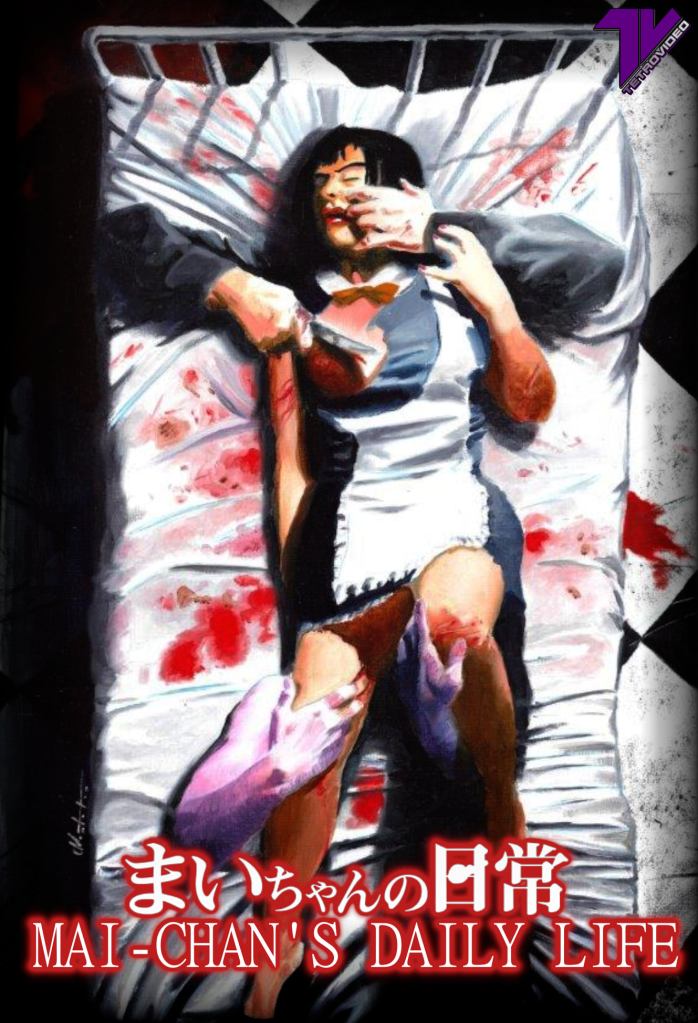
Mai-chan’s Daily Life (2014)

Mai-chan’s Daily Life brings to mind questions I never thought I’d ask such as “what if instead of being a badass superhero Wolverine was a tortured sex slave?” That’s essentially the central plot of this film, where a maid with infinitely regenerative powers (who can still feel pain) is used by her sadistic “master” to fulfill his violent, brutal fantasies. Loosely based upon the 2003 Manga Mai-chan no nichijô by Waita Uziga the film was adapted and directed by Sade Satô in 2014. While the story may deviate quite a bit from the source material, it maintains the same spirit of gleeful brutality thanks in large part to direct supervision of the process by Uziga himself.

The storyline in this adaptation centers around a new character created for the film named Miyako (Miyako Akane) who starts work as a maid at the remote house where Mai-chan (An Koshi) already works. Once Miyako dons her short, fetishistic maid outfit, Mai-chan starts showing her the ropes. This includes how to dust the jars filled with dead puppies, as well as how to be appropriately subservient to their wheelchair-bound employer known only as “Master” (Shôgo Maruyamawho) and the cruel head maid Kaede (Soako Roman). After witnessing the brutal punishment Mai-chan receives for daring to spill the milk that she was forced to lap up from a bowl on the floor, Miyako becomes aware of Mai-chan’s special ability. Rather than horrifying her, this seems to awaken something in Miyako who becomes obsessed with the idea of “devouring” Mai-chan.

Despite its incredibly brutal violence, the film actually feels toned-down from the Manga as it contains none of the graphic sex or (thankfully) pedophilia of the source material. I can’t say that there is really a lot beneath the surface here, as both the film and the Manga seem primarily created to indulge the Torture Porn fantasies of the audience and the lingering shots of bent-over maids and sadistic violence certainly work to support that idea. Don’t get me wrong though, there’s absolutely nothing wrong with that and it’s great when a film knows what it is and owns it. Despite all the violence, the film has a lightness to it and doesn’t take itself too seriously. There’s something about Mai-chan that just makes it so damn engaging (dare I say fun) and the experience is reminiscent of the similarly graphic yet lighthearted Guinea Pig 3: He Never Dies.

It helps that the acting and special effects are both excellent which serves to keep you immersed in this strange, twisted story. The film does (for some reason) alternate between black & white and color at seemingly random intervals which may have been an homage to the B&W source material, but I found to be a needless distraction. Even though it originally came out in 2014 the film is getting a proper re-release courtesy of Tetro Video in July of 2021, which is great news for fans who can no longer get a hold of the OOP edition that Redemption Films put out in 2016. Connoisseurs of twisted, splatter cinema would do well to check this one out because at just over an hour, it goes down real easy and has a great rewatchability factor. It may not be the most complex thing on the menu but it’s a satisfying treat that Extreme Cinema fans will want to devour over and over again.

Short Film Review: Family Bond (2019) Duration 12 min 49 sec

A successful story is one that develops as it progresses, bringing new twists and revelations as it builds upon itself. When the story in question is a short, then it’s important that the movement occurs quickly and meaningfully. Director/co-writer Chris Guzzo finds that balance with Family Bond which starts out on a tense but innocuous domestic scene and develops into something far more menacing before long. Its difficult to really talk about the short’s plot without giving spoilers but there are other things to discuss. The acting for one is good, it’s not the best I’ve ever seen but it still manages to bring the characters to life and gets the job done. Within its brief run time the film is able to throw in some major twists and surprising revelations which is difficult to do within such a limited space. Those twists however do rely heavily on the acceptance of a certain fact that, while possible, is unlikely enough to remain dangerously close to implausible. Still, an overall interesting story that efficiently sets up the characters and the world and will take you on an engaging ride that builds to a fittingly dark climax.

Short Film Review: Waiting (2019) Duration 6 min

“Show, don’t tell”, an old adage that rings especially true for the visual medium of film and one that writer/director Anthony Cally has fully embraced with his dialogue-free short, Waiting. It’s a credit to Cally and everyone involved that his story about a group of people waiting in a bar was so engaging that I wasn’t even cognizant of the fact that no one had spoken a word until after the film finished. It’s a bold move to try and communicate a concept without words, but the brilliant acting, gorgeous, professional production design, and the exquisite use of sound to guide the narrative all work in concert to create a stunning final product.

The story itself is very clever and while it might take viewers a couple of watches to pick up on exactly what is happening, all the clues are provided if you look carefully. As more information is revealed the tension becomes palpable as this seemingly innocuous location is clearly anything but normal. While it does function perfectly as a self-contained story, the world was so engaging that I would love to see it as a springboard into a feature-length continuation. At just about six minutes, this bite-sized short left me hungry for more and as soon as it was finished I immediately had to watch it again. Here’s hoping we see a lot more of Anthony Cally in the future, and that we’re not left waiting too long for his feature debut.

Short Film Review: Filtered (2021) Duration 5 min 39 sec

As we rely more and more on technology to make connections (especially as the ever present quarantine isolation marches on) it makes sense that tech based horror would become more prevalent in the genre in new and interesting ways. Just as Host did last year, Filtered is able to effectively communicate horror and anxiety in the simple yet brilliant format of video chat. With a runtime of less than six minutes, writer/ director Vincenzo Nappi doesn’t have a lot of time to establish characters or backstory, yet is able to make both Jasmine (Jasmine Winter) and Marco (Marco Carreiro) immediately feel genuine and real with the sparse information provided. This goes a long way to making their initially mundane conversation all the more familiar at the start and therefore more frightening by the climax. With simple yet effective imagery that recalls the classic David Lynch shortThe Alphabet at times, this is an amazing piece of bite-sized horror that feels very apropos to the moment.

Short Film Review: Forced Entry (2021) Duration 24 min 24 sec

Typically in short films it’s best to dive right into the action and Forced Entry does just that as it plunges you into the world of psychotic drifter duo Arthur Maddox (Tom Lodewyck) and Donovan Hatche (James Bett Jr). The film follows the pair on a brutal killing spree over the course of a couple of days and was inspired by real life murderers Lawrence Bittaker and Roy Norris who raped and killed five young women in 1979. Even though brief footage of the real killers is shown at the end, the connection they have to the film probably wouldn’t have been clear to anyone who didn’t have the luxury of reading the highly detailed press kit. Even so, the shots do still serve to illustrate the point that our real world is filled with brutal, sadistic violence that usually occurs without much motive or rational explanation.

The story here is definitely pretty bare bones as most of the twenty-four minute runtime is taken up with extended scenes of mean-spirited violence. That’s not at all a bad thing in this case though, because even without a more robust narrative, the film still manages to be highly compelling with some truly impressive practical gore effects and excellent performances from the victims. It also makes sense given the fact that K.M. Jamison (who co-wrote/co-directed with James Bett Jr) said in a statement that the film is intended to function as a kind of showcase for what will hopefully be turned into a feature someday. In that regard it’s highly successful and I’m very on-board to see this nasty little story get fully fleshed-out in all its blood-soaked glory.

Nightmare Symphony (2021)

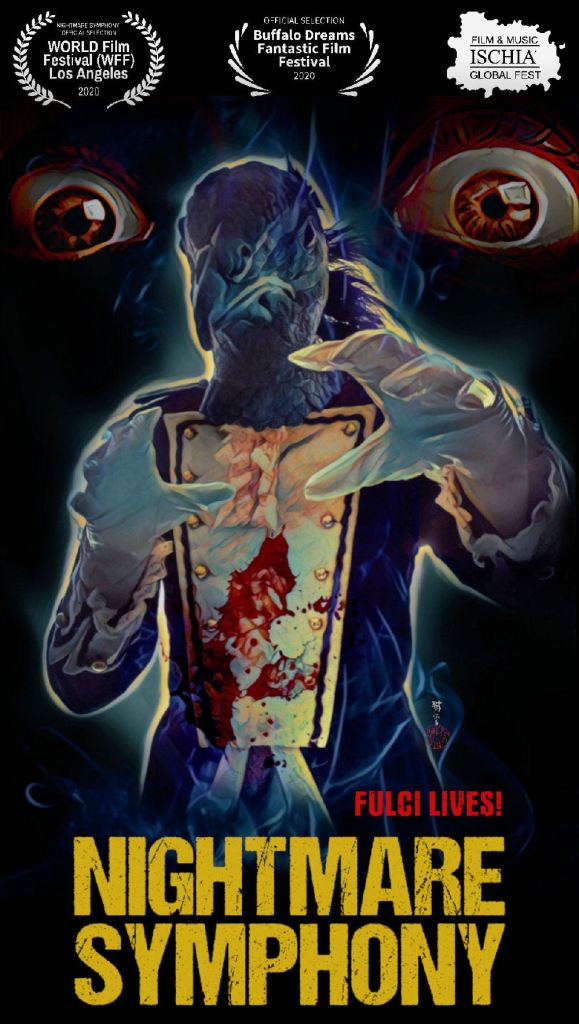
It’s interesting that the review for Nightmare Symphony would come directly after my review of Undergods since both films play with ambiguity and surreal imagery but achieve nearly opposite results. In this case, the Giallo-inspired film takes a big swing at meta commentary and the nature of reality with its story of an American director Frank (Frank LaLoggia) who goes to Italy to finish the edit of his film. Before long people all around him seem to be dying at the hands of a mysterious killer in a bird mask, who leaves no trace behind other than a peacock feather as their calling card.

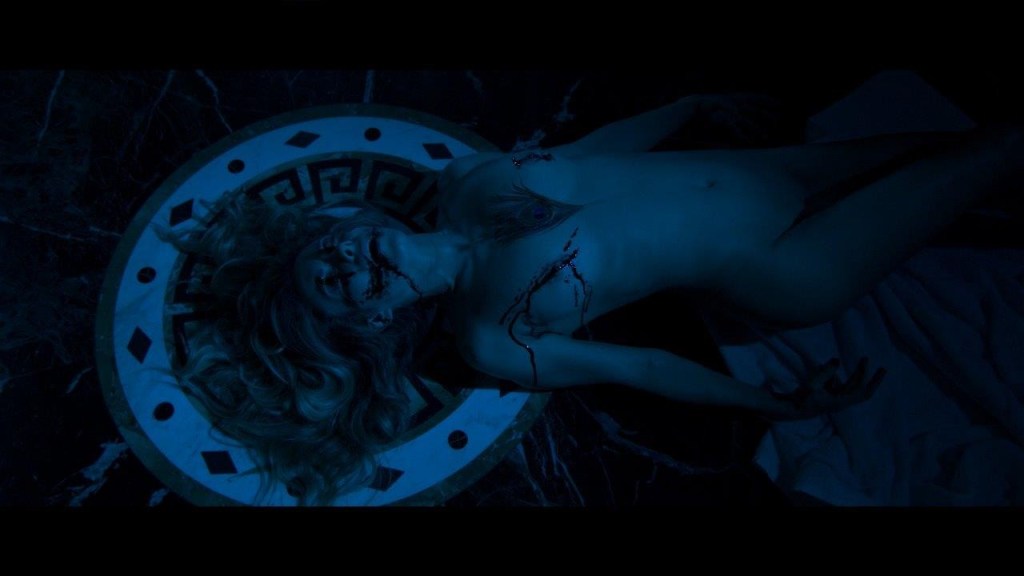
Clearly this film is a love letter to Giallo itself, which is apparent long before the dedication to Lucio Fulci during the closing credits. On this front it succeeds wonderfully and the color-saturated scenes where the bird masked killer slashes up their victims with a straight razor to a pulsating synth score are a thing of beauty. In fact, I want to especially shout out all the FX work on this film because it is far and away the best part of the entire experience and every gory scene that features it is a work of brutal, bloody art.

What’s less successful is the story itself, as well as LaLoggia’s lackluster performance which never quite rings true, especially when paired with some of the actors in minor roles that are really bringing their A-game. It’s frustrating because I can see what writer Antonio Tentori (Cat in the Brain, Demonia) is trying to do but it simply does not come together. The ending (which I won’t reveal here) attempts to be very clever with a big meta reveal but falls utterly flat due to the fact that the preceding story in no way supports it.

Ambiguity in films can be a great thing, but a story that actively contradicts itself and feels like there are key scenes missing isn’t the same as not understanding a surreal film that’s filled with metaphor and symbolism. If you are going to play with the concept of reality itself in a film then you need to clearly establish what the reality of the world is and really understand when and how you are breaking with those conventions.

In this case Nightmare Symphony feels as confused as the viewer but attempts to cover its plot holes with stylized theatrics that it hopes will somehow congeal into meaning. Still, the film has a lot of style and a few carefully crafted re-shoots might be all it takes to fill in the missing pieces and tie the ending to the film that preceded it.

Larva Mental (2021)

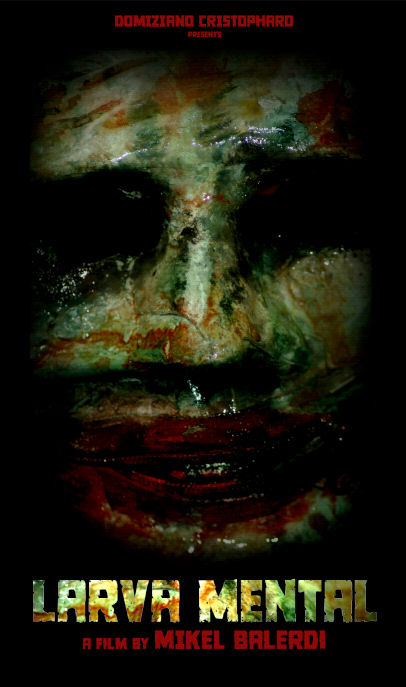
Larva Mental is a difficult film to talk about. For a lot of people this would be due to the extremely grotesque and graphic content, the mere mention of which is enough to nauseate and horrify the average viewer. I of course am not the average viewer and as someone who revels in the twisted grotesqueries found in the darkest corners of cinema, the content itself is no problem for me. Instead I find it difficult because I am of two minds about this film; one that thoroughly appreciates and champions the use of profoundly disturbing imagery and taboo performance-art and one that views the movie by the caliber of the filmmaking and the quality of the storytelling.

There are only two credited actors in the film, but since neither is given a character name, I will refer to them as The Father (Mikel Balerdi) and The Daughter (Daieri Gadna). Balerdi also wrote and directed, and the special FX make-up is credited entirely to him and Gadna, so clearly it’s a very DIY project. There’s certainly nothing wrong with that but the quality of the footage as well as the reliance on slightly shaky hand-held and static shots makes it very apparent that this was made without the assistance of a professional crew.

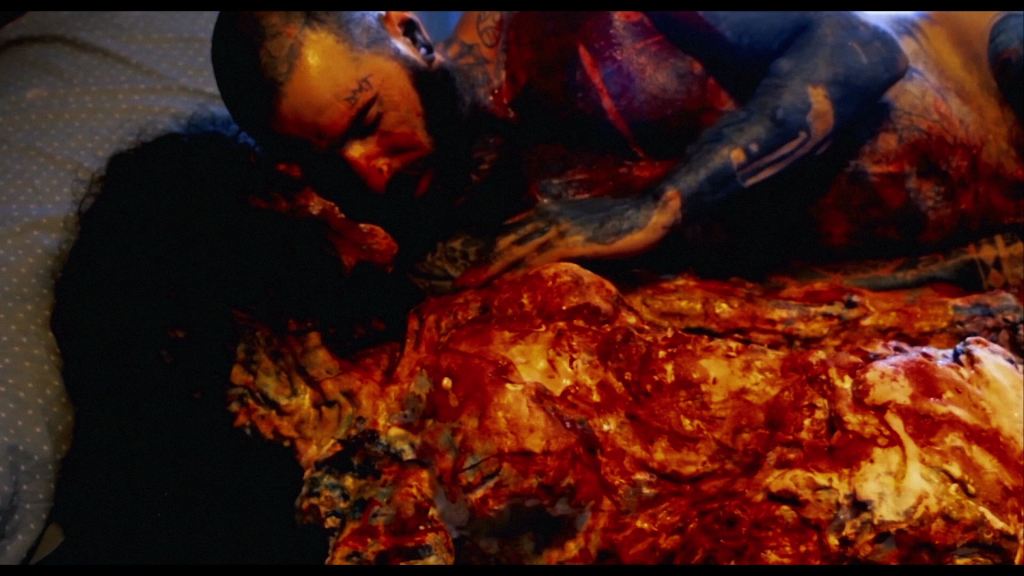
There is almost no dialogue in the film but the story is about a father and daughter who seem to have shared a trauma (and have an “interesting” relationship that involves sleeping naked together in the same bed). One day, The Father puts on a collar shirt goes away on what seems to be a business trip (although what business he works in with those face tattoos is unclear) leaving The Daughter at home to snoop around his computer. When she finds an intensely depraved video of him (that really must be seen to be believed) and some sketchy masks hidden away, she is so upset that she brutally kills herself. Upon discovering the body, he is so distraught that it sends him into a spiral of heroin shooting, self harm, and some good old fashioned corpse fucking.

The main draw of this film is clearly the spectacle of the various depraved scenes, but there is so much of them crammed into the short runtime that it starts to feel like a series of internet shock videos strung together with only a vague semblance of a story filling in the cracks. The rough video quality and down-n-dirty feel work well in service of the unsimulated shock scenes and reinforce the fact that this is indeed an example of legit extreme underground filmmaking at its nastiest. Conversely, the seams start to show a bit more when practical effects are involved. The corpse here doesn’t have the same level of high quality realism found in other films that are light on plot but heavy on gruesome body violence like AGP: Bouquet of Guts and Gore or Aftermath, which give the scenes with it significantly less impact.

Speaking of impact, the shock factor of the scenes would be higher if there weren’t so many of them back to back. Early scenes also ramp up the extremity quite high which results in them taking the wind out of the sails of those that follow and dulls their effectiveness. I would have greatly preferred that story and character development were given priority and that the level of depravity escalated gradually throughout to give it a stronger impact. With a runtime of just over an hour, there is plenty of room to weave the same amount of disturbing footage into a well established character arc that would give the scenes far more bite.

Based on the information I could find, this appears to be Balerdi’s first feature length film, but I hope we see more of him in the future. From a performance art standpoint, this film is able to go to levels that are exceedingly daring and bold and if Balerdi is able to put that same fearless, unflinching energy into a more well realized narrative, he could create some dark art that really shakes things up in the world of Extreme Cinema.

A Record of Sweet Murder (2019)

When The Blair Witch Project exploded onto the scene in 1999 it forever changed the world of horror cinema. In its wake, the once novel concept of a “found footage” film established by Cannibal Holocaust in 1980 quickly became ubiquitous within the market to the point of oversaturation. In the intervening years many filmmakers have used the audience’s willingness to embrace the rougher, naturalistic aesthetic of the style as an excuse for low production value as they churn out countless versions of the same basic story.

Thankfully, innovative filmmakers have also made their mark on the subgenre and films like Rec, Creep, and more recently Host (to name just a few) have elevated the style by taking it in new and creative directions. Innovation within the subgenre is rare enough but A Record of Sweet Murder is wholly unique as it dares to combine the found footage aesthetic with the rarest of cinema tropes, the single take film. By all conventional wisdom, an idea this ambitious could never work, but writer/director Kôji Shiraishi (Grotesque) pulls it off with results that are nothing short of mind-blowing!

The story centers around investigative reporter Kim Soyeon (Kim Kkobbi) who receives a call from Park Sangjoon (Je-wook Yeon), an escaped fugitive wanted for numerous murders. Park offers her an exclusive interview if she will meet him in a secluded location and bring along a Japanese cameraman. Since Kim and Park share a childhood connection, she believes that they will not be in any danger, but once they arrive it becomes clear that Park has a much larger plan in which they are to play an integral role.

To be clear, this film isn’t a true one-shot film like Russian Ark, but since everything but a few quick scenes at the end was done in a single take it’s still an incredible feat of filmmaking. It isn’t just the fact of doing it in a single take that is impressive, it’s what they are able to accomplish within the massive shot that is truly mind-blowing. Brutal fight scenes, multiple locations, numerous characters, realistic special effects, and an engaging storyline all work in concert to produce a thoroughly unique, mesmerizing experience. Even without the novelty of the single take this would be an incredible, well acted, and engaging film but the fact that Shiraishi goes the extra mile with a ground-breaking concept really puts it over the top.

It’s truly a cinematic travesty that such an innovative, brilliant film has gotten such little attention since its release yet Hitchcock’s faux one-shot film Rope is still talked about with such reverence after more than seven decades. I know that the cameras of the time limited the production to shooting it in a series of ten minute takes but Hitchcock’s blatant cutaways do absolutely nothing to preserve the illusion of an unbroken shot in that overrated “classic”. Despite this (and the fact that it felt more like watching a one-act play than a one-shot film) Rope was still innovative for its time and innovation should always be appreciated. To that end I’m hard pressed to think of many films in recent memory that have innovated more than ARoSM and here’s hoping that someday its style-blending brilliance will be appreciated for the unique achievement that it is.