The Benefactress (an exposure of cinematic freedom) (2025)

Understanding the artistic intention of a filmmaker is key to being able to determine the quality of the work. While you usually don’t have the ability to hear directly from the artist what their work meant, you also shouldn’t need to because, if done successfully, the message and intention should be evident through the language of film, no matter how abstract the work. Sometimes you have to let go of traditional narrative expectations entirely to meet the film on its own level, embracing the vibe and symbolism the director is using. For The Benefactress (an exposure of cinematic freedom) the intention clearly isn’t to entertain the audience with the kind of fun escapism they can get from a mainstream theater but rather to utilize the tools of filmmaking to explore how far the boundaries of art can be pushed. Now, as with any work of art, the determination of how successful it is depends on if the execution can live up to the intention.

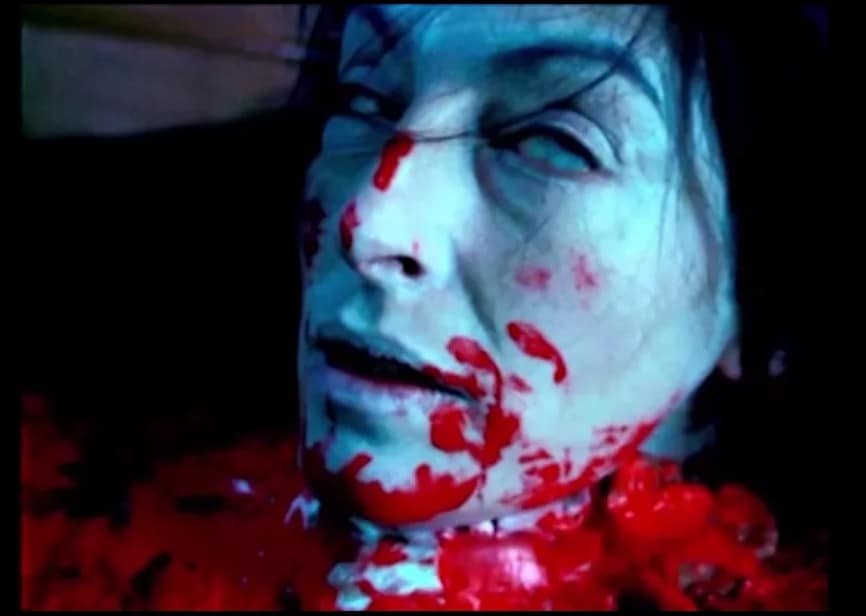
The film is the creation of writer/director Guerrilla Metropolitana and starts with a long text crawl that, among other things, talks about how the director’s previous work gained the attention of individuals in “high ranks of society” who have now decided to fund this project and see what an underground filmmaker can do with mainstream money. After that, an unassuming middle-aged woman named Juicy X reads a statement to camera about her previous experience with Metropolitana’s unconventional methods. She also states that the financial resources being provided by the mysterious benefactress known by the pseudonym “Elektra McBride” has brought a new quality to his cinema. Now that the copious amounts of funding have been firmly established, the expectations are officially set, and I can’t wait to see what this edgy, unfiltered, underground film with Hollywood level production values looks like. Sounds like we have another Serbian Film on our hands.

After over eight minutes of preamble, the main film is ready to start and most of the remaining hour of the runtime is devoted to Juicy X sexually assaulting another middle-aged woman in light bondage gear who seems to be her captive. Playing himself as the director/camera operator in the film within a film, Metropolitana records everything in shaky hand-held as Juicy X forceably inserts various objects into her victim and performs other sex acts onto her seemingly unwilling victim. This is done for the benefit of the benefactress herself who watches via a livestream monitor wearing nothing but a gimp mask while breathing in heavily from an oxygen tank and masturbating. The film is loosely plotted but does take some twists and turns as new characters are introduced and Metropolitana even steps out from behind the camera to take his turn raping the woman as well. Perhaps this section was inspired by the controversial Belgian arthouse shocker Man Bites Dog, or perhaps not.

It’s unclear where all of the mainstream money they kept referring to earlier ended up, it certainly wasn’t in the single apartment that served as the shooting location or in the generic film stock filter that was put on the digital footage in post-production. This isn’t something that I would normally draw attention to because I don’t hold a lack of budget against a production but if you are going to repeatedly introduce the idea of the film having a substantial budget then it should be called out when we don’t see any evidence of it on the screen. This brings us to the biggest issue with the film itself which is the inherent disingenuousness of the production.

Every aspect of this film seems intent on trying to deceive the viewer into thinking it’s something that it is not from the bullshit story about the funding in the opening crawl to the fake film grain to the ear piercing canned mic feedback sound that is added almost compulsively throughout. The greatest offender by far however is the fact that all the sexuality in this “exposure of cinematic freedom” is faked. Now, there is a point while we see Metropolitana humping the nameless victim where a voiceover of him comes in to let the audience know he is really fucking her but we’ll have to take his word for it because the angle doesn’t reveal anything. There is also a moment when we see what looks like cum spurt out onto Juicy X’s backside from behind the camera which may also be authentic since the boner that Metropolitana displays through multiple scenes very much is.

So, a few possible exceptions aside, the film is a fake, softcore simulation and I can’t for the life of me understand why a film whose whole thesis is centered around cinematic freedom is not even able to commit to its own premise and resorts to unnecessary self-censorship. Had this simply committed to the concept and delivered a truly unfiltered explicit experience then it would be a solid piece of boundary-pushing filmmaking but as it is, it feels stifled and restrained and there isn’t enough of a story or creative film techniques to make up for it. There are so many films out there that effectively utilize explicit sexuality as a form of artist expression and Metropolitana should take cues from films like We Are the Flesh, Shortbus, 29 Needles, Flesh Eater X, Baise-moi, XXX: Dark Web, Portraits of Andrea Palmer and so many others that boldly push the limits of cinematic freedom and don’t simply take a half measure. I truly think Metropolitana could be capable of delivering some really interesting boundary-pushing art if he takes the gloves off and makes a film that owns and celebrates what it is instead of trying to convince you that it’s something that it’s not.

Availability: Limited

The film is being distributed by Blood Pact Films and can be purchased on their official website.

The Profane Exhibit (2013)

At long last the wait is nearly over! The Profane Exhibit, an anthology collection of Extreme Cinema shorts by 10 of the most boundary-pushing directors is finally making its home media debut via Unearthed Films after notoriously languishing in post-production for eleven years after its initial festival premiere in 2013. I couldn’t confirm the specifics about the cause of the extended release delay but situations like this tend to come down to unglamorous explanations involving rights issues and personality conflicts. While many fans of underground horror have been eagerly anticipating its release, the unusually long waiting period was the cause of much restless grumbling online and even speculation that the film itself was nothing more than a myth. So naturally, the first question on everyone’s mind is going to be “was it worth the wait?” Well, let’s discuss.

Each of the 10 segments is a standalone piece by a different director and are completely unrelated with only some strange footage of meat processing acting as the connective tissue, if you will. The films vary in content and quality as is always the case to some degree in anthologies with the overarching connection seemingly being “just make something super fucked up”. That’s certainly a sentiment I can get on board with as well as a collection that features heavy hitters of underground cinema on both sides of the camera…..and Uwe Boll. Ruggero Deodato (Cannibal Holocaust), Yoshihiro Nishimura (Tokyo Gore Police), Marian Dora (Melancholie der Engel) and many others all contribute segments for an unprecedented collection of international talent. On the other side of the lens, some notable highlights include legendary character actor Clint Howard (Ice Cream Man, Arrested Development) taking an exceptionally dark turn in Boll’s segment Basement, and Eihi Shiina (Audition, Tokyo Gore Police, Helldriver) crushing it in Nishimura’s Hell Chef segment like the absolute fucking legend that she is.

One of the key factors of an anthology is how you structure the segments. Ideally, the first one out of the gate should grab hold of you and set the tone of things to come until the film culminates in a showstopping finale. Unfortunately, this is where The Profane Exhibit is guilty of a major misstep by opening the collection with the tepid and underwhelming Mother May I by Anthony DiBlasi. The short tells the story of a sinister nun who deals out draconian punishments to the young women in her charge and while it is a perfectly serviceable horror short with some inspired creature effects, it feels out of place in a collection that is supposed to be centered around the concept of boundary-pushing extremity. This anthology would have been much better served by opening with almost any other segment from the collection and Hell Chef, Tophet Quorom or Manna would have all been exceptionally good ways to kick things off.

The weirdest outlier of the whole anthology is unquestionably Deodato’s segment, The Bridge. For many horror fans, Cannibal Holocaust acts as an entry point into world of darker and more obscure Extreme Cinema and even numerous genre fans who can’t stomach it are at least aware of what it is making Deodato probably the most recognizable name in the whole collection. Given the pedigree of his most notable work, it is utterly baffling how tame and innocuous his entry was. Sure, the idea is dark but this short blip of a film barely registers as horror and definitely not as something that should be in an Extreme Cinema collection. Rest in Power to a legend though.

Now I want to focus on some of the things this collection does right, because there are a lot of them. Dora delivers a tour de force with his brilliantly directed and utterly bleak (naturally) entry Mors in Tabula about a doctor called to a rural town to aid a severely ill child in World War II era Germany. Hell Chef is a very fun and brutal entry that delivers a pitch-perfect slice of Japanese Splatter Gore and while there may not have been a lot of substance to Manna, I thoroughly enjoyed it for the unrelenting visual feast of sex and violence that it was.Basement and Goodwife are both solid entries in the “human monsters hiding in plain sight in suburban America” subgenre and Tophet Quorom is an excellent segment about an evil cult that brings a well-realized story to life along with some ferocious violence. I like how the aptly titled micro-segment Amouche Bouche ties into the “meat” segments that are intercut between entries throughout. The real stand-out in this collection though is Nacho Vigalondo’s Sins of the Father. This one starts with such a strange and jarring premise that unfolds and reveals itself in unexpected ways to unveil the immensely dark and unpredictable narrative. The truly unique quality of the story coupled with the expertly crafted production make this one a haunting and mesmerizing experience that will stay will you far longer than some of the more overtly violent entries here.

I’ve seen some pretty mixed chatter about this film lately and part of that may be due to its legendarily long wait time before release building expectations to an unmatchable degree. Is it everything it could be and everything we could want in an Extreme Cinema collection that pushes the boundaries farther than any others dare to go? No, it has its missteps but there is far and away (Clint Howard reference, couldn’t help myself) much more good than not. While it’s not perfect, The Profane Exhibit is a daring and provocative collection of art that fans of twisted, underground cinema won’t want to miss. So yeah, it was worth the wait.

Availability: Upcoming Release

The film will be released through Unearthed Films on September 24th, 2024 and can be preordered here.

Mutilation Theatre (2023)

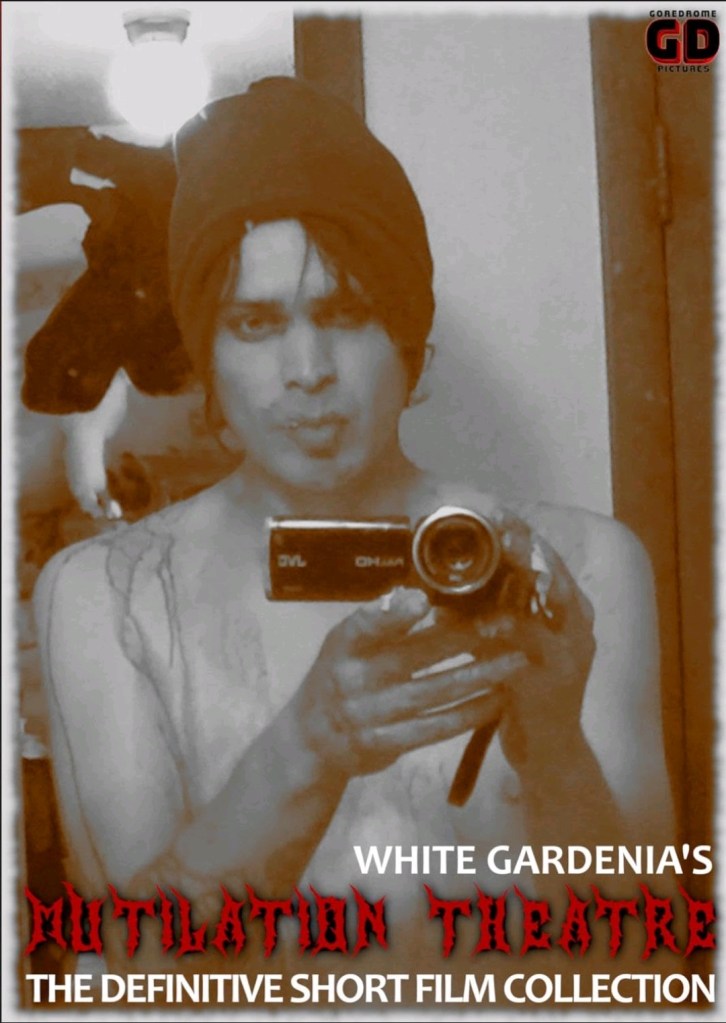
I’ve been a fan of White Gardenia (the underground artist collective helmed by controversial performance artist Daniel Valient) for quite some time now so naturally the idea of a definitive collection of their work was very appealing to me. Mutilation Theatre combines films from previous White Gardenia collections such as Blood Tastes Like Perfume and How to Raise Women from the Dead plus substantial additional footage. The film, released by Goredrome Pictures, comes in at a hefty four and a half hours and is billed as “The Definitive Short Film Collection”, which at that length it certainly should be. It’s definitely comprehensive but as far as definitive goes we’ll talk more about that a little later.

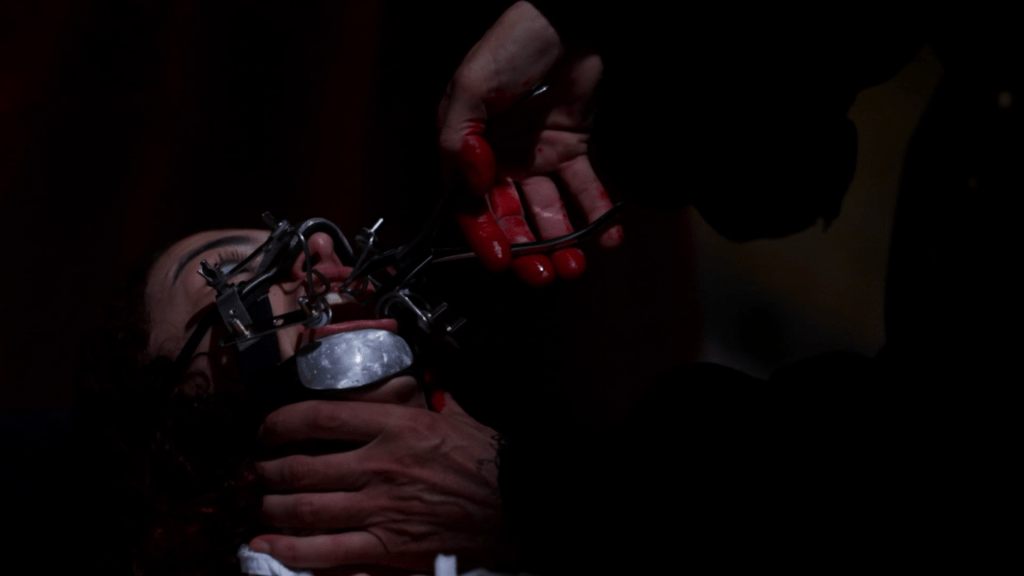
For fans of WG, Mutilation Theatre does provide the hits and features many of my personal favorites including The Oracle at Mesopotamia, Akasha’s First Time, m.i.p.a.m.h., Mobius Strip and more. These are the kinds of films that feature White Gardenia at their best and embody the surreal, unique experience that they are known for, featuring discordant audio soundscapes, bizarre onscreen text popups, and of course, real body mutilation and blood drinking. It also kicks off with a bang featuring a short that was new to me called The Oracle at Erythaea that was a sublime piece of disturbing art and featured a startling scene where Daniel viciously nails his own hand to the table before letting Allison drink his blood. The inclusion of the unsimulated shit-play/shit-eating scene later in the collection was genuinely surprising and good to see that WG can still find new shocking avenues to explore.

When your collection is longer than the extended cut of Return of the King, you’re bound to have some ups and downs in the quality of the material. White Gardenia is strongest when they focus on their well-honed format of surreal self-mutilation but falter a bit when it comes to narrative segments. While these scenes aren’t bad, they lack the forethought and substance to make them pop and are leaning heavily on the use of unsimulated cutting, explicit sex, and occasional special effects to keep the viewer engaged. There is also a bit of culling that could have been beneficial such as the segment The Oracle at West Gate Mall (Oct 1985) which is literally nothing more than a short clip of an animatronic skeleton inside a Spirit Halloween and was clearly shot well after 1985.

It’s great that there are underground companies like Goredrome willing to put out obscure content like this but there are a few things left to be desired about the release itself. The fact that this is branded as a definitive edition yet lacks some key WG segments is pretty disappointing. We only get V.O laden clips of the infamous finger-severing/eating from A Midnite Snack and segments like Allison’s Mouth Fills with Blood and Semen and Cher Nevin’s annihilating vaginal mutilation clip Yummy Fur are entirely absent. This is most likely due to their current inclusion on the Vore Gore and XXX: Dark Web compilations but still, these are keystone WG clips and you’d think they’d find a way to get them included. It’s also downright baffling to me that this collection still includes clips that are cut-off partway through with text directing you to a website for the full, uncensored version. Isn’t the whole point of a definitive collection to present artists’ work in its uncut entirety? And if these segments aren’t archived in physical media here then it seems unlikely it will ever happen for them.

If you know me then you know there is nothing I find more obscene and distasteful than censorship, self or otherwise. To that end, I was quite surprised that a collection that features bloodplay, explicit sex, and snacking on human feces would only include the censored version of A Perfume Made from Blood and Tears. And finally, not to sound overly nitpicky but it would have been really great to have more labeled subchapters to help find individual films rather than everything being dumped into a timeline and cut into four giant segments.

Ultimately, while there is good stuff here there is also room for improvement. The issue isn’t the content so much as the presentation that’s undermining it. We have yet to obtain a truly definitive gold-standard release of the work of White Gardenia but this is still a solid and comprehensive collection and a great way to dive in headfirst and experience the provocative, disturbing and thoroughly unique art they have created.

Availability: Limited

Limited copies are available from Goredrome.com while supplies last.

The Art of Self Harm (2023)

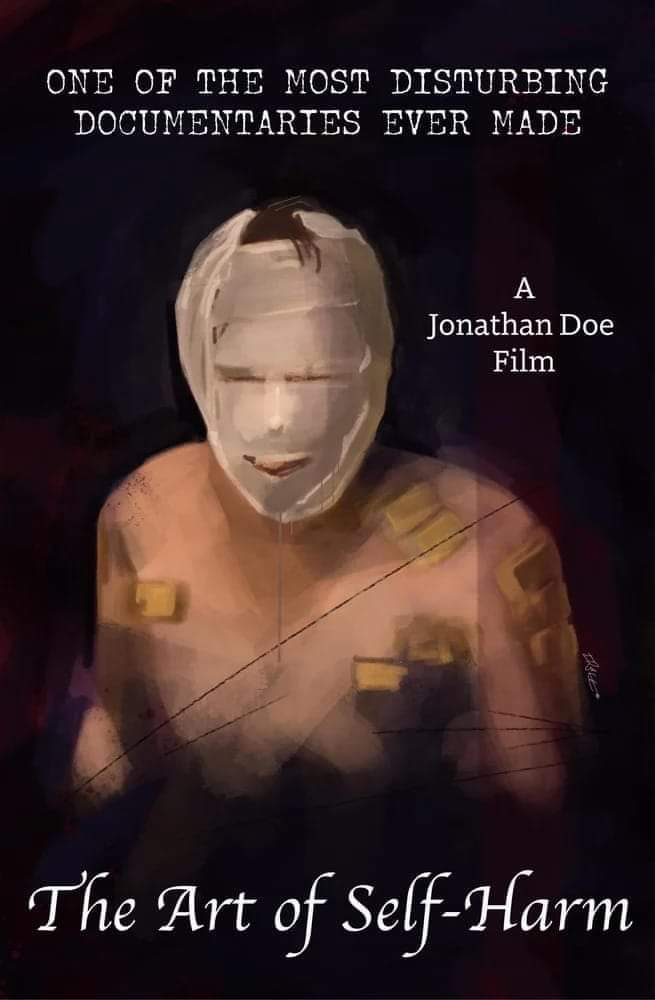
“One of the most disturbing documentaries ever made” a quote attributed to no one confidently proclaims at the top of the cover art. It’s a bold move to state this about your own film rather than waiting for others to bestow it upon you, but when the subject of your documentary is White Gardenia, a performance art collective that is literally on the cutting edge of underground Extreme Cinema you may have good cause to. So, does The Art of Self Harm live up to this proclamation or is it a hyperbolic marketing tactic? We’ll get more into this in a minute.

White Gardenia has been growing in prominence within the underground community thanks to limited edition compilations of their work like Blood Tastes Like Perfume and How to Raise Women from the Dead entering the marketplace along with segments in other collections such as XXX: Dark Web and Vore Gore. Defining exactly who is and isn’t officially part of the group can be a little murky as multiple people will pop in and out of videos, but the mainstays are Cherokee Nevin, Allison Belmont, and of course the ringleader himself, Daniel Valient. Much like the members themselves, the work of White Gardenia isn’t easily defined by strict labels or categorization but can most broadly be described as surreal short films that utilize music and unsimulated self-mutilation to create a unique and provocative experience for the viewer.

With The Art of Self Harm filmmaker Jonathan Doe (a prominent underground artist in his own right known for such films as The Degenerates, Barf Bunny, and Defilement of a Porcelain Doll) gains unprecedented access to the group, interviewing the key members and digging into WG’s backstory as well as some of their more notorious scenes. He even goes a step further and becomes part of the story himself when he films a new scene for them where Cherokee nails Daniel’s scrotum to a table in service of making a shall we say, “unconventional” candelabra.

The doc itself doesn’t really have a thesis statement nor does it delve too extensively into how this particular kind of outsider art fits into the larger cultural context but not every documentarian needs to be Ken Burns or Errol Morris. What it does offer is an intimate look at the people behind this provocative art and give context and additional information that even a long-time fan such as myself was unaware of. Whether its finding out the dark origin of the White Gardenia name, how the group shifted their focus from music creation to extreme performance art or just to see the “death pit” where Allison meditates amongst the corpses of various animals, this provides a lot of interesting info that fans are sure to appreciate. Daniel chooses to obscure his face in the interviews (even though it is on full display in the numerous clips that are intercut throughout) but is revealing in other ways as he further expands on his personal philosophy and motivation that he had only previously touched on in various clips in the past.

It’s not just the conversation that may be earning this film its distinction as a particularly disturbing documentary, as there are also numerous clips that those not desensitized by years of viewing Extreme Cinema may find hard to endure. Aside from the aforementioned candelabra piece, Doe also includes clips of classic White Gardenia segments including the notorious Midnite Snack from XXX: Dark Web where Daniel severs his own finger before he and Allison cook and taste it. It also includes the Yummy Fur segment from Vore Gore and Doe interviews Cherokee about what it was like to cut off a piece of her own labia and devour it.

There’s a lot of very interesting content within The Art of Self Harm for WG fans to…chew on if you will, but one more noteworthy parts that I found particularly intriguing was the behind-the-scenes controversy that XXX: Dark Web caused which even went so far as to involve the police. Yes, just like Ruggero Deodato was for Cannibal Holocaust and Hideshi Hino for Guinea Pig 2: Flower of Flesh and Blood, the members of White Gardenia were reported to the authorities for their involvement in the collection and had to prove that no one was in fact killed in any of the clips. I actually commend how reasonable the Montana police department was in their handling of this situation but the thought of three officers having to sit in a room and closely watch the entirety of XXX: Dark Web really puts a twisted smile on my face.

So, does The Art of Self Harm earn its self-appointed distinction? It really depends on your particular threshold for certain kinds of content and with films like Africa Addio, Orozco the Embalmer, Earthlings, Night and Fog, etc there are quite a few pushing the envelope in that category. That being said, I feel you would be hard-pressed to find someone who could reasonably disagree with the fact that a film with this much uncensored physical mutilation is indeed one of the most disturbing documentaries ever made.

Availability: Upcoming Release

Film will be officially for sale through Putrid Productions on November 18th, 2023 but is currently available for pre-order.

Justine (2023)

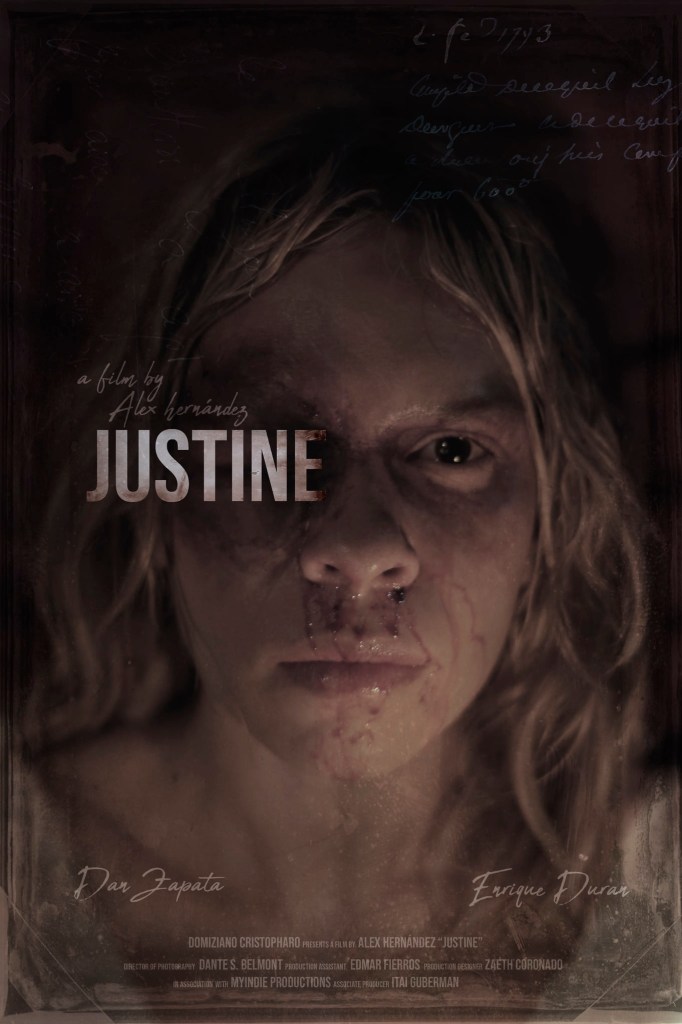
Every movie is made for a reason. More often than not that reason is nothing more than the rapid commodification of something resembling entertainment that is regurgitated out onto the market simply to make money. Other films eschew any concerns of commercial success in service of presenting the artist’s raw, unfiltered expression of ideas. In the simplest of terms, this is what distinguishes an art film from a commercial one, but whether or not it is a good art film depends on how effectively those ideas can be conveyed to the intended audience. Justine is undeniably an art film as the graphic violence, abstract plot, and incestuous necrophilia (you heard me) are indicative of director Alejandro Hernandez’s uncompromising vision, unburdened by concerns of mass appeal or commercial viability.

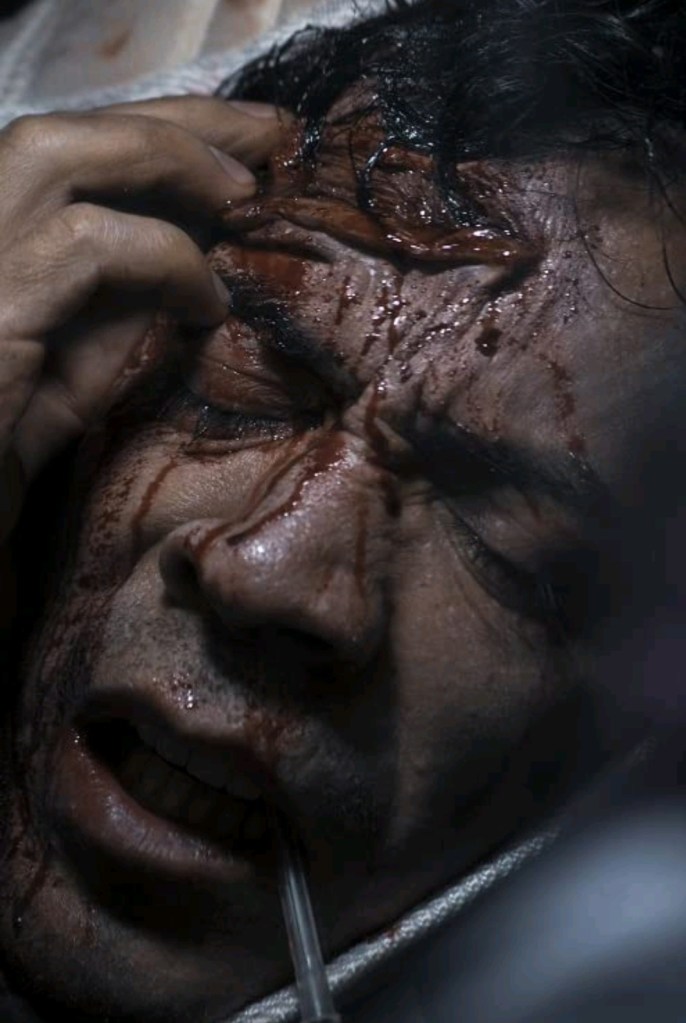
The film starts with the titular Justine (Dan Zapata) bruised and battered, telling her story, seemingly to a nurse in a hospital, although the location isn’t explicitly clear. In the retelling, we see the events that lead up to her brutalized state as she is subjected to strange, horrific experiments by the vicious Dr. Rodin (Enrique Diaz Duran) and his colleague. The story is loosely based upon Justine, or The Misfortunes of Virtue by the Marquis de Sade, and while this text has been adapted to film numerous times, it’s safe to say that this is by far the most graphic and explicit version. While this version does try to pay homage to the classical style of the source material with its verbose and metaphorical dialogue, it’s less faithful to the storyline and subtext of the original work.

De Sade’s novel is widely regarded as a misanthropic commentary on how those who try to lead a virtuous life will ultimately suffer for it, while those who are overtly wicked will prosper, but Hernandez instead concentrates his focus on the more Torture Porny aspects of de Sade’s writing. This version is less about the futility of a young woman’s journey through a morally bankrupt society and more of a Stockholm Syndrome “love” story that takes place in a torture chamber. While I understand the intention behind using more poetic dialogue, it does make the evolving relationship between Justine and Rodin unnecessarily cumbersome to understand if not downright incomprehensible.

A purely cynical read of the film overall might suggest that the flowery dialogue, classical music, and Roman Numerals that separate the chapter breaks might be an overly aspirational attempt to inject profundity into a story that is, at its core, a very base Torture Porn. That wouldn’t be an entirely fair read, however, because despite shortcomings in some areas, there are other aspects of Justine that are executed extremely well.

The acting, for one, is truly impressive and while both leads shine in their respective roles and do the best with what they’ve got to work with, it’s really Dr. Rodin that steals the show. From the physicality to the pathos to the pure wickedness that seems to ooze out of him, Diaz Duran brings out a menace and a believability to the character that is utterly mesmerizing to watch. From a technical proficiency standpoint, this film is also incredibly well made with excellent cinematography and some top-notch brutal gore effects. A more minimalist approach to the dialogue with just enough information to move the story along and a complete excising of the VO narration would have helped this production considerably. Except in rare cases, VO is generally a storytelling crutch used by filmmakers who don’t feel confident that their images can speak for themselves and the visceral imagery in this film has plenty to say on its own.

Justine certainly swings for the fences and while its story is a bit too muddled to reach the emotional and intellectual resonance it so clearly seeks, I do admire it for attempting. This is not to say that it is rendered unwatchable as a result, far from it in fact, and the exquisite viscera and unfiltered brutality alone will make it well worth the price of admission for many gore fans. And the incestuous necrophilia? Well, you’ll just have to see for yourself.

Availability: Upcoming Release

Film is releasing in 2023, current date unknown as of review. Visit https://tetrovideo.com for updates and info.

Hyde’s Secret Nightmare (2011)

At what point does a sexually explicit art film simply become porn, and what is the distinction between art and porn exactly? A large part is the director’s intention but it’s also about the ratio between scenes with fucking and scenes without and where the real focus of the film is. Porn is porn because the main event is the sex and everything else is either lead up to that or filler. The only value the non-explicit scenes have is how much they prop up and enhance the explicit ones. A sexually explicit art film by contrast is focused on expressing ideas and uses sexuality as a tool in service of that rather than simply being a vehicle for titillating imagery. It seems obvious enough but aspirationally artistic porn films and excessively explicit art films have a way of muddying the waters.

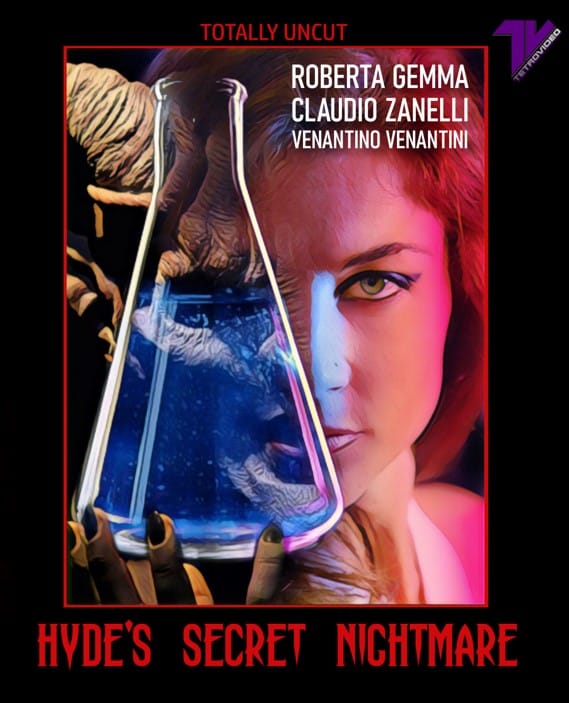
While Hyde’s Secret Nightmare positions itself as an art film, a case can be made that it is nestled a bit more snugly in the gray area than it would like to admit. The story follows a young doctor/mad scientist Henry Chagall (Claudio Zanelli) who is desperately trying to find a scientific solution to cure his impotence. His work involves a lot of shady use of stolen female corpses and (somehow) he stumbles upon an elixir that turns him into a beautiful woman (Roberta Gemma) for a short period of time. Once he is in this new form, he adopts the persona “Eva Hyde” and starts exploring the world from a different perspective. This leads him on a journey of self-discovery filled with graphic ultra-violence and a whole lotta explicit sex.

There’s a lot to unpack in the movie’s more than two hour runtime but what jumps out the most here is that this is a film of strange choices. No, I’m not talking about all the genital mutilation, violent murders, necrophilia, and explicit fucking, that part I get. I’m more referring to the fact that the characters break into near-constant soliloquies delivered straight to camera that cover a range of lofty topics such as feminism, the ethical implications of animal testing, theology, etc. In case these unrelated divergences weren’t 4th wall breaking enough, writer/director Domiziano Cristopharo also occasionally includes the pre-take slates for, uh….some reason. Another piece that sticks out is the fact that Henry’s assistant Hans (Giovanni la Gorga) is constantly referred to as old and crippled but the actor looks barely older than Henry himself and no effort is made to cosmetically adjust his appearance to fit how the character is described.

Curious choices aside, there is also a lot that Nightmare does right and it unquestionably falls into the Extreme Cinema category. There is no shortage of graphic, unsimulated penetration and the film is also not limited to heteronormative coupling, which is nice touch. There are also some moments that really stood out to me such as a blowjob that turns into a dick being graphically bitten off and an unsimulated scene where a couple sews themselves together, piercing various parts of their bodies with a large needle including their faces and genitals. The performances are decent overall and Zanelli especially brings a great energy and earnestness to his role.

I always appreciate explicit sexuality being incorporated into a film but the sheer abundance of it, and the fact that the plot seems structured around it rather than vice versa, cheapens the experience. This is actually a situation where a “less is more” philosophy can give the explicit scenes more impact as seen in more plot-centric films such as Lars von Trier’s Nymphomaniac, Catherine Breillat’s Anatomy of Hell, or John Cameron Mitchell’s Shortbus. The film does touch on some interesting ideas, such as gender fluidity and identity, but merely pays lip service to them rather than digging in and exploring more fully. This is unfortunate since a modern, explicit retelling of the Jekyll & Hyde story viewed through the lens of gender identity and societal stigmas could have been fertile ground for some interesting commentary. So, while light on substance, Nightmare does provide a generous amount of unfiltered sexuality and well-crafted violence that should make the journey worth it for fans of Extreme Cinema.

Availability: Upcoming Release

Film is scheduled to be released on physical media in July of 2022 at tetrovideo.com

Short Film Review: Sadistic Pleasures (2021) Duration 23 min

As a site whose primary goal is to feature reviews of the most fucked up and grotesque films ever made, it’s long over due that the underground company A Baroque House (whose bread and butter is extremely graphic erotic horror shorts) had some representation. That’s not to say this is a review of the company’s varied output as a whole but since Sadistic Pleasures was a first time watch for me, it seemed a good one to start on for an unbiased and fresh take on the merits of that particular film.

It’s important to meet films on their own terms and understand the goal of a particular production to be able to assess how successful it is at achieving it. Since this film has about as much plot as early Guinea Pig entries, it’s not really fair to judge what is essentially just scenes of erotic titillation followed by graphic mutilation by conventional narrative standards. Instead, you must understand that this is down-n-dirty underground shock cinema meant to deliver a jolt to the more primal parts of your brain by delivering a taboo experience that you won’t be able to find on any conventional streaming service.

The film starts with a nameless young woman (Kaiia Eve) playing to the camera as she starts to put on a progressively more explicit show for the viewer. This continues for a little while until hands come into frame from an off-screen person (Leila Lewis) and things start to get a lot rougher, even escalating into a bit of cutting and knife play (simulated). The woman is soon drugged with a syringe full of a mysterious dark liquid and the real brutality begins.

Given the previously mentioned criteria, my main complaints center around areas that could have been tightened up to make the viewing a more cohesive and satisfying experience. The fact that the footage cuts between handheld POV and set-up shots is disorienting and makes it hard to establish where the characters are in time and space and what the viewers relationship to them is. The film would have been better served either leaning all the way into the handheld POV and framing the whole thing in more of a found footage context or visually distinguishing between the POV and the other shots so it doesn’t completely demolish the fourth wall when she looks right down the barrel of the camera.

It would have also been nice to have a little bit of dialogue to establish the context and maybe some interaction between the girl and the person behind the camera to make the situation she’s in a bit more clear. Regardless, the film has to be judged on what it does have and to that end there are some impressive visual elements that I want to call out. The scene that was particularity noteworthy was the image of the woman lying on the bed, brutalized and covered in bandages except where Eve’s real life tattoo of a demonic face on her lower belly remains perfectly framed by blood soaked gauze. Its a moment of horrific beauty and works excellently with the ominous sound design that accompanies it.

The FX here are also pretty on point, especially in a scene that features the best graphic breast cutting since The House that Jack Built, helped in large part by the attention to detail that went into making the prosthetic match Eve’s actual tattoos. So while Sadistic Pleasures may not have much to offer from a narrative or intellectual standpoint, it gets right down to business by delivering some edgy, uncensored content and at 23 minutes doesn’t overstay its welcome.

Availability: Moderately Available

Film is available for rental or purchase exclusively at http://www.abaroquehouse.com.

How to Raise Women from the Dead (2021)

Mutilation performance artist/musician Daniel Valient is back with another batch of twisted videos from his band White Gardenia. While Blood Tastes Like Perfume was more of a standard collection of the kind of videos fans of the band would expect to find (and may have already seen online) How to Raise Women from the Dead takes a big swing with some new content and goes in a very different direction. In art, taking risks is often necessary for growth but is also inherently a gamble, so lets discuss to what degree it did (or did not) pay off in this case.

The first disc in this two disc set is the Blu-ray featuring four separate videos on the main menu. The primary draw here is the short The Secret Perfume of Decay which marks Valient’s first foray into proper narrative storytelling as a director. This departure from the more abstract and experimental work that White Gardenia is known for is part of the risk I was referring too but ultimately was not nearly as significant a change as the other videos would end up being. These are experimental in a whole different way as all three of them are comprised of a series of static images with audio clips playing over them that discussed transhumanism and the singularity in depth with a particular focus on the scientist Frank J Tipler.

For the uninitiated, the concept of transhumanism ultimately boils down to a philosophical and intellectual movement based around the goal of conquering death through advanced technology. The singularity is the hypothetical point at which artificial intelligence surpasses human intelligence, becomes self-aware, and creates an irreversible and uncontrollable change that permanently alters the course of humanity. If this is a subject that interests you then you may find these segments to be informative and enlightening but if not then watching them feels a lot like being cornered by a belligerent family member who is dead-set on converting you to their religion. This is certainly a rich topic to explore but it would have been better done through some kind of artistic interpretation rather than an information dump of raw audio interviews.

On the other hand, in The Secret Perfume of Decay Valient does a good job portraying the story of a nameless serial killer and his most recent victim, both played by uncredited actors. The short still features Gardenia’s trademark self-mutilation, off-kilter tone, and a very interesting appearance by Valient himself which was the highlight of the whole experience. I also enjoyed learning about the real-world practice of re-creating paper mâché busts of unknown victims in the 60’s and 70’s which lead to some incredibly uncanny and downright creepy results. While very different in form from the other shorts it is still tied to them thematically as transhumanist views of death and resurrection play heavily into the story. My only major complaint here is Valient’s over reliance on text cards when he would have been better served following the classic “show don’t tell” rule of filmmaking.

The other disc in pack is labeled as “Extras Disc” and in a bewildering formatting choice features another copy of TSPoD which has been unceremoniously dumped onto an auto-play DVD with no menu, rewind or chapter separation along with ten other Gardenia films. I’m very pleased at the inclusion of these films as this is the first time any of them have been released onto physical media but am confused why they weren’t featured prominently on the main disc with the long form audio interviews more fittingly relegated to the extras section.

While I did like TSPoD, the real gem of this collection is the inclusion of some classic WG shorts that I absolutely adore. Films like (m.i.p.a.m.h, Mobius Strip and Video for Teilhard de Chardin) exemplify White Gardenia at its best, showcasing the surreal, abstract and disturbing content they are known for. These are the kind of deeply unsettling, genuinely strange videos that feel like something you would wander into in the darker corners of the internet and help to make up for the inclusion of some overly tepid BDSM and the absolutely egregious inclusion of the censored version (!) of A Perfume Made from Blood and Tears. In short, the disc is a mix of highs and lows which is an apt description of the overall collection itself but in both cases there is enough great content to be found within to make it well worth having in your collection.

Availability: Limited

Limited copies of the two disc set are available https://www.abaroquehouse.com while supplies last.

Double Feature: The Girl with the Cutter/Golgota (2021)

Today I’ll be doing something a little bit different as I talk about the recently released double feature by underground Extreme Cinema director Mikel Balerdi (Vore Gore, Larva Mental). The release features both The Girl with the Cutter and Golgota whose combined running time only totals about 78 minutes and as they are packaged together, I will be discussing both within the same review. Things kick off with the more produced of the two,The Girl with the Cutter, which stars Cofi Valduvieux as a woman struggling with mental illness and the urge to self-harm with a boxcutter.

Information about both films is pretty sparse, but from what I understand TGwtC was inspired by a set of real pictures that gained notoriety within certain circles of the internet featuring an unknown young woman who had performed some of the most graphic and extreme self-mutilation ever seen. The film itself seems to be a creative reimagining of her life, the events that lead to her cutting, and where it may have ultimately taken her. Even though the untranslated (Italian?) text in the beginning seems to state that this was based on real events and some of the actual source photos are intercut throughout the film, her story is really more of a creative springboard to launch the fictional narrative than an account of what actually happened.

Golgota on the other hand is a different animal entirely and is about as down-n-dirty and to the point as Extreme Cinema gets. There is no plot to speak of just real footage of a Dark Web performer known only as Wendy putting on her debaucherous show while Balerdi films her in a forever tainted hotel room. Aside from minimal editing and some background noises put in to further enhance the unpleasantness of the experience, this is really just six segments (labeled as 1 hour, 2 hour, etc) that feature ever heightening acts of depravity. Think Two Girls, One Cup crossed with a White Gardenia video so, needles to say, those with weak stomachs need not apply.

TGwtC represents a significant step forward in terms of technique from what we saw from Balerdi in Larva Mental most notably in the editing department. The glitching effect he employs throughout the film really adds a level to the fragmenting reality and surreal aspects of the story as we see Valduvieux’s character spiral further down the rabbit hole. He is also able to create some effectively scary shots using relatively simple make-up effects and camera work. Credit also must be given to Valduvieux who delivers a committed and compelling performance through what I imagine must have been a physically taxing shoot. The graphic special effects are incredibly well made and the inclusion of the real pics adds a disturbing layer of reality to the whole experience.

While this segment is ultimately very successful and well made, there were still a few notes I had about the production. Chief among them is the footage of her everyday life as well as some idyllic memories that I know were meant to give depth and dimension to her character but ultimately succeeded in slowing the film down. The scenes were too disjointed and random to effectively add to the storyline and Balerdi would have been better served by either further expanding the whole segment into a proper narrative with a fleshed out story or excising them in favor of creating a more streamlined and purely surreal, fast-paced experience. Furthermore, opening text tells us the film takes place in 1990 which is a baffling choice as it adds nothing to the story and only succeeds in making the cars, smart phone and the Asus laptop feel incredibly anachronistic.

As for Golgota it’s hard to judge its merits as a film as it isn’t so much a movie as a shock video. Still, there is something compelling and intriguing in the presentation and as soon as the ambiguous title screen comes up you know you are about to journey into some very dark territory with imagery that can shock and repulse, even in this jaded age of easily accessible atrocities. I will say though, the fact that the shot of her actually shitting and everything that happens next is separated by an edit may undermine the credibility of the horror that follows for some. While I can’t say with unimpeachable certainty that what we see isn’t a well-crafted forgery as Pasolini did in Salo, given what I know of Balerdi’s work and the underground nature of the production, I find it extremely unlikely that this is anything but genuine.

So, while these two films may be different in some key ways, they do work together to create an effectively disturbing and truly extreme work of boundary-pushing art. It may not be perfect but in the end it manages to be a harrowing experience that any fan of truly provocative cinema owes it to themselves to partake in. Plus, Golgota has the unsavory distinction of being the only film I’ve ever seen that made me physically gag while watching it. So there’s that.

Availability: Limited

Limited copies of the DVD available on tetrovideo.com while supplies last.

Xpiation (2017)

The term “expiation” refers to a kind of atonement, the act of making amends or the reparation for some kind of wrongdoing. By its title alone, Xpiation is already tipping its hand to show that this brutal, torture-focused film is about more than simply being a showcase for senseless brutality. How much more and how effectively it’s executed is the real question though and today we’ll peel back the layers like so much skin off the face of a terrified man in the bowels of a torture dungeon.

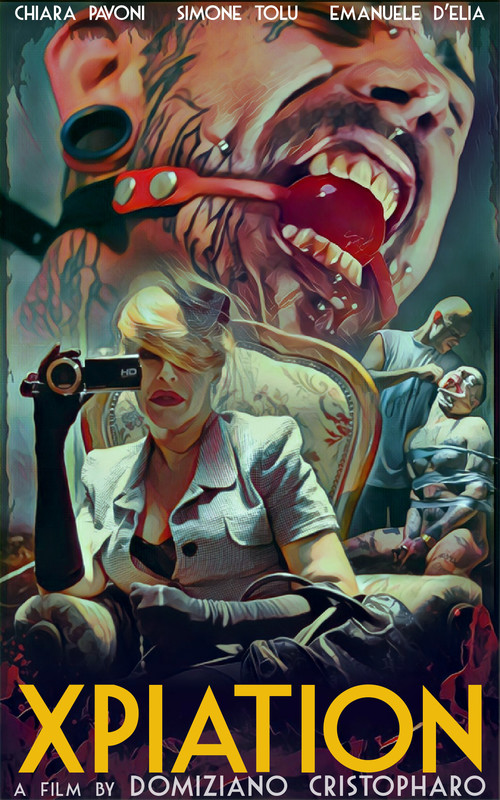
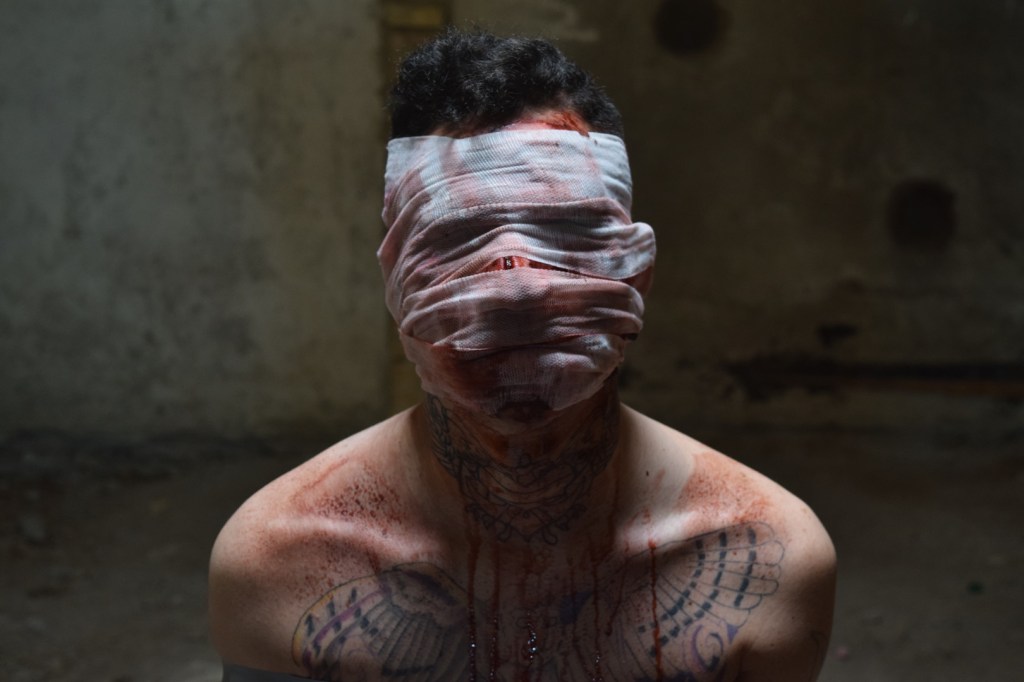
This 2017 entry from hardcore underground filmmaker Domiziano Cristopharo tells the story of an unnamed man, credited as “Latino Guy” (Emanuele D’Elia) who finds himself tied up in a decrepit room being tortured in a variety of ways by a giggling maniac known as (naturally) “Torturer” (Simone Tolu). The event itself is being dispassionately observed by a strange and mysterious woman known only as “Her” (Chiara Pavoni) who sits close by recording it all on her camcorder and occasionally joining in. The graphic and explicit torture scenes are interwoven with surreal moments, hallucinations, and flashbacks that eventually shed light on who these people are and why they are doing what they are doing.

First and foremost, Xpiation is Extreme Cinema and as such delivers on the gruesome violence with excellent practical effects that render the uncompromising brutality in exquisite detail. There’s plenty to satisfy the gorehounds here as the film viciously doles out cutting, burning, beating and even an exceptionally explicit ball smashing scene that’s sure to have every viewer with those parts cringing and crossing their legs. While extreme violence in a film is fun, it can also become repetitive on its own and as someone who has seen a LOT of dirty basement Torture Porn, I was glad to see the film at least attempt to expand on the spectacle of violent titillation through use of surreal imagery.

The attempt was not entirely successful though and the inclusion of these scenes (as well as the flashbacks) made it seem like the film was on track to deliver more of a creative mind-fuck twist on the story than what we ultimately got. I do like how it plays with the concept of perspective and audience expectation but in the end the story itself is quite thin and the success of the experience relies quite heavily on the graphic, shocking effects. I like the violence and the weirdness but I would challenge filmmakers like Cristopharo to bring more attention to character development and story arc to create art that is overall more affecting and ultimately more provocative. As an exercise I would recommend that part of the scriptwriting process should involve removing all the violence, shoring up the story that remains and then adding it back in.

Like the rest of the film, the acting is a bit of a mixed bag as Tolu gives off an energy that is a bit more goofy than convincingly deranged while Pavoni’s stoic presence exudes a more engaging depth of character helped in no small part by her exquisite and unconventional costume design. So while Xpiation may not hit every mark perfectly it’s still an interesting and visceral experience that showcases a level of free expression that you won’t find in mainstream cinema.

Availability: Limited

Limited copies of the DVD can be found at tetrovideo.com while supplies last.