
 As any horror fan knows, there is no shortage of holiday-themed horror films out there. However, while holidays like Halloween and Christmas boast a multitude of titles, less represented holidays like say, 4th of July have far fewer movies modeled after them. That being said, it’s hard to imagine a movie ever being made that could more enthusiastically embrace the patriotic American holiday than Uncle Sam.
The plot centers around Master Sergeant Sam Harper (David ‘Shark’ Fralick), a helicopter gunner who is killed by friendly fire during the Gulf War. When his body is shipped back to the states for burial his young nephew Jody (Christopher Ogden) becomes obsessed with him and following in his footsteps. But it isn’t long before Harper’s restless corpse awakens, steals an Uncle Sam outfit and goes on a bloody rampage against draft-dodgers, flag burners, corrupt politicians and anyone else who dares defile the honor of his beloved country. Will Jody have the courage to defend the town and stand up to his….(sigh) uncle, Sam?
While the idea of a murderous reanimated corpse in an Uncle Sam costume is indeed strange, what’s even more bizarre is that this weird throw-away film from the 90’s wasn’t directed by a first timer nobody, it was directed by fucking William Lustig! In fact, despite consistently working as a producer up till present day, Uncle Sam actually represents the final feature film the director of the seminal slasher Maniac has directed to date.
When you go into a movie like Uncle Sam you have a good idea what to expect. Clearly you’re not going to get brilliance but if the film can keep you entertained with a cheesy story and plenty of gruesome kills then it’s done it’s job. Unfortunately, this is where the film ultimately fails as it commits the only truly unforgivable sin of the cheesy slasher sub-genre…..it bores the audience. Aside from the opening scene there aren’t any kills until forty-two minutes in!
Evidently, a lot of padding was needed to stretch out the paper-thin story and even though the second half does pick up a bit, it’s too little too late. Some of the kills are creative and decently bloody but without the kind of glorious, gooey over-the-top madness we saw in 80’s films or the sleek, realistic gore of modern day horror this is a classic example of why the 90’s were considered an overall low point in the history of the Horror genre.
There are some things I did appreciate about this film, though. Primarily how it so fully embraced the underrepresented holiday with such gleeful abandon making this a film that doesn’t just take place on the 4th of July but is, without a doubt, a 4th of July themed horror movie, and all holidays should have at least one horror film that fully represents them. I also have to give props to the credit sequence which not only establishes the iconic Uncle Sam outfit for the viewer through real archival footage but also shows how genuinely bizarre and creepy it could be at times.
If this doesn’t sound like enough to recommend the film, it’s because it’s not. The movie is not even remotely scary which is largely due to the fact that the titular villain spends most of the time standing in plain view so there is never even a chance of tension or dread building before a kill. Even with the cheesy concept and low budget this film could have succeeded if it had jumped right into the action and assaulted the viewer with a series of brutal kills that didn’t let up. At least then it would have made for a fun movie to watch with a few friends and more than a few drinks. As it is, watching this is about as exciting as celebrating the holiday with a damp sparkler and a non-alcoholic beer.

 The plot of Michael Myers: Absolute Evil can simply be summed as a mockumentary which discusses Michael Myers as though he were a real serial killer. However, unlike most mockumentaries this is not a comedy and is presented in the same kind of tone that you would find with a typical documentary about a real serial killer. This is certainly an interesting, unusual approach so the question becomes, does it pay off?
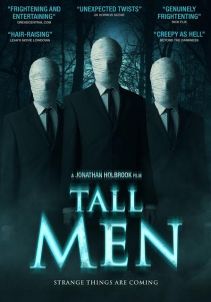 Creating a world that is subtly surreal can be a very difficult task. Balancing elements of a disintegrating reality with a compelling storyline that progresses at the correct pace to guide the viewer along the journey with the protagonist is a challenging undertaking indeed. So how does Tall Men fare with a storyline that embodies this concept? Well, let’s discuss.
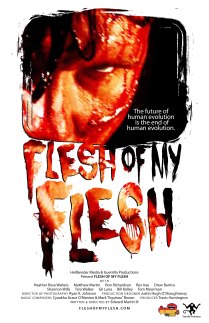 When viewing micro-budget films, you have to go into it with the understanding that you are not going to be seeing the same kind of slick production values that you get with Hollywood films that have budgets in the tens or hundreds of millions. Because of this, I try to be fair and cut a certain amount of slack in terms of production aspects that could not be helped due to the budget, like footage quality, set design, amateur actors, etc. I do however still hold filmmakers responsible for choices within their control such as the script, actors they chose, and production choices made.
 I first saw Adrenalin: Fear the Rush back in the late 90s and at the time, I was blown away. I remember thinking it really lived up to it’s title (not so much the subtitle though, that’s just fucking stupid.) Naturally I was very curious to see if it still held up because let me tell you, a lot of shit has changed for me since then. For one thing, I’m watching a lot more horror and a lot less (ahem) Brendan Fraser films…..
 Quantum theory, sentient liquid, 80’s synth scores and Alice Cooper. Today I discuss Prince of Darkness which is quite possibly John Carpenter’s strangest film, and that’s saying a lot. By the way, some minor spoilers ahead.
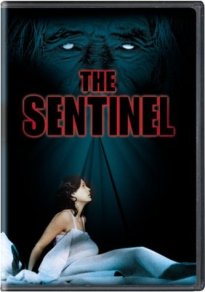 The Sentinel is a lesser known film that was allegedly created as Universal’s response to The Exorcist which was made four years prior. And while it does in fact have some thematic elements that draw comparisons to that film, it actually seems to garner more inspiration from Rosemary’s Baby. So, the question naturally becomes “does it stand up those monumental horror classics but was unfairly relegated into near obscurity? Or is there a reason why it doesn’t often come up in the conversation when classic religious-based horror is discussed?”
 Ah, the zombie film. Is there any horror subgenre more oversaturated these days? Much like the zombies themselves the films seem to be everywhere, shambling along with little change or innovation as the concept is resurrected time and again with similar, diminishing returns. As the zombie subgenre has become more and watered down with mainstream films like World War Z and Warm Bodies (zombie rom-com, seriously?) I’ve started to feel like we’ll never get back to the kind of brutal, badass action that made the zombie films great in the first place. That was until I saw Wyrmwood: Road of the Dead.

