The Human Centipede: First Sequence (2009)

Human CentipedeThere are few films that can cause disgust and revulsion simply from their basic concept alone and truly none that can stand at the level of The Human Centipede: First Sequence in terms of sheer gut-reaction to the plot itself. In the seven years since it’s release the film has inspired two sequels, a slew of controversy and become a prominent pop-culture reference. So I decided it was time to revisit the iconic film that started it all.

The plot centers around Lindsay (Ashley Williams) and Jenny (Ashlynn Yennie) two young American women traveling through Europe, currently stopped over in Germany. A flat tire and no cell reception send them wandering through the woods at night in search of help. Unfortunately for them, the first house they come across belongs to retired surgeon Dr. Heiter (Dieter Laser) who just so happens to be looking for a couple of healthy, young victims to help him with his demented new experiment.

Horror movies have been around since the inception of cinema itself and after countless entries into the genre it is very rare that a genuinely original idea comes about. While the concept of innocent victims being held prisoner and tortured by a madman is not in and of itself new, the idea of surgically connecting them via the Gastric System (i.e ass-to-mouth) is an inspired stroke of demented genius. With this film writer/director Tom Six has created a movie that is not only incredibly creative and original but also a significant, landmark film in the genre itself.

So, clearly the concept is excellent but a solid concept is only worthwhile if executed properly. From a technical standpoint the footage quality indicates that this is clearly an indie film as it doesn’t have the rich, beautiful cinematography of say A Serbian Film. That being said, the film has everything it needs to tell it’s twisted story and Six wisely chooses to limit most of the action to a single location. It also delivers on the practical gore effects which are simple, realistic and very effective. I should also note that this isn’t a very gory movie by horror standards and Six allows the concept itself to do the heavy lifting, making the fact that many people are so shocked by it all the more impressive.

Now, there were a few minor issues that I feel could have been addressed to greatly strengthen the film. The primary being that there is a point where a character is trying to escape the house, pre-centipede, and walks by phones multiple times without even attempting to use them. I also felt like the female leads used each others’ names in conversation way too much so that it became distracting, which is kind of Screenwriting 101. Very minor complaints to be sure, they simply stand out more because the film is so tight otherwise. The story overall is very well paced and keeps the tension up without getting bogged down in filler scenes or unnecessary exposition.

Both Williams and Yennie do give solid performances and really sell the fear in what must have been a very physically uncomfortable shoot. Although, I did feel that their scenes prior to meeting Dr. Heiter didn’t really rise above average. Speaking of the mad doctor, Laser absolutely steals the fucking show as Heiter giving a stunning performance positively dripping with menace. I cannot imagine anyone else playing that role and he is a big part of what makes the movie so successful.

In conclusion, this is a film that every horror fan should see and a stunning example of creativity, originality and a filmmaker with the balls to go way beyond the comfort zone of typical movie goers. We need more directors like this who are willing to be daring, provocative and not give a fuck about acceptance from the mainstream, because that’s the kind mindset it takes to produce real, significant art.

4.5 Stars Red

A Serbian Film (2010)

a_serbian_film_posterThere isn’t one definitive list out there of the most disturbing films ever made and the lists that do exist vary greatly in both quality and authority. One consistency though is you’re sure to find A Serbian Film right near the top of any of them. If you don’t see it, stop reading that list immediately because this is without a doubt one of the most shocking and disturbing films of all time and once you’ve seen it you know why.

The plot of the film is actually very simple. Milos (Srdjan Todorovic) is a retired Serbian porn star who has a loving relationship with his wife and young son. Money is tight so he agrees to come out of retirement at the behest of a former colleague for a mysterious and lucrative job making one last film for a strange, shady director (Sergej Trifunovic). And then, well there’s just no other way to say this, shit gets fucked up.

Before I get into it, I have to mention that you absolutely must watch the uncut version of this film. This is a trip most people won’t take more than once (I have, of course, but then I’m not most people) so you owe it to yourself to see it exactly how it was intended. The other thing I’ll mention is that this isn’t exactly a horror film by classic definition. The intention here isn’t to scare the audience but rather to shock them with levels of sexual violence rarely seen at all on film and certainly not seen to this extent. In fact it is described by director Srdjan Spasojevic as, “A drama that ventures down into Hell”. That being said though, the brutal, horrific nature of this film does make it sit more comfortably in the Horror genre than anywhere else.

In an age when real death clips and extreme pornography are only a click away online, it’s very hard to find a movie that is truly shocking. It’s been awhile since a film came out that felt this legitimately edgy and dangerous. Although the graphic scenes are not the primary reason that this film is so shocking, it’s so shocking because it’s so well made. Any filmmaker can throw copious amounts of gore gags at you but if they’re not realistic they merely come off as laughable. This film on the other hand is shot with the kind of professionalism you’d expect from an Oscar-winning Hollywood film. The cinematography is absolutely gorgeous and the acting and directing are pitch-fucking-perfect! This makes the actions the characters take infinitely more powerful as you are not only connected to them as characters but can’t simply dismiss the violence as a gag. It looks real.

Still, this is not the most violent film ever made. Another reason that it feels so shocking is that the violence is built up to and not over-used to the point of making the audience feel numb to it. What is truly shocking, above all else, is the sexual nature of the violence in this film. All of the most brutal moments occur in a sexual context (and are perpetrated against both females and males, by the way).

Beyond that there is also the incredibly deviant nature of the acts themselves. Rape, necrophilia, pedophilia as well as other horrifying acts of violence that most people would never even have conceived of are all present as though the film itself was birthed from the darkest corners of the Deep Web.

But don’t worry, it wasn’t. Everything here is of course simulated and that is the true genius of this film, that it can manage to be so horrifying without anything bad actually happening. This is precisely why I am not impressed by movies like Cannibal Holocaust that, while indeed bloody, earn most of their notoriety simply because they include actual animal cruelty. A Serbian Film on the other hand is disturbing and shocking solely because of the ideas it explores and the realities it brings to light.

What makes this such a significant and vital film is that it unflinchingly portrays the kinds of horrors that happen in the real world every day. Whether we want to think about it or not, we have to open our eyes to the fact that no matter how horrific a fictional scene in a movie might be, humans have done just as bad or worse in real life, many, many times before. (Just read the fucking news for proof of that.)

It is essential that art is allowed to provide a true reflection of society and the darkest parts of human nature that we pretend don’t exist. This is especially true in this case as Spasojevic made this film as an artistic reaction to his feelings for his home country, one that has an exceptionally violent past. This was discussed during a 2010 interview with Rue Morgue Magazine which delved deep into the artistic intentions of this film and shed light on how it came to be (issue 106 if you want to track it down, and you should).

In conclusion, this film is a triumph of daring free expression that unabashedly displays the darkness, pain, and rage of human suffering into an essential art piece that must be experienced to be believed. An unequivocal contribution to Horror and film itself that reminds us that horror should be horrifying and vile human acts should be presented in a way that makes us feel disturbed and repulsed rather than excited and elated.

5 Stars Red

Tetsuo 2: Body Hammer (1992)

Tetsuo 2When it comes to sequels, making one for Shin’ya Tsukamoto’s original cyberpunk masterpiece Tetsuo must rank up there as one of the most difficult to pull off. How to stay true to the unbridled insanity of the original while at the same time taking the story, such as it is, in new and interesting directions? I will say, there certainly were some big changes here. So how did it fair when stacked up against the classic first entry to this insane universe? Well, let’s discuss Tetsuo 2:Body Hammer.

First off I should mention that this isn’t actually a sequel but rather a reimagining of the original story. Tomorowo Taguchi is back, playing another “salaryman” who this time goes by the name Taniguchi Tomoo. The film actually abandons the gleeful insanity of the original to follow a more standard plot structure this time and, even more shockingly, is in color.

Taniguchi is simply a meek businessman who lives a normal life with his wife and son and, other than not having any memories from before he was adopted at the age of eight, has nothing particularly unusual about his life. His normal life is shattered (obviously, otherwise there’s no movie) when skin-head thugs kill his son and shoot Taniguchi with a strange metal gun. He is then taken to an industrial building where his mind is experimented on to provoke the release of the metal-morphing powers, that he now possesses, in a controlled environment. That is until things get out of control.

There is actually a lot going on with the plot in this film and rather than the balls-to-the-wall mania of the original the pacing this time goes through a series of lulls and sprints. Tsukamoto provides more explanation into the origin of the powers as well as the characters’ backstory . He also delves into the motivations and back-story of a secret society of skin-heads, a new addition in this outing, that wants to possess the metal-transforming powers for themselves. And indeed it makes sense to want to use it as a weapon as the transformation manifests as controllable protruding guns this time around rather than the metal-tumor chaos of the first one. So, the transformed are more Terminator, less metal-plagued monster.

There does seem to be an attempt to widen the audience as the plot more closely resembles that of a standard action film rather than an abstract art piece. There is even a (possibly unintentional) homage to the first Alien film. Ultimately, this shift in style is to the detriment of the film itself creating a very different experience from the kinetic madness of the first film.

That’s not to say there isn’t a lot to love about Tetsuo 2. The film is still far and away much more interesting than the vast majority of films out there and there are many scenes where Tsukamoto uses time lapse effects and stop-motion animation to remind you that you are still in fact watching a Tetsuo film. He also takes advantage of the fact that the film is in color to guide the emotional journey of the viewer from the muted, dark, metallic blue of the skin-head’s industrial lair to the brighter yellows of the calmer outdoor flashback scenes. And the story itself is complex and unsettling with interesting twists and without clearly defined heroes and villains or easy answers. It may follow more of an action plot structure than the first film but is far weirder and more interesting than anything Michael Bay will ever direct.

The largest challenge that Tetsuo 2 faces is it’s inevitable comparison to the original, superior film. That being said though, it’s certainly a trip worth taking, if you can find it. But track it down you should because Shin’ya Tsukamoto has once again taken us down the rabbit hole into a dark, fascinating world of metal-infused insanity.

3.5 Stars Red

Grotesque (2009)

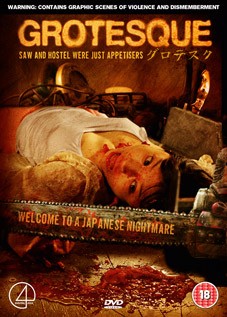
GrotesqueThe term “Torture Porn” was first coined back in 2006 by film critic David Edelstein describing the emerging trend of films like Hostel and Saw which featured very graphic scenes of torture and dismemberment. While scenes of graphic violence have been a staple of horror films for decades the new crop of early millennium extreme horror films brought the violence to the next level by dwelling on graphic and explicit carnage to an extent not previously seen in mainstream films. The structure of these types of films also typically mirrors the structure of a porn, hence the name, in that the primary focus of the film is a series of set-ups and titillating, explicit pay-offs. Now, I’ve seen a lot of Torture Porn films, probably all of them, but none in my experience better capture the essential nature of what a Torture Porn film is better than Koji Shiraishi’s exercise in extreme brutality, Grotesque.
The film opens with a young man and woman (Hiroaki Kawatsure and Kotoha Hiroyama) being attacked on their way back from their first date by a nameless sketchy loner in a van (Shigeo Osako). They wake up to find themselves tied up in a room at an unknown location as the nameless man begins to torture them. What follows is an hour long endurance test for the viewer as the man tests their wills to live, telling them he will free them if they can sufficiently excite him.

It would be easy to dismiss Grotesque simply as shock-value meant to titillate the most twisted and jaded of horror fans with it’s graphic and unflinching depictions of violence but that is far from the whole picture. What you really have here is an incredibly bold and fearless piece of independent filmmaking that gives the finger to every convention of watered-down Hollywood cinema that shoots for the middle and only cares about profits. This is what happens when a filmmaker doesn’t give a fuck what people think of his movie and makes the kind of film that he wants to make. It’s an incredibly punk-rock approach to filmmaking.

However, a film can have all the best intentions of being subversive and shocking but if it can’t properly execute the effects it will come off as nothing more than cheap and laughable. Rest assured though, Grotesque does NOT suffer from this problem and the gore effects are mind-blowingly realistic, making the violence all the more shocking. Eye-gouging, genital mutilation, disembowelment, to name just a few, are all pulled off with the kind of masterful realism that would make Tom Savini proud.

What I also find interesting about this film is how the audience’s emotional journey simultaneously mirrors both the villain and the victim’s. You cringe as they are brutalized and cling to hope for their survival at the same time indulging in the visceral thrill (you know you do) that the villain himself is going to such great lengths to experience. This is of course true of horror in general but it’s far more front and center in this film. It also raises an interesting point about how far some people will go to experience certain feelings, no matter what the cost. Drug addicts, gamblers, murderers, so many people in the real world take the pursuit of feeling a high to extreme and destructive lengths.

In summation, this is a harrowing and visceral experience that is not for the casual horror fan. The story itself is very stripped-down and simple and Shiraishi wisely opts for a tight 73 minute feature that keeps the tension up rather than drawing the plot out further just to reach the 90 minute mark. The story does take an unexpected sharp turn into surreal territory towards the end which is jarring at first but ultimately works to bring the story to a perfect conclusion.

4 Stars Red

Tetsuo: The Iron Man (1989)


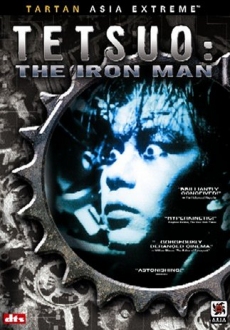
e_coverMany films can be bizarre and abstract but few films truly capture the feeling of being in a living nightmare quite so well as Tetsuo: The Iron Man. However, what may seem to more casual viewers like a series of disturbing black and white images simply meant to take you on an insane visual journey, is in reality a film with a strong narrative thread connecting the central characters to a single traumatic event.

Opening on a desolate industrial landscape, reminiscent of David Lynch’s surreal masterpiece Eraserhead, the film begins with an unknown man gruesomely inserting a metal rod into his leg. Shortly after doing so however he freaks out and runs screaming into the street. The film then follows an ordinary businessman (Tomorowo Taguchi, whose character is bizarrely listed in the credits as ‘Salaryman’), as he unwillingly embarks on a hellish journey in which his body begins to turn from flesh to metal following a horrifying encounter in the subway.

With a running time of a mere 67 minutes, barely qualifying as a feature, writer/director Shin’ya Tsukamoto packs an amazing amount into this dark, disturbing and utterly amazing film. The metal itself is fascinating, presenting to the characters like rusty junk-metal tumors protruding from their skin rather than some kind of sleek cybernetic enhancement. The Salaryman also feels like an authentic tortured soul, a classic movie monster cursed by a physical transformation he can’t control that threatens to destroy everything in his life.

This is tied into what is perhaps the most central theme in the film itself which is the melding of sexuality and metal-related violence. This is a running theme throughout (giant drill-cock anyone?) but rather than being an exercise in gratuitous perversion it is deftly tied back to the central narrative event making it an integral part of the story. This is also a key example of how Tsukamoto interweaves flashbacks with the disintegrating reality of the present to give us a story that is fast-paced and frenetic while at the same time nuanced and complex.

While the film is certainly groundbreaking it just doesn’t quite reach the five star level for me of films that have deep, emotionally complex acting and a rich, polished visual style that reflects a high level of quality filmmaking regardless of the budget.  But make no mistake, the gritty visuals, high-contrast lighting, stop-motion animation and lightning quick edits make this a horrifying journey into a surreal nightmare that simply must be experienced to be believed.  Overall, highly recommended.


tetsuo-iron-man-shinya-tsukamoto

4.5 Stars Red