The Blob (1958) vs The Blob (1988)

Blob Comparison

It’s hard to imagine a film that embraces the notion of a campy Creature Feature more than The Blob. Just by the title alone you know exactly what you’re in for. Despite being incredibly well known films, there actually is not a contemporary remake of this story, although there is rumored to be one in development that would star Samuel L Jackson (!). So, as of this time we have the 1958 and 1988 versions, each very emblematic of the time period in which it they were made.

The story in both centers around a meteor that crashes in the woods outside of a town and releases a gelatinous creature that absorbs and devours the residents. Both films also feature an old man as patient zero and center around teen protagonists who discover and bring him to the doctor, which is where the mayhem really begins. However, at that point the similarities pretty much end.

Now, I know the original was made in the era of campy drive-in horror and special effects knowledge was very limited at that time. That being said, there are still quite a few aspects that could have been greatly improved upon. For one thing, all of the “teens” in this film look like they’re about 35. This actually makes sense because in reality stars Steve McQueen and Aneta Corsaut were 28 and 25 respectively when the movie was filmed…..and it shows. There’s nothing that shatters even the vaguest illusion of realism like “man-child” McQueen blubbering to the cops to not tell his daddy that he was out hot-rodding. When you couple this with the painfully stagy ’50’s acting, you end up with characters that are distractingly unrealistic and completely unrelatable.

The remake on the other hand establishes characters that not only look age appropriate but are surprisingly well-developed with minimal exposition. There is a general feeling of ’80’s cheesiness of course but for the most part the characters are played straight and realistic enough to make you feel emotionally invested in the story. The remake also does a far better job at having a logical justification for why most people are initially skeptical and reluctant to accept what’s happening. This is in stark contrast to the irrational insistence by the cops in the original that those crazy “kids” are pulling one heck of an elaborate prank on old Johnny Law.

Since this is a Creature Feature the quality of the creature itself naturally plays a pivotal roll in selling the scares in the film. This is another area in which the remake out-classes the original with an amorphous creature that presents as a truly threatening monster rather than something that alternately looks like a giant piece of half-chewed candy and a sad bag of jello. The remake also makes great use of practical effects, delivering some truly amazing gooey, gory kills in all their wonderful ’80’s glory.

The original also could have tightened up some of the writing which was confounding even for the era. One of the best examples of this is when the fire chief notices the diner that people are trapped in the basement of is on fire and casually asks the sheriff if he has any ideas on how to put it out. (!) He then follows that up with pretty much “Ah, that fire will probably burn out in 10 minutes or so”. (Never mind that the people will most likely burn to death by then. How did he get this fucking job!?)

I mean, the bad writing is good for a few unintentional laughs of course. For instance, the scene when the nurse throws a bottle of acid on the blob, that of course does nothing, and then declares “Dr, nothing will stop it!” (you’ve tried exactly one thing, one.) Obviously he then he tells her to stay in the room she could easily escape (!) while he gets his gun and we’re then treated to one of the lamest deaths in film history.

All these kinds of issues could be overlooked however if the original provided an overall film that was an enjoyably campy, fun ride. Unfortunately, it just doesn’t. There simply isn’t enough to make it fun and the slow pace, shoddy ADR, poorly staged action, bad dialogue and lack of anything even remotely close to frightening make this a wholly unsatisfying experience. On the other hand the remake gives you exactly what you’d expect and want from a film like this which is a fun, gory monster flick that holds up surprisingly well after almost thirty years.

Winner The Blob 1988

A Serbian Film (2010)

a_serbian_film_posterThere isn’t one definitive list out there of the most disturbing films ever made and the lists that do exist vary greatly in both quality and authority. One consistency though is you’re sure to find A Serbian Film right near the top of any of them. If you don’t see it, stop reading that list immediately because this is without a doubt one of the most shocking and disturbing films of all time and once you’ve seen it you know why.

The plot of the film is actually very simple. Milos (Srdjan Todorovic) is a retired Serbian porn star who has a loving relationship with his wife and young son. Money is tight so he agrees to come out of retirement at the behest of a former colleague for a mysterious and lucrative job making one last film for a strange, shady director (Sergej Trifunovic). And then, well there’s just no other way to say this, shit gets fucked up.

Before I get into it, I have to mention that you absolutely must watch the uncut version of this film. This is a trip most people won’t take more than once (I have, of course, but then I’m not most people) so you owe it to yourself to see it exactly how it was intended. The other thing I’ll mention is that this isn’t exactly a horror film by classic definition. The intention here isn’t to scare the audience but rather to shock them with levels of sexual violence rarely seen at all on film and certainly not seen to this extent. In fact it is described by director Srdjan Spasojevic as, “A drama that ventures down into Hell”. That being said though, the brutal, horrific nature of this film does make it sit more comfortably in the Horror genre than anywhere else.

In an age when real death clips and extreme pornography are only a click away online, it’s very hard to find a movie that is truly shocking. It’s been awhile since a film came out that felt this legitimately edgy and dangerous. Although the graphic scenes are not the primary reason that this film is so shocking, it’s so shocking because it’s so well made. Any filmmaker can throw copious amounts of gore gags at you but if they’re not realistic they merely come off as laughable. This film on the other hand is shot with the kind of professionalism you’d expect from an Oscar-winning Hollywood film. The cinematography is absolutely gorgeous and the acting and directing are pitch-fucking-perfect! This makes the actions the characters take infinitely more powerful as you are not only connected to them as characters but can’t simply dismiss the violence as a gag. It looks real.

Still, this is not the most violent film ever made. Another reason that it feels so shocking is that the violence is built up to and not over-used to the point of making the audience feel numb to it. What is truly shocking, above all else, is the sexual nature of the violence in this film. All of the most brutal moments occur in a sexual context (and are perpetrated against both females and males, by the way).

Beyond that there is also the incredibly deviant nature of the acts themselves. Rape, necrophilia, pedophilia as well as other horrifying acts of violence that most people would never even have conceived of are all present as though the film itself was birthed from the darkest corners of the Deep Web.

But don’t worry, it wasn’t. Everything here is of course simulated and that is the true genius of this film, that it can manage to be so horrifying without anything bad actually happening. This is precisely why I am not impressed by movies like Cannibal Holocaust that, while indeed bloody, earn most of their notoriety simply because they include actual animal cruelty. A Serbian Film on the other hand is disturbing and shocking solely because of the ideas it explores and the realities it brings to light.

What makes this such a significant and vital film is that it unflinchingly portrays the kinds of horrors that happen in the real world every day. Whether we want to think about it or not, we have to open our eyes to the fact that no matter how horrific a fictional scene in a movie might be, humans have done just as bad or worse in real life, many, many times before. (Just read the fucking news for proof of that.)

It is essential that art is allowed to provide a true reflection of society and the darkest parts of human nature that we pretend don’t exist. This is especially true in this case as Spasojevic made this film as an artistic reaction to his feelings for his home country, one that has an exceptionally violent past. This was discussed during a 2010 interview with Rue Morgue Magazine which delved deep into the artistic intentions of this film and shed light on how it came to be (issue 106 if you want to track it down, and you should).

In conclusion, this film is a triumph of daring free expression that unabashedly displays the darkness, pain, and rage of human suffering into an essential art piece that must be experienced to be believed. An unequivocal contribution to Horror and film itself that reminds us that horror should be horrifying and vile human acts should be presented in a way that makes us feel disturbed and repulsed rather than excited and elated.

5 Stars Red

Adrenalin: Fear the Rush (1996)

Adrenalin_Fear_the_RushI first saw Adrenalin: Fear the Rush back in the late 90s and at the time, I was blown away. I remember thinking it really lived up to it’s title (not so much the subtitle though, that’s just fucking stupid.) Naturally I was very curious to see if it still held up because let me tell you, a lot of shit has changed for me since then. For one thing, I’m watching a lot more horror and a lot less (ahem) Brendan Fraser films…..

The film takes place in 2007 after an epidemic has wreaked havoc on Europe (you all remember the great European outbreak of 2007 right?). Natasha Henstridge (Species) plays Officer Delon, a cop in an internment camp in Boston for new European immigrants set up to keep them quarantined and prevent the epidemic from spreading. When an infected man goes on a killing spree it is up to her and a small group of officers to track him down and kill him before he becomes highly infectious and starts an outbreak that would have catastrophic results. Christopher Lambert (Highlander) shares top billing (back when he could do that) as one of the other officers who joins Delon in pursuit of the infected maniac.

The first thing I’ll say about this film is it doesn’t fuck around. You get just enough exposition to set-up the story and then you’re off with Delon chasing the deformed madman through claustrophobic tunnels and dilapidated buildings. Relationships between characters are established but the film doesn’t dwell on them in an overly-sentimental way which helps keep the pacing tight.

I do have to mention that clearly this is not a high budget film but director Albert Pyun wisely plays to the film’s strengths by focusing on a small cast in a confined environment rather than attempting extravagant scenes that he couldn’t pull off with the available budget. Now, I know that Pyun is someone who has been savaged by the internet over the years (even compared to Ed Wood, the ultimate insult) and while I can’t speak for his filmography in general I do have one thing to say about this one….it works.

There is without a doubt a palpable sense of tension and dread as Delon and company chase down the killer through effectively creepy sets. This definitely looks like a case where Pyun found existing locations that worked for the film rather than trying to build something that just looked dilapidated and ultimately came off as fake. The use of shadow and lighting also works very well and this is certainly a film best enjoyed alone in the dark.

The antagonist is mostly shot from the back or in shadows which works well as a method for making him more ominous and is also good because his contacts look incredibly fake when seen in a close-up. There are of course other aspects of the film that are less effective as well. Christopher Lambert is, well, about as good as he ever is and there is sometimes an inconsistent sense of space within the buildings. This is most apparent when characters freak out because they are being locked in a room only to casually walk out in the next scene as though it never happened. It should also be noted that the image quality, prop design and supporting cast keep you reminded that the film was made on the cheap.

All in all though this is a solid film that’s well worth watching despite some flaws. It has what it needs where it counts and regardless of any preconceived notions you may have about Pyun, I would certainly recommend this journey into the dilapidated depths of the city.

3 Stars Red

Prince of Darkness (1987)

Prince of DarknessQuantum theory, sentient liquid, 80’s synth scores and Alice Cooper. Today I discuss Prince of Darkness which is quite possibly John Carpenter’s strangest film, and that’s saying a lot. By the way, some minor spoilers ahead.

When an old priest belonging to a secret sect tasked with protecting the world from an ancient evil dies, another priest (Donald Pleasence) has to unravel the mystery of what he had been guarding humanity from. He enlists the help of Quantum Physics professor Howard Birack (Victor Wong) and his group of PhD students to try and discover the true nature of the swirling green liquid that the old priest had been guarding before it destroys the world.

Now, the script that Martin Quatermass (aka John Carpenter) created is certainly unique, especially where the antagonist is concerned. The evil, self-aware liquid (that’s right, you heard me) soon forces itself from it’s container and into the mouth of one of the students where it is then transmitted via direct mouth-to-mouth-vomit (!) into the bodies of other students, possessing each of them along the way.

So, credit where credit is due, that is certainly an interesting concept and the film does do a good job in the first act of creating a sense of dread and the feeling of a powerful, otherworldly menace threatening our very existence. In addition to this there were some discussions about quantum theory and the nature of reality itself that I found really interesting. However, that sense of dread and intrigue dissipated as I began to have far too many questions that should have been addressed.

For instance “why doesn’t anyone call the cops when people are blatantly murdered outside in the open or turn into giant piles of living bugs?” I mean, other than the groups of possessed hobos wandering around with Alice Cooper, the “evil” doesn’t appear to affect anyone else outside the abandoned church where the students are conducting the research. Also “why would a group of scientists be so quick to wholeheartedly believe in a bat-shit crazy story about the liquid in the basement being a manifestation of pure evil and Jesus being an alien based on the translated text from one source?” Now, to be fair one of the students does remain highly skeptical but that’s not nearly enough to counter-balance the ridiculous behavior of the others.

I feel like Quatermass (as he sometimes like to be called) is operating under a very vague understanding of how scientific research works. That’s why the so-called scientists of this film can declare an object that could only have been made by modern era humans is seven million years old without having to clarify it with a statement like “but of course that’s impossible!” Or extrapolate a profoundly crazy theory that the liquid is conscious and able to move objects psychically based on nothing more than a fucking seismograph reading!

The situation is not helped by the mediocre performances from the cast complete with some terrible attempts at comic relief that only succeed in exacerbating the inherent lack of realism. I will say that Donald Pleasence certainly does the best job in portraying a convincing character but others (I’m looking at you Dennis Dun) are distractingly bad.

All in all, an interesting and original idea that was poorly executed and not really worth tracking down to watch. A few scenes offer some interesting scares (the man into bugs one was actually incredibly creepy) but there just isn’t enough here to make up for the frustration of the shoddy plot. Maybe that’s why John Carpenter chose to hide behind a pseudonym with an esoteric sci-fi reference in it rather than use his own, highly recognizable, name.

1.5 Stars Red


Tetsuo 2: Body Hammer (1992)

Tetsuo 2When it comes to sequels, making one for Shin’ya Tsukamoto’s original cyberpunk masterpiece Tetsuo must rank up there as one of the most difficult to pull off. How to stay true to the unbridled insanity of the original while at the same time taking the story, such as it is, in new and interesting directions? I will say, there certainly were some big changes here. So how did it fair when stacked up against the classic first entry to this insane universe? Well, let’s discuss Tetsuo 2:Body Hammer.

First off I should mention that this isn’t actually a sequel but rather a reimagining of the original story. Tomorowo Taguchi is back, playing another “salaryman” who this time goes by the name Taniguchi Tomoo. The film actually abandons the gleeful insanity of the original to follow a more standard plot structure this time and, even more shockingly, is in color.

Taniguchi is simply a meek businessman who lives a normal life with his wife and son and, other than not having any memories from before he was adopted at the age of eight, has nothing particularly unusual about his life. His normal life is shattered (obviously, otherwise there’s no movie) when skin-head thugs kill his son and shoot Taniguchi with a strange metal gun. He is then taken to an industrial building where his mind is experimented on to provoke the release of the metal-morphing powers, that he now possesses, in a controlled environment. That is until things get out of control.

There is actually a lot going on with the plot in this film and rather than the balls-to-the-wall mania of the original the pacing this time goes through a series of lulls and sprints. Tsukamoto provides more explanation into the origin of the powers as well as the characters’ backstory . He also delves into the motivations and back-story of a secret society of skin-heads, a new addition in this outing, that wants to possess the metal-transforming powers for themselves. And indeed it makes sense to want to use it as a weapon as the transformation manifests as controllable protruding guns this time around rather than the metal-tumor chaos of the first one. So, the transformed are more Terminator, less metal-plagued monster.

There does seem to be an attempt to widen the audience as the plot more closely resembles that of a standard action film rather than an abstract art piece. There is even a (possibly unintentional) homage to the first Alien film. Ultimately, this shift in style is to the detriment of the film itself creating a very different experience from the kinetic madness of the first film.

That’s not to say there isn’t a lot to love about Tetsuo 2. The film is still far and away much more interesting than the vast majority of films out there and there are many scenes where Tsukamoto uses time lapse effects and stop-motion animation to remind you that you are still in fact watching a Tetsuo film. He also takes advantage of the fact that the film is in color to guide the emotional journey of the viewer from the muted, dark, metallic blue of the skin-head’s industrial lair to the brighter yellows of the calmer outdoor flashback scenes. And the story itself is complex and unsettling with interesting twists and without clearly defined heroes and villains or easy answers. It may follow more of an action plot structure than the first film but is far weirder and more interesting than anything Michael Bay will ever direct.

The largest challenge that Tetsuo 2 faces is it’s inevitable comparison to the original, superior film. That being said though, it’s certainly a trip worth taking, if you can find it. But track it down you should because Shin’ya Tsukamoto has once again taken us down the rabbit hole into a dark, fascinating world of metal-infused insanity.

3.5 Stars Red

The Sentinel (1977)

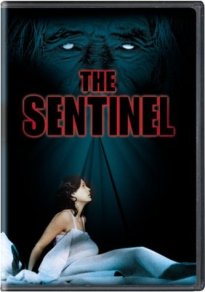
The SentinelThe Sentinel is a lesser known film that was allegedly created as Universal’s response to The Exorcist which was made four years prior. And while it does in fact have some thematic elements that draw comparisons to that film, it actually seems to garner more inspiration from Rosemary’s Baby. So, the question naturally becomes “does it stand up those monumental horror classics but was unfairly relegated into near obscurity? Or is there a reason why it doesn’t often come up in the conversation when classic religious-based horror is discussed?”

The story follows model Alison Parker (Cristina Raines) who is devoted to her slick, lawyer boyfriend Michael (Chris Sarandon) but at the same time looking for her own apartment because she wants her own space. Despite the fact that her wealthy father soon dies, money seems to be tight so she opts for a spacious but somewhat creepy apartment where her top floor neighbor is an old blind priest who does nothing but “stare” out the window. As you can imagine, shit starts getting creepy when she’s there alone and her and Michael must figure out the truth about the building before it’s too late.

Now, I’m a big fan of slow-burn tension but forty minutes into this film I honestly had the thought “how is this even classified as a horror movie?” While The Sentinel tries to establish a world full of palpable tension where things are not as they seem, a la Rosemary’s Baby, the effort largely falls flat, resulting in large stretches of monotony. This is not to say that there aren’t scenes where the film earns it’s horror stripes. A surprisingly gruesome encounter with a ghost about halfway through and a climax that is both incredibly creepy and very inventive do help to redeem the film a great deal, even if it does come off as rather overt Christian propaganda.

Clearly, the studio had high hopes for this being an effective horror vehicle and a lot of thought did go into assembling the supporting cast, but with mixed results. Faded star Ava Gardner’s Transatlantic Accent comes off as stagy and out of place from the reset of the cast. In addition, fantastic character actors such as Christopher Walken and Jeff Goldblum show up as minor characters but are squandered on insignificant roles. On the other hand, Burgess Meredith actually does deliver an effective performance that deftly transitions from friendly old coot to one of genuine menace.

In conclusion, The Sentinel does have an original concept and some great scenes interspersed throughout (that one with the cat eating the bird certainly had a chilling weight to it) but the overall picture isn’t engaging enough to really make it worth it. If you are religion-themed horror completest, there will probably be enough here to keep you interested to the end but frankly you’d have a better time just putting in The Exorcist again.

2.5 Stars Red

Grotesque (2009)

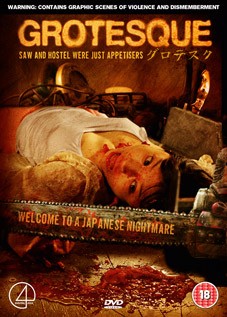
GrotesqueThe term “Torture Porn” was first coined back in 2006 by film critic David Edelstein describing the emerging trend of films like Hostel and Saw which featured very graphic scenes of torture and dismemberment. While scenes of graphic violence have been a staple of horror films for decades the new crop of early millennium extreme horror films brought the violence to the next level by dwelling on graphic and explicit carnage to an extent not previously seen in mainstream films. The structure of these types of films also typically mirrors the structure of a porn, hence the name, in that the primary focus of the film is a series of set-ups and titillating, explicit pay-offs. Now, I’ve seen a lot of Torture Porn films, probably all of them, but none in my experience better capture the essential nature of what a Torture Porn film is better than Koji Shiraishi’s exercise in extreme brutality, Grotesque.

The film opens with a young man and woman (Hiroaki Kawatsure and Kotoha Hiroyama) being attacked on their way back from their first date by a nameless sketchy loner in a van (Shigeo Osako). They wake up to find themselves tied up in a room at an unknown location as the nameless man begins to torture them. What follows is an hour long endurance test for the viewer as the man tests their wills to live, telling them he will free them if they can sufficiently excite him.

It would be easy to dismiss Grotesque simply as shock-value meant to titillate the most twisted and jaded of horror fans with it’s graphic and unflinching depictions of violence but that is far from the whole picture. What you really have here is an incredibly bold and fearless piece of independent filmmaking that gives the finger to every convention of watered-down Hollywood cinema that shoots for the middle and only cares about profits. This is what happens when a filmmaker doesn’t give a fuck what people think of his movie and makes the kind of film that he wants to make. It’s an incredibly punk-rock approach to filmmaking.

However, a film can have all the best intentions of being subversive and shocking but if it can’t properly execute the effects it will come off as nothing more than cheap and laughable. Rest assured though, Grotesque does NOT suffer from this problem and the gore effects are mind-blowingly realistic, making the violence all the more shocking. Eye-gouging, genital mutilation, disembowelment, to name just a few, are all pulled off with the kind of masterful realism that would make Tom Savini proud.

What I also find interesting about this film is how the audience’s emotional journey simultaneously mirrors both the villain and the victim’s. You cringe as they are brutalized and cling to hope for their survival at the same time indulging in the visceral thrill (you know you do) that the villain himself is going to such great lengths to experience. This is of course true of horror in general but it’s far more front and center in this film. It also raises an interesting point about how far some people will go to experience certain feelings, no matter what the cost. Drug addicts, gamblers, murderers, so many people in the real world take the pursuit of feeling a high to extreme and destructive lengths.

In summation, this is a harrowing and visceral experience that is not for the casual horror fan. The story itself is very stripped-down and simple and Shiraishi wisely opts for a tight 73 minute feature that keeps the tension up rather than drawing the plot out further just to reach the 90 minute mark. The story does take an unexpected sharp turn into surreal territory towards the end which is jarring at first but ultimately works to bring the story to a perfect conclusion.

4 Stars Red

Black Christmas (1974) vs Black X-Mas (2006)

Black Xmas vs Black Xmas

Sometimes comparing an original to a remake is very simple. When the original is a masterpiece with a brilliant story that is simply watered down and cheapened by the remake then it’s a no-brainer. However, when neither film is exactly outstanding it actually makes the comparison trickier. Such is the case with Black Christmas but to it’s credit at least they waited a few decades before trotting this middling slasher out for a new coat of paint.

Both films center around a sorority house on Christmas that begins receiving disturbing phone calls from an unidentified creep. After that it’s not long before the residents of the house, in true slasher fashion, start getting gruesomely knocked off one by one by an unseen killer.

The set-up for each is basically the same but for some reason, perhaps to add more of a sense of menace, the writers of the remake decided to add an additional storyline involving the villain Billy escaping from a mental hospital for the criminally insane. This actually had the opposite effect pushing the film deeply into campy territory and taking all the power away from the scene where the first mysterious obscene phone call is made, which is a truly unsettling moment in the original film. This is also true of the copious amounts of flashback scenes, and the addition of the character of Billy’s sister, the remake included seeking to flesh out Billy’s backstory. In reality this only ends up slowing down the story and making the villain far less frightening than the mysterious killer from the original who lurked in the shadows and seemed to strike out of nowhere.

That being said though, the original does suffer from issues of it’s own. The film is punctuated by a few good kills and some effective scenes of tension, the creepy phone calls really are masterfully done, but it does spend most of the time between them with a story that severely drags. This is not helped by some comic relief scenes that further drag down the story (although that line about the Mormon Tabernacle Choir is a rare moment of comic brilliance).  However, I do want to acknowledge that in the context of Horror history the original does play a significant role as an early precursor to the Slasher subgenre.  It’s contribution to the genre in general has been an important one but many aspects of this film just have not aged well.

As underwhelming as the cast of the original is, they look like master thespians when compared with the utterly unbearable cast of pretty “actresses” they assembled for the remake. I swear I have never wanted a cast to die more badly in my life, so at least there was some satisfaction to be had when that began occurring in brutal ways (btw what’s with all the eyeball ripping in the remake? They’re obsessed!)

I will give credit where credit is due and say that the last half-hour or so of the remake does become more engaging as it builds towards the typical Final Girl climax. The fundamental problem with the remake though is the fact that the entire film itself has such a cheesy “campfire ghost story” kind of feeling to it. I’m surprised characters aren’t putting flashlights under their chins every time they talk about Billy’s unrealistically bad childhood. Every single shot is exaggerated, stylized and devoid of any substance or realism so you never forget you are watching a Hollywood movie.

So, despite some pacing and character development issues I am gonna give the win to the original in this case because at least I never felt like I wanted to stab my eyes out with an icicle rather than watch another minute of the witless banter between a group of actresses that prove the casting couch is alive and well.

Winner Black Christmas 1974