
 Today I drink up Happy Hour, the twisted debut short from director Gavin Thompson. Does this dialogue-free, black and white film have what it takes to deliver a compelling story in under twelve minutes? Well, let’s discuss.
The film follows two nameless characters, a young woman (Melanie Jess) who is bringing a young man (David Kim) back to her apartment. However, what appears at first to be a standard night of hooking up takes a turn for the brutal as it becomes clear she has something far more sinister in mind.
The first thing that is of note about this film is that in addition to being black and white it is also utterly without sound other than the boisterous classical music that plays throughout. These are both very bold stylistic choices that can make films come off as incredibly pretentious if not handled correctly. For these choices to work there needs to be a solid thematic reason for choosing them over conventional methods of telling the story otherwise it becomes counter-productive.
I feel like a lot of aspiring filmmakers use B&W in an attempt to emulate the classic notion of indie cinema but what they should know is that those films were primarily shot on B&W stock for practical reasons rather than artistic ones. While Happy Hour does look good in B&W I am unconvinced that it (as well as the music) was used for any other purpose than to try to impose a greater artistic significance on the story. If the story had been complex and nuanced these choices may have carried more weight but as it is it’s very one-note. It (and I feel a spoiler alert is warranted here) gets on one track and stays there without adding any twists, reversals or surprises. The classical music also had a bit of a muting effect on the violence and would have served the film better had it only played during select parts or been turned down so that the screams and sound effects could come through.
I do want to point out though that despite these issues there are also some key things that the film does very well. The actors for one are able to express an incredible amount with only their facial expressions and body language. Both turn in very solid performances but Jess really shines in this regard, allowing her subtle facial expressions to communicate the malevolent feelings underneath.
In addition, the special effects are simple but effective and Thompson wisely chose to stick with gore gags he could convincingly pull off. I also have to give credit for the camera work itself which does a very decent job of guiding the mood of the story through well-conceived shots.
So, all in all a pretty solid short that has some really positive aspects to it but ultimately leaves something to be desired. I do feel that with a more solid storyline in his hands Thompson could be capable of creating something very interesting and worthwhile indeed.

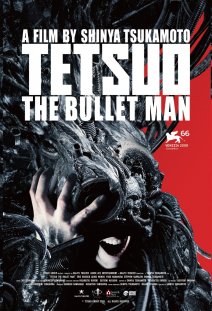 After a seventeen year hiatus from the series, cult director Shin’ya Tsukamoto returns for a third installment of metal-morphing insanity with Tetsuo: The Bullet Man. Given that it was made nearly two decades after Tetsuo 2: Body Hammer, Tsukamoto certainly had enough time to plan a brilliant return to the series that would not only honor the originals but also reinvigorate the concept for a new generation. With significantly more experience as a director, as well as the enormous advances that have been made in filmmaking technology, it should be a foregone conclusion that Tsukamoto knocked it out of the park with this one, right? Well, let’s discuss.
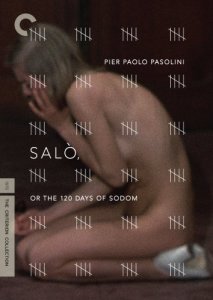 If you are seeking out the most notorious, disturbing and controversial films of all time, Salo, or the 120 Days of Sodom is a title that’s sure to come up over and over again. The film is legendary for its levels of depravity and for being a kind of an endurance test that weeds out all but the most hardened viewers. It’s something that has been on my radar for years and I decided it was finally time to see what all the fuss was about. I wanted to judge for myself if this this forty-one year old film could in fact still live up to it’s reputation and hold a candle to modern-day examples of extreme horror like A Serbian Film, Human Centipede 2, Martyrs, etc.
 In this review, the underground film production company Ungovernable Films takes it to the streets with their Punk exploitation film The Ungovernable Force. Being that this is the same company that created films with titles like Honky Holocaust and Gay Jesus you have a pretty good idea what kind of film experience you are in for if you are at all familiar with their other work. So the question is “Does this Troma-style film capture the gleeful, grotesque magic of movies like Father’s Day or is it simply an hour and a half of boobs, cheap but explicit violence and porn-level dialogue?” Well, I guess there’s only one way for you punks to find out!
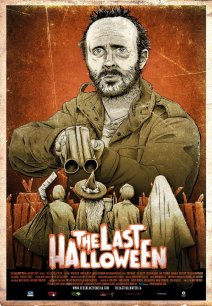 It is still a bit early yet to think about but, believe it or not, Halloween is right around the corner. In the spirit of that horror-themed holiday which is so near and dear to our black hearts, I decided to review the 2013 short The Last Halloween.
 With this review I conclude my current binge of Richard Powell shorts with his 2012 film Familiar, which was made between his shorts Worm and Heir. After seeing the caliber of his other films I was very intrigued to see how this one would stack up to the others and if he could in fact maintain the high level of quality I’ve come to expect from his films.
 For this review I once again go into the dark mind of Richard Powell and dissect his 2010 short, Worm. After giving out one of my very rare five star ratings to his 2015 short Heir I was certainly interested to see how his other work compared. Does it stand on equal footing with the later film or is there a progression to the quality of his films that culminates in the outstanding 2015 film? Well, let’s discuss. By the way, some aspects of the ending are referenced here, not a full on reveal of course but all the same I feel a spoiler alert is warranted for this review just in case.
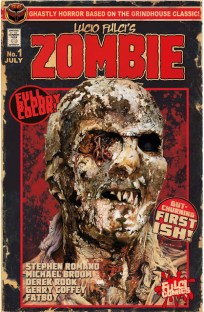 For this review I’m doing something a little different and I will actually be reviewing issue #1 of the comic book adaptation of Lucio Fulci’s Zombie. Since comics are such a different medium than films I felt it didn’t make sense to use the same star rating system I typically use for films. So for this review I will be omitting that entirely and simply letting the review speak for itself.
 I see the format of short films in general as an opportunity for truly unbridled filmmaking. Even though the filmmakers themselves almost never see much in the way of financial gains from the actual shorts, they are also not beholden to the kinds of artistic compromises so often required to make a feature film marketable. This allows the most daring and talented directors to create short films that delve into dark subject matter and employ experimental techniques to create a vision untarnished by the meddling of outside forces who seek to make it more “palatable” for a wider audience. Directors who take advantage of that freedom are sometimes able to create films that are uninhibited, brilliant art pieces and Heir is one such film.
 When your film has a running time of under ten minutes there isn’t a lot of room to flesh out an elaborate story and the entirety of the film is generally focused on the resolution of one central conflict. Stained is no exception to this rule, and the plot can easily be summed up as (sigh)…..a man takes a shit and has to try and find some toilet paper to wipe his ass. Yes, that’s really the plot.
 Horror and Alternative Cinema Reviews