
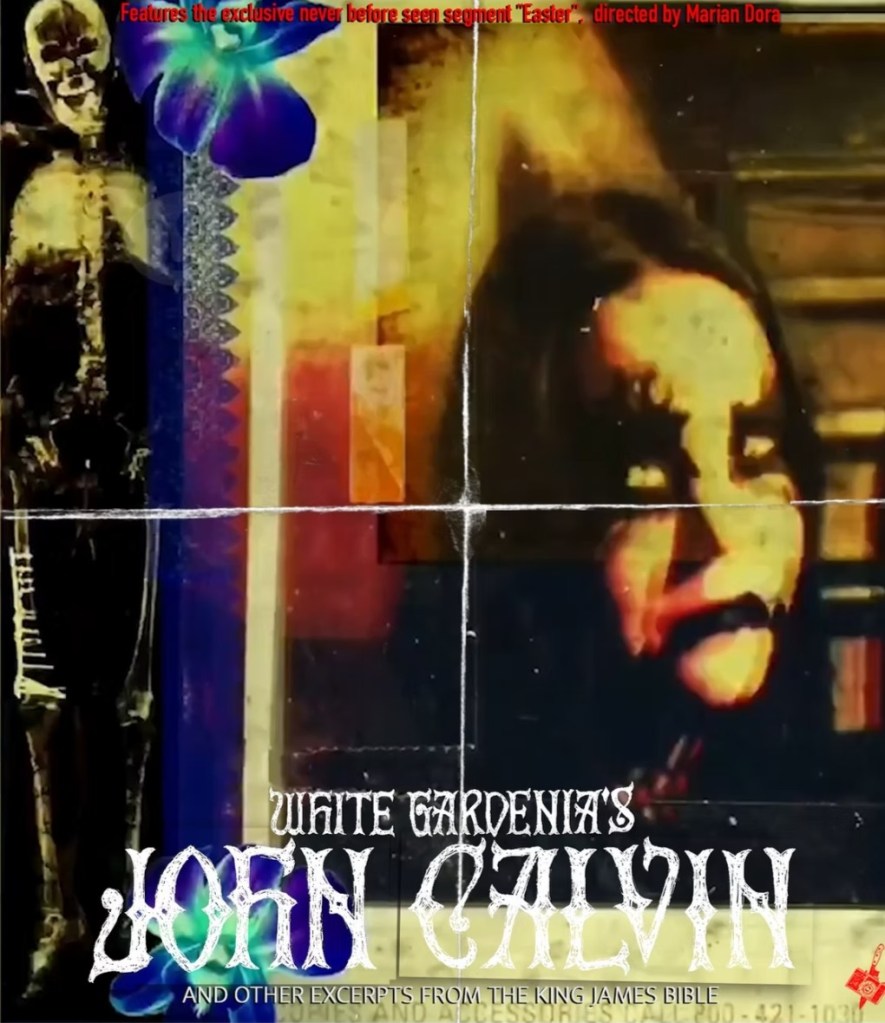
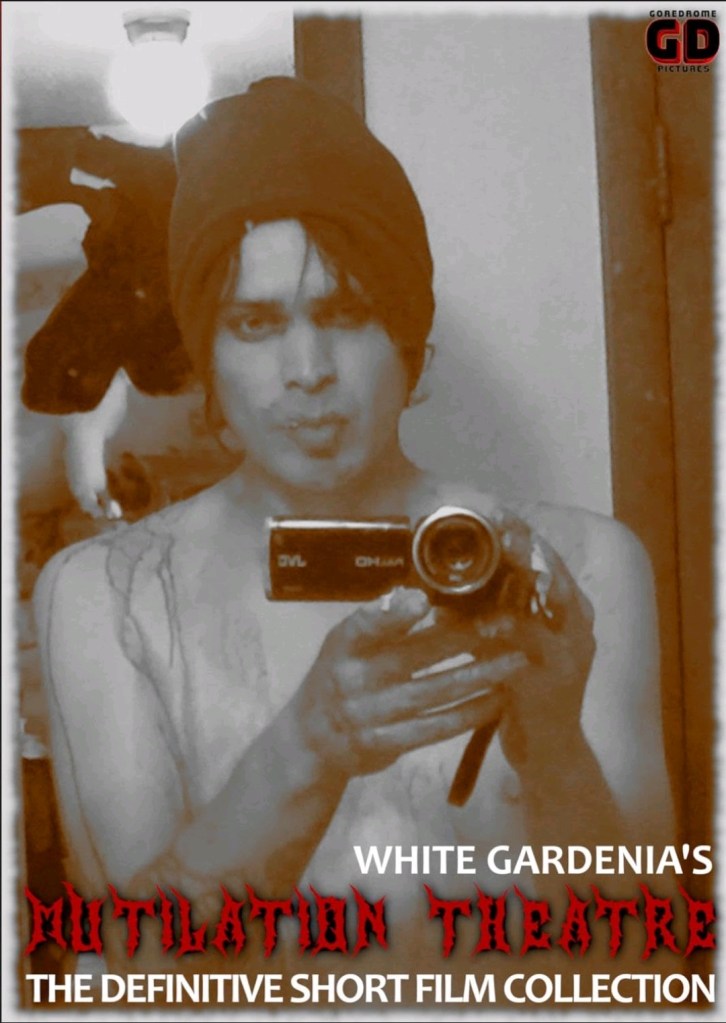
Art’s inherent subjectivity is never more apparent than in abstract films. Without a traditional narrative structure and so much of the imagery left up to interpretation, the goal isn’t so much about determining whether something was “good” or “entertaining” so much as it is understanding the artist’s motivation and goals and whether or not they were able to achieve them. Spearheaded by underground artist Daniel Valient, White Gardenia’s John Calvin is in many ways a significant departure from the style and content of their previous works in part because it shifts focus from nudity and self mutilation to biblical stories and also because it represents a collaborative effort with multiple other filmmakers.
Unlike traditional anthologies, the various parts aren’t clearly segmented by filmmaker and instead flow into each other with brief text on screen sometimes indicating the switch to a different segment. The presentation is a real variety of mixed media from static collage imagery accompanied by discordant and distorted soundscapes to live action scenes and old silent film footage reworked and reedited into Found Art style segments. This does make for a bit of an uneven tone as the highly produced black and white scene from Marian Dora (Melancholie der Engel) presents a much more professional tone than some of the less successful live action segments whose costumes and camerawork have a much more DIY aesthetic to them.
This collection is on a whole a very interesting and unconventional piece of artistic expression but is at its least successful when it leans into an over-reliance of on-screen text or direct voice-over to communicate the ideas presented in it. There are a lot of interesting concepts and ideas here dealing with religion, transhumanism, death, and resurrection but I would challenge Valient and the other artists to rely on their talents and abilities to process these concepts through a creative filter and express them more abstractly than simply telling it to the audience. I also found the choice to include footage that was clearly filmed handheld from another screen to be curious rather than just incorporating it into the footage itself.

The times when this film is at its most successful are when it’s able to lean into the surreal and bizarre aspects and run wild with them. The make-up effects on the lepers were truly inspired and genuinely haunting but the most interesting part of this experience is without a doubt the use of the bizarre collage imagery. The use of this creative technique, incorporating some moving images into a mostly static scene, coupled with distorted audio made for a unique and intriguing experience. I also like how the old footage was recontextualized into something strange and new and there were points that were reminiscent of early Lynch shorts and the kind of dark anatomical visuals Marilyn Manson used during his most provocative period. The time-lapse decomposition also brought to mind Peter Greenaway’s deeply unsettling masterpiece A Zed and Two Naughts.
Ultimately, a bit of a mixed bag as collaborations typically are, there are moments of experimental brilliance here and a more streamlined version that pairs down the overuse of text throughout would probably be more successful. While the effectiveness of the overarching message in the film will undoubtedly depend on your personal connection to the tenets of Christianity and interest in transhumanism, I always appreciate art that takes big swings and isn’t afraid to use highly unconventional and experimental ways of expressing ideas.

Availability: Limited

Limited edition Blu-rays can be purchased at Bizarretheater.com









 Horror and Alternative Cinema Reviews