In terms of production value, short films really run the gamut from goofy DIY productions slapped together with little forethought in someone’s backyard, to slickly produced professional pieces with Hollywood-level craftsmanship. With recording and editing equipment being more accessible and user friendly than ever, barriers to creating a film have never been lower, but the ability to create a good one remains as difficult and elusive as ever. Regardless of the tools and technology, the biggest factor in determining the quality of a film is how well it’s able to succeed on the most fundamental level of being “a good story, well told.”
With a total runtime of just nine minutes and the film itself being contained to just over six, Beyond the Moonlight doesn’t have a lot of runway to work with but from the beginning is able to establish a level of quality with rich atmosphere and beautifully executed shots. The story follows a young woman (Isabella Jaimie) furiously practicing ballet at night and performing for a strict task-masker (Alexandra Almendarez) who keeps demanding more from her. The film at this point gives strong Suspiria vibes and effectively builds tension with excellent camerawork, well-crafted lighting, and a particularly impressive shot that utilizes mirrors to great effect.
While I applaud the use of practical effects here the main misstep in the film is the fundamental tonal shift at the end that takes a tense and intriguing set-up and puts a button on it that’s downright hokey. The idea itself is solid and had the scene been taken a little more seriously, it could have ended on a much stronger note. That being said, I was still left wanting more as this whole film really just hints at the beginnings of a larger story and fortunately the short is already being adapted into a one- hour TV pilot. I’m truly intrigued to see how that goes because if writer/director Natalie Rodriguez is able to strike the right tonal balance we could have something really interesting here.
Availability: Unavailable
Currently there is no release date for the film but more info can be found on the official website here
Understanding the artistic intention of a filmmaker is key to being able to determine the quality of the work. While you usually don’t have the ability to hear directly from the artist what their work meant, you also shouldn’t need to because, if done successfully, the message and intention should be evident through the language of film, no matter how abstract the work. Sometimes you have to let go of traditional narrative expectations entirely to meet the film on its own level, embracing the vibe and symbolism the director is using. For The Benefactress (an exposure of cinematic freedom) the intention clearly isn’t to entertain the audience with the kind of fun escapism they can get from a mainstream theater but rather to utilize the tools of filmmaking to explore how far the boundaries of art can be pushed. Now, as with any work of art, the determination of how successful it is depends on if the execution can live up to the intention.
The film is the creation of writer/director Guerrilla Metropolitana and starts with a long text crawl that, among other things, talks about how the director’s previous work gained the attention of individuals in “high ranks of society” who have now decided to fund this project and see what an underground filmmaker can do with mainstream money. After that, an unassuming middle-aged woman named Juicy X reads a statement to camera about her previous experience with Metropolitana’s unconventional methods. She also states that the financial resources being provided by the mysterious benefactress known by the pseudonym “Elektra McBride” has brought a new quality to his cinema. Now that the copious amounts of funding have been firmly established, the expectations are officially set, and I can’t wait to see what this edgy, unfiltered, underground film with Hollywood level production values looks like. Sounds like we have another Serbian Film on our hands.
After over eight minutes of preamble, the main film is ready to start and most of the remaining hour of the runtime is devoted to Juicy X sexually assaulting another middle-aged woman in light bondage gear who seems to be her captive. Playing himself as the director/camera operator in the film within a film, Metropolitana records everything in shaky hand-held as Juicy X forceably inserts various objects into her victim and performs other sex acts onto her seemingly unwilling victim. This is done for the benefit of the benefactress herself who watches via a livestream monitor wearing nothing but a gimp mask while breathing in heavily from an oxygen tank and masturbating. The film is loosely plotted but does take some twists and turns as new characters are introduced and Metropolitana even steps out from behind the camera to take his turn raping the woman as well. Perhaps this section was inspired by the controversial Belgian arthouse shocker Man Bites Dog, or perhaps not.
It’s unclear where all of the mainstream money they kept referring to earlier ended up, it certainly wasn’t in the single apartment that served as the shooting location or in the generic film stock filter that was put on the digital footage in post-production. This isn’t something that I would normally draw attention to because I don’t hold a lack of budget against a production but if you are going to repeatedly introduce the idea of the film having a substantial budget then it should be called out when we don’t see any evidence of it on the screen. This brings us to the biggest issue with the film itself which is the inherent disingenuousness of the production.
Every aspect of this film seems intent on trying to deceive the viewer into thinking it’s something that it is not from the bullshit story about the funding in the opening crawl to the fake film grain to the ear piercing canned mic feedback sound that is added almost compulsively throughout. The greatest offender by far however is the fact that all the sexuality in this “exposure of cinematic freedom” is faked. Now, there is a point while we see Metropolitana humping the nameless victim where a voiceover of him comes in to let the audience know he is really fucking her but we’ll have to take his word for it because the angle doesn’t reveal anything. There is also a moment when we see what looks like cum spurt out onto Juicy X’s backside from behind the camera which may also be authentic since the boner that Metropolitana displays through multiple scenes very much is.
So, a few possible exceptions aside, the film is a fake, softcore simulation and I can’t for the life of me understand why a film whose whole thesis is centered around cinematic freedom is not even able to commit to its own premise and resorts to unnecessary self-censorship. Had this simply committed to the concept and delivered a truly unfiltered explicit experience then it would be a solid piece of boundary-pushing filmmaking but as it is, it feels stifled and restrained and there isn’t enough of a story or creative film techniques to make up for it. There are so many films out there that effectively utilize explicit sexuality as a form of artist expression and Metropolitana should take cues from films like We Are the Flesh, Shortbus, 29 Needles, Flesh Eater X, Baise-moi, XXX: Dark Web, Portraits of Andrea Palmer and so many others that boldly push the limits of cinematic freedom and don’t simply take a half measure. I truly think Metropolitana could be capable of delivering some really interesting boundary-pushing art if he takes the gloves off and makes a film that owns and celebrates what it is instead of trying to convince you that it’s something that it’s not.
Availability: Limited
The film is being distributed by Blood Pact Films and can be purchased on their official website.
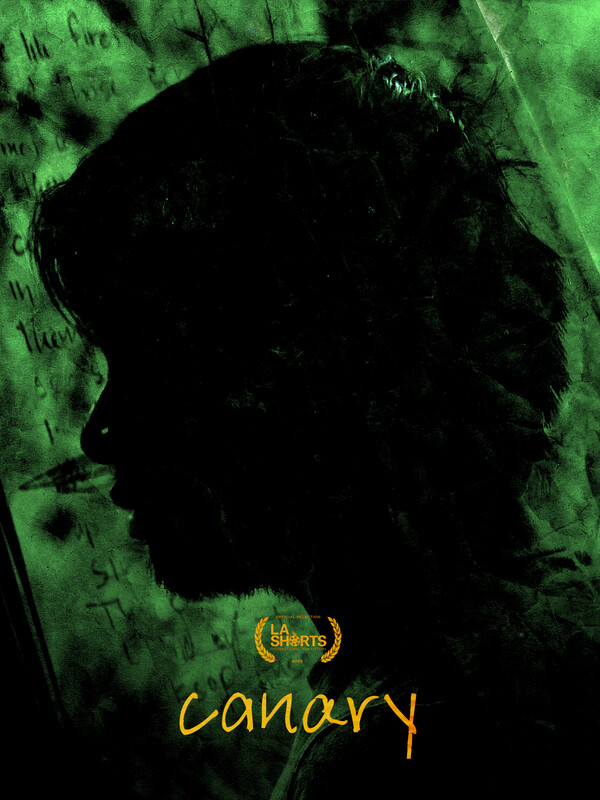
The apocalypse has always been a fertile topic for art, but with each passing day it begins to feel less like an abstract fantasy and more like an impending inevitability. Far from being a hot take or an alarmist viewpoint, the steady drumbeat of “our world is ending” isn’t so much catastrophic revelation as it is a pervassive, omnipresent anxiety that permeates our collective unconscious. The question isn’t so much if the end times will come about soon but which grotesque vision of the future will we be treated to as we usher in the denouemont of the human race? What seemingly impossible reality will we look back on as eeirly prophetic? The Road? Mad Max? The Matrix? 1984?
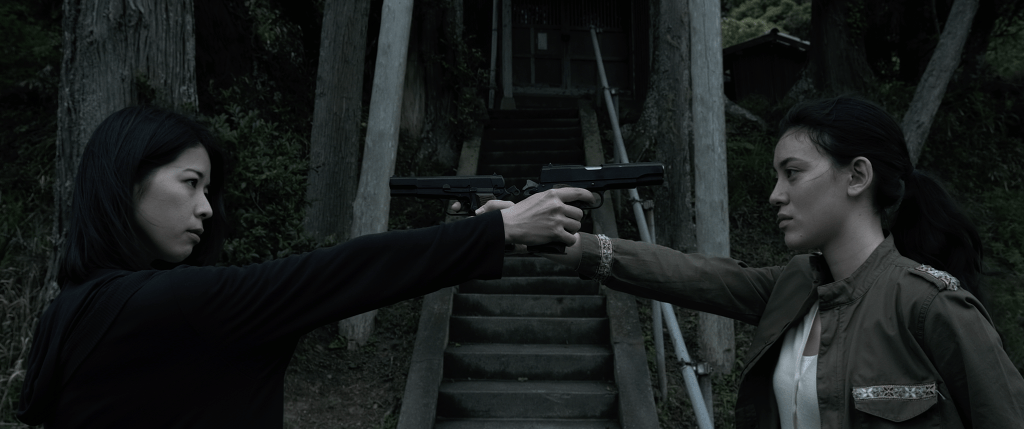
Canary never spells it out directly, but doesn’t need to as there are enough allusions to the clearly supernatural origin of the hellish new reality the characters are living in. For Alan (Barron Leung) things have found a way to get even worse as he finds himself trapped in a remote cabin where the only other survivors are three assholes who bully him mercilessly.
With such a high concept idea, it would be easy to overextend the modest resources of this independent short but director Taka Tsubota wisely chooses to take the all too infrequent approach of actually understanding how to work within the limitations of his available budget. This less-is-more philosophy works wonderfully here as Tsubota pulls off genuine tension with some excellent camera work and world-building without exposition dumps. The acting chops of some of the supporting cast aren’t quite where I’d like them to be but overall it’s a good story, well told, that fits perfectly into its runtime.
Availability: Unavailable
The film recently played at the LA Shorts film festival on 7/24/23 but does not currently have an official release date at time of review. Visit takatsubota.com for updates and further info.
Call me old-school but the idea of an A.I servant sitting idle and listening to your every word never sat well with me and I won’t have Alexa, Google Nest, or any of that weird, Big Brother shit in my house. While that no doubt sounds ridiculous to some, I’m clearly not the only one who has felt disquieted by the ubiquitous self-imposed surveillance of our modern world as films like L.U.N.A. deal with this very specific technological anxiety.
In the world of the film, the Alexa surrogate is called L.U.N.A and is a pyramid shaped device that technicians like Lilian (Fernanda Romero) spend a lot of time making house calls to repair. When she is summoned to the creepy old mansion that young couple Jamie and Sarah Cambell (Lauren Bair and Lauren Deshane) recently moved into she soon finds that this is far from an ordinary call.
Even more than the horror elements of this story the strangest thing about this reality is the reliability of the devices themselves. Apparently (according to the film) they break down so frequently and in such great quantity that technicians such as Lillian have to work from 6 in the morning till well after dark just to try and keep up with what must be an unfathomable amount of malfunctioning units. Given that the repair call itself seems to take less than five minutes, the surrounding community must be absolutely lousy with broken L.U.N.As that must be serviced in-person at all hours, from the break of dawn to the dead of night.
It’s just strange that a film that is so careful to logically justify so many aspects of the world would leave such an odd detail hanging. If the L.U.N.As themselves were built into the house or at least larger than a decorative paperweight, then there would have been more justification for Lillian’s job. Despite how much time I’m spending focusing on this particular aspect of the story, what’s most important is how well the overall components of the production work.
To that end, it’s an incredibly well-realized vision that wears its Giallo influences proudly on it’s sleeve (or in Sarah’s case, directly on her Inferno shirt). The creative camerawork, bold stylistic choices, pulsating synth score, and genuine tension all work in concert to deliver a very polished experience. In the end I was left wanting more, which was partly to the credit of the engaging story and partly because the abrupt ending was slightly unsatisfying. While the story did build effectively to its conclusion, it felt a bit more like the opening scene of a feature than a stand-alone short. Regardless, it’s a very well-made and entertaining piece of cinema and if it was to be expanded to a feature length production I’d happily line up to see it.
Availability: Unavailable
No release date as of review, visit http://www.blakevaz.com for updates and further information.
It’s staggering to think about how many movies come out every single year, especially when you factor in the numerous straight-to-VOD releases that are being pumped into the home media system like so much sludge into a feeding trough. Yes, this can be a way for upstart artists to get their personal and groundbreaking work out to a larger audience but for every one of those films there’s at least a dozen more that are cynical cash-grabs whose only purpose is to make some money with as little financial (and creative) investment as possible. So the question here becomes ‘is Ouija Japan one of those rare exceptions of groundbreaking art made by an earnest and passionate filmmaker, or is it indistinguishable from the rest of the muck clogging up our on-demand queues?’
Ouija Japan tells the story of Karen (Ariel Sekiya) an American transplant living in Japan who has only been in the country with her husband for the last six months and is still struggling to fit in. When an interpretation misunderstanding results in her agreeing to join a group of her co-workers on a weekend getaway to a remote village she sees it as an opportunity to strengthen her connection to them and hopefully start to fit in. When the group decides to use a game of Kokkuri-san (essentially Japanese Ouija) to disrespect the fox deity that is worshiped in the village, they soon find themselves unwitting participants in a deadly game which can have only one winner.
Now, I know that movies take an incredible amount of work to make and I have no doubt that everyone involved is really trying but when the end result looks like a bunch of teenagers tried to remake Battle Royale on an iPhone it’s time to put away the participation trophy. To its credit, the fact that players in the survival game need to use their smartphones to fully participate and unlock real-world power-ups is a novel idea that modernizes the concept a bit but is nowhere near enough to counterbalance the flaws, of which there are many. Sure, the lighting is flat, the script is pedestrian, and every aspect of the film has an inherent cheapness to it, but nothing quite compares to the voice work on display here.
In what seems like a last-minute attempt to ingratiate the film with Western audiences the Japanese actors speak about half their lines in English. This would have been perfectly fine had they been fluent in both but their tenuous grasp on the language makes the stilted acting go from awkward to downright painful. While the dual languages do factor into the story, the filmmakers would have been far better served finding a script work-around instead and sparing the actors (and the audience) this unnecessary struggle. Additionally, some actors appear to have their dialogue fully recorded in ADR which is no better as it creates an almost cartoonish disconnect between the characters and the lines themselves.
At the end of the day, what it really comes down to is that modern viewers have a plethora of options for entertainment. For a horror title to stand out amongst the literally hundreds of other choices that are packed in with any given streaming service at no extra charge there really has to be something there that makes it worth the investment of our precious time. In the case of Ouija Japan it’s not even a question of a lack of resources since I have seen better filmmakers do far more with significantly less. Amateurish production values can be overlooked if there is a compelling soul to the film and brilliance from at least one aspect shining through. Here there is just a fundamental lack of creativity, originality, and technical ability but then again that does exemplify the difference between art and a product, between the gems…..and the muck.
Availability: Upcoming Release
Film will release on Blu-ray and Amazon Prime on 10/19/21.
Imagine just how many lives could have been spared in horror movies had outsiders simply heeded the warnings of the Crazy Ralphs of the world and stayed the hell out of cursed areas. Although, that would be significantly less fun for the audience who has signed up for the twisted pleasure of watching at least most of the stubbornly disbelieving travelers be eviscerated in gruesome and (hopefully) creative ways. It really doesn’t need to be a case of either/or, though. I would like to see more characters take the threat seriously but still be unable to escape so that the inciting incident can occur and the fun can begin. Demigod opts to tread down the more well-worn trail to set up the conflict but we’ll see if it can rise above its conventional structure to bring a compelling and original story to light.
Upon receiving news of her estranged grandfather Karl’s passing, Robin (Rachel Nichols) heads to his now vacant home in the Black Forest of Germany to tend to his affairs, bringing her husband Leo (Yohance Myles) along for the ride. Once there, they encounter Arthur (director/co-writer Miles Doleac), an eccentric hunter and former friend of Karl’s who warns them about the supernatural presence that resides in the woods. Before long the three find themselves (along with several other unfortunate locals) embroiled in a desperate fight for survival against an ancient evil that lurks within the woods and the coven of witches that summoned him.
The lesson would seem to be “trust the locals and get the hell out while you can” but since Arthur finds himself in the exact same predicament as the outsider couple despite having intimate knowledge of the dangers that lurk in the woods, it turns out that it doesn’t matter after all. This feels less like an intentional choice by Doleac and more of an oversight, especially as it is far from the only inconsistency we witness in the film. That’s not to say that there isn’t still a lot to like about this movie and, despite the predictable set-up, there is a lot of tension to be had and a story that is compelling enough to grab your attention.
The experience of watching it is pretty much the definition of a mixed bag as the film will hit high points that are undone by low points which repeat the cycle to ultimately land somewhere in the middle. The visual style of the film itself is a good example of this as the overall quality falls within the flat look we’ve come to expect from low-budget digital only to be broken up by a strikingly creative shot or a very well executed special effect. The end result settles in the area of “good” but a more aggressively abstract filmmaking style, acting that is brilliant rather than fine, and a storyline whose tension didn’t peter out towards the end due to some unnecessarily long-winded speeches could have bumped it to the category of “great”.
The part that sticks out more than any other however is the look of the demigod himself. It’s hard to have a convincingly scary monster on an independent budget and Doleac wisely opts to shoot around the creature throughout most of the film offering glimpses rather than full-on shots. Unfortunately, he chooses to abandon this practice towards the end of the film letting the audience come face-to-face with the sheer terror of a sensibly-priced Halloween mask (and yes the red, laser eyes hurt more than they help). Still, the end result is a film with some effectively bloody kills and a few solid stretches of genuine tension so, while it may not be a masterpiece, it’s a decent enough way to spend an hour and a half.
Availability: Upcoming Release
Film is being released in select theaters and on VOD on 10/15/21.
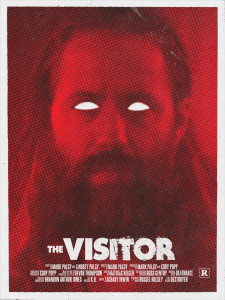
Coming in at a scant six minutes and forty seconds, The Visitor packs a lot into its short runtime. The story follows an unnamed writer who leaves behind his wife for the weekend to go to their country house and finish his book but encounters something very strange upon his arrival. One thing that immediately pops out about this film is director Mark Palgy’s choice to overlay a pulsating score over the entire runtime in place of any sound effects or audible dialogue. It’s a bold choice, especially since there is a significant amount of dialogue in the film which is instead conveyed through subtitles. This unconventional decision could have easily gone south, but in this case it works wonderfully and imbues the short with a life and energy that complements the visuals.
The 70s-style grain works well to contribute to the subtly surreal quality of the film which sometimes gives way to fully psychedelic imagery and bold color palettes reminiscent of Panos Cosmatos’ Mandy. The only minor gripe I have is that it briefly plays into a convention I see entirely too much where a character experiences something that would be utterly mind-shattering but regards it with little more than a mild incredulity. Still, this is an excellent film with high production values in every aspect from the aerial shots and the production company logos to the special effects and the camera work. It very much succeeds as a stand-alone short but could also definitely be expanded into a feature that brings the simple yet chilling story to a global scale.
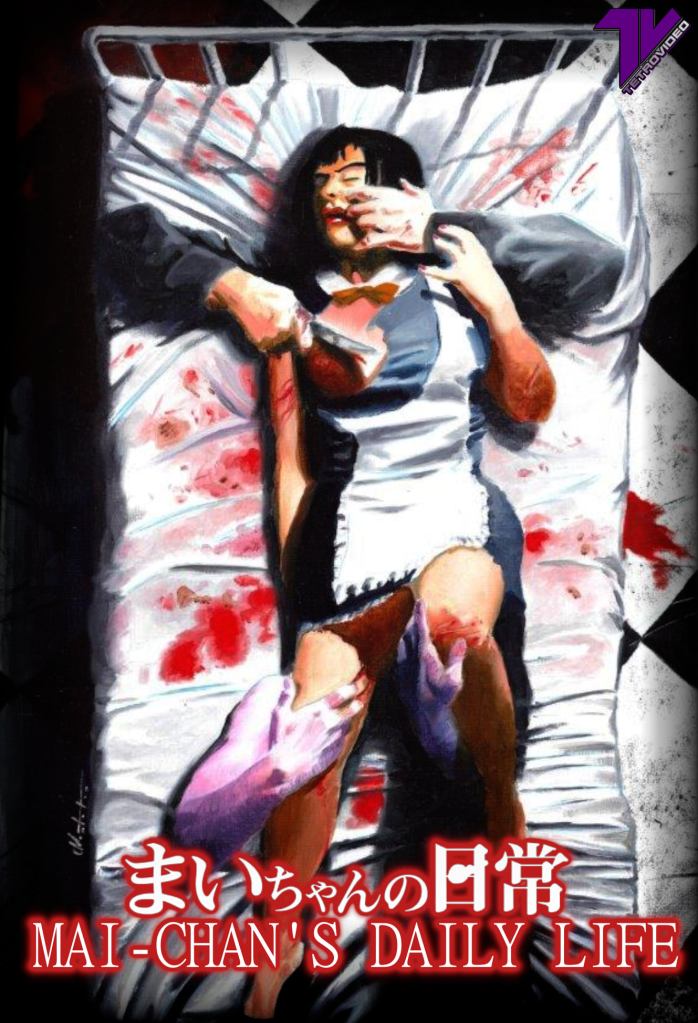
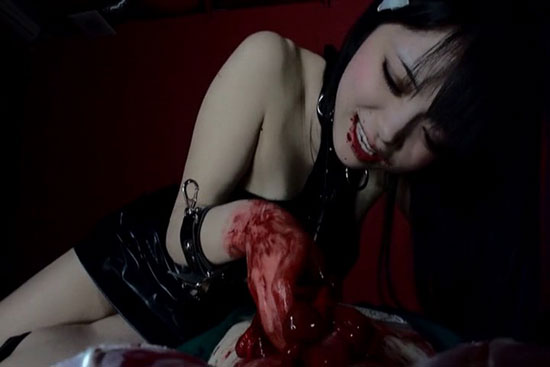
Mai-chan’s Daily Life brings to mind questions I never thought I’d ask such as “what if instead of being a badass superhero Wolverine was a tortured sex slave?” That’s essentially the central plot of this film, where a maid with infinitely regenerative powers (who can still feel pain) is used by her sadistic “master” to fulfill his violent, brutal fantasies. Loosely based upon the 2003 Manga Mai-chan no nichijô by Waita Uziga the film was adapted and directed by Sade Satô in 2014. While the story may deviate quite a bit from the source material, it maintains the same spirit of gleeful brutality thanks in large part to direct supervision of the process by Uziga himself.
The storyline in this adaptation centers around a new character created for the film named Miyako (Miyako Akane) who starts work as a maid at the remote house where Mai-chan (An Koshi) already works. Once Miyako dons her short, fetishistic maid outfit, Mai-chan starts showing her the ropes. This includes how to dust the jars filled with dead puppies, as well as how to be appropriately subservient to their wheelchair-bound employer known only as “Master” (Shôgo Maruyamawho) and the cruel head maid Kaede (Soako Roman). After witnessing the brutal punishment Mai-chan receives for daring to spill the milk that she was forced to lap up from a bowl on the floor, Miyako becomes aware of Mai-chan’s special ability. Rather than horrifying her, this seems to awaken something in Miyako who becomes obsessed with the idea of “devouring” Mai-chan.
Despite its incredibly brutal violence, the film actually feels toned-down from the Manga as it contains none of the graphic sex or (thankfully) pedophilia of the source material. I can’t say that there is really a lot beneath the surface here, as both the film and the Manga seem primarily created to indulge the Torture Porn fantasies of the audience and the lingering shots of bent-over maids and sadistic violence certainly work to support that idea. Don’t get me wrong though, there’s absolutely nothing wrong with that and it’s great when a film knows what it is and owns it. Despite all the violence, the film has a lightness to it and doesn’t take itself too seriously. There’s something about Mai-chan that just makes it so damn engaging (dare I say fun) and the experience is reminiscent of the similarly graphic yet lighthearted Guinea Pig 3: He Never Dies.
It helps that the acting and special effects are both excellent which serves to keep you immersed in this strange, twisted story. The film does (for some reason) alternate between black & white and color at seemingly random intervals which may have been an homage to the B&W source material, but I found to be a needless distraction. Even though it originally came out in 2014 the film is getting a proper re-release courtesy of Tetro Video in July of 2021, which is great news for fans who can no longer get a hold of the OOP edition that Redemption Films put out in 2016. Connoisseurs of twisted, splatter cinema would do well to check this one out because at just over an hour, it goes down real easy and has a great rewatchability factor. It may not be the most complex thing on the menu but it’s a satisfying treat that Extreme Cinema fans will want to devour over and over again.
A successful story is one that develops as it progresses, bringing new twists and revelations as it builds upon itself. When the story in question is a short, then it’s important that the movement occurs quickly and meaningfully. Director/co-writer Chris Guzzo finds that balance with Family Bond which starts out on a tense but innocuous domestic scene and develops into something far more menacing before long. Its difficult to really talk about the short’s plot without giving spoilers but there are other things to discuss. The acting for one is good, it’s not the best I’ve ever seen but it still manages to bring the characters to life and gets the job done. Within its brief run time the film is able to throw in some major twists and surprising revelations which is difficult to do within such a limited space. Those twists however do rely heavily on the acceptance of a certain fact that, while possible, is unlikely enough to remain dangerously close to implausible. Still, an overall interesting story that efficiently sets up the characters and the world and will take you on an engaging ride that builds to a fittingly dark climax.
As we rely more and more on technology to make connections (especially as the ever present quarantine isolation marches on) it makes sense that tech based horror would become more prevalent in the genre in new and interesting ways. Just as Host did last year, Filtered is able to effectively communicate horror and anxiety in the simple yet brilliant format of video chat. With a runtime of less than six minutes, writer/ director Vincenzo Nappi doesn’t have a lot of time to establish characters or backstory, yet is able to make both Jasmine (Jasmine Winter) and Marco (Marco Carreiro) immediately feel genuine and real with the sparse information provided. This goes a long way to making their initially mundane conversation all the more familiar at the start and therefore more frightening by the climax. With simple yet effective imagery that recalls the classic David Lynch shortThe Alphabet at times, this is an amazing piece of bite-sized horror that feels very apropos to the moment.











 Horror and Alternative Cinema Reviews