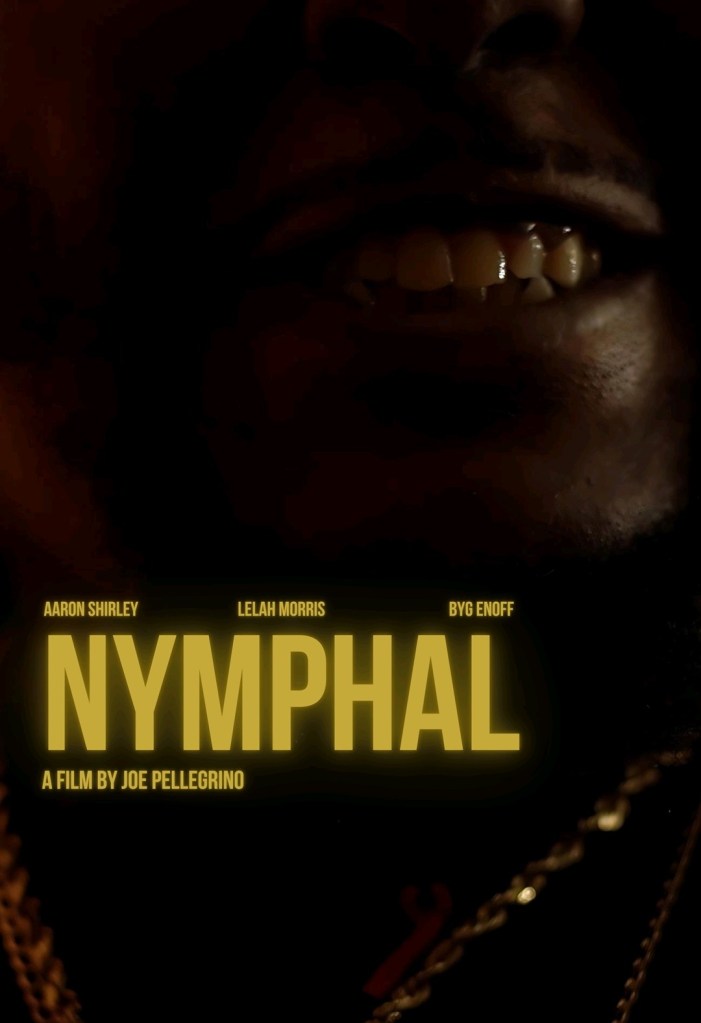
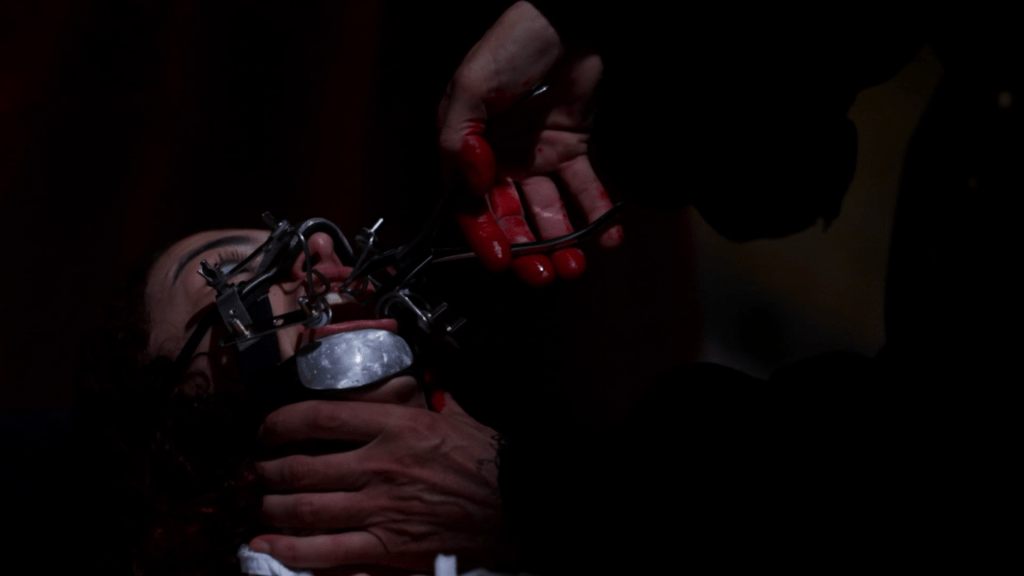
When a shlubby, middle-aged single dad is in desperate need of rent money, things go from odd to full-blown crazy in this unique and increasingly bizarre short. Nymphal is definitely an unconventional film and when we are introduced to our silent protagonist flopped half-naked on the bed it’s hard to imagine where it will go or the strange route we will take to get there. Thankfully by the end things do make sense (including the odd title) or at least as much sense as they are going to make.
While it is delightfully strange there is a method to the madness and the film stays true to its own internal logic, never devolving into nonsensically weird for the hell of it. Writer/director (Joe Pellegrino) was clearly working with a shoestring budget but is able to squeeze a lot of production value out of this shoot and incorporates so many great touches of subtly surreal world building that flesh out the story. The giant gangster landlord, the weirdos buying toys, and of course the excellent fake TV commercial that gave Mandy vibes in the best possible way. It all leads to an unhinged conclusion that I won’t spoil here but with a total runtime of just over 20 minutes is well worth seeing for yourself. That being said, the overall pacing would benefit from a bit of trimming and tightening but regardless it’s still an effectively creepy and unusual film that deserves a wider audience.
Availability: Widely Available
The full film is available on the director’s YouTube channel @joepellegrinofilm
In terms of production value, short films really run the gamut from goofy DIY productions slapped together with little forethought in someone’s backyard, to slickly produced professional pieces with Hollywood-level craftsmanship. With recording and editing equipment being more accessible and user friendly than ever, barriers to creating a film have never been lower, but the ability to create a good one remains as difficult and elusive as ever. Regardless of the tools and technology, the biggest factor in determining the quality of a film is how well it’s able to succeed on the most fundamental level of being “a good story, well told.”
With a total runtime of just nine minutes and the film itself being contained to just over six, Beyond the Moonlight doesn’t have a lot of runway to work with but from the beginning is able to establish a level of quality with rich atmosphere and beautifully executed shots. The story follows a young woman (Isabella Jaimie) furiously practicing ballet at night and performing for a strict task-masker (Alexandra Almendarez) who keeps demanding more from her. The film at this point gives strong Suspiria vibes and effectively builds tension with excellent camerawork, well-crafted lighting, and a particularly impressive shot that utilizes mirrors to great effect.
While I applaud the use of practical effects here the main misstep in the film is the fundamental tonal shift at the end that takes a tense and intriguing set-up and puts a button on it that’s downright hokey. The idea itself is solid and had the scene been taken a little more seriously, it could have ended on a much stronger note. That being said, I was still left wanting more as this whole film really just hints at the beginnings of a larger story and fortunately the short is already being adapted into a one- hour TV pilot. I’m truly intrigued to see how that goes because if writer/director Natalie Rodriguez is able to strike the right tonal balance we could have something really interesting here.
Availability: Unavailable
Currently there is no release date for the film but more info can be found on the official website here
Understanding the artistic intention of a filmmaker is key to being able to determine the quality of the work. While you usually don’t have the ability to hear directly from the artist what their work meant, you also shouldn’t need to because, if done successfully, the message and intention should be evident through the language of film, no matter how abstract the work. Sometimes you have to let go of traditional narrative expectations entirely to meet the film on its own level, embracing the vibe and symbolism the director is using. For The Benefactress (an exposure of cinematic freedom) the intention clearly isn’t to entertain the audience with the kind of fun escapism they can get from a mainstream theater but rather to utilize the tools of filmmaking to explore how far the boundaries of art can be pushed. Now, as with any work of art, the determination of how successful it is depends on if the execution can live up to the intention.
The film is the creation of writer/director Guerrilla Metropolitana and starts with a long text crawl that, among other things, talks about how the director’s previous work gained the attention of individuals in “high ranks of society” who have now decided to fund this project and see what an underground filmmaker can do with mainstream money. After that, an unassuming middle-aged woman named Juicy X reads a statement to camera about her previous experience with Metropolitana’s unconventional methods. She also states that the financial resources being provided by the mysterious benefactress known by the pseudonym “Elektra McBride” has brought a new quality to his cinema. Now that the copious amounts of funding have been firmly established, the expectations are officially set, and I can’t wait to see what this edgy, unfiltered, underground film with Hollywood level production values looks like. Sounds like we have another Serbian Film on our hands.
After over eight minutes of preamble, the main film is ready to start and most of the remaining hour of the runtime is devoted to Juicy X sexually assaulting another middle-aged woman in light bondage gear who seems to be her captive. Playing himself as the director/camera operator in the film within a film, Metropolitana records everything in shaky hand-held as Juicy X forceably inserts various objects into her victim and performs other sex acts onto her seemingly unwilling victim. This is done for the benefit of the benefactress herself who watches via a livestream monitor wearing nothing but a gimp mask while breathing in heavily from an oxygen tank and masturbating. The film is loosely plotted but does take some twists and turns as new characters are introduced and Metropolitana even steps out from behind the camera to take his turn raping the woman as well. Perhaps this section was inspired by the controversial Belgian arthouse shocker Man Bites Dog, or perhaps not.
It’s unclear where all of the mainstream money they kept referring to earlier ended up, it certainly wasn’t in the single apartment that served as the shooting location or in the generic film stock filter that was put on the digital footage in post-production. This isn’t something that I would normally draw attention to because I don’t hold a lack of budget against a production but if you are going to repeatedly introduce the idea of the film having a substantial budget then it should be called out when we don’t see any evidence of it on the screen. This brings us to the biggest issue with the film itself which is the inherent disingenuousness of the production.
Every aspect of this film seems intent on trying to deceive the viewer into thinking it’s something that it is not from the bullshit story about the funding in the opening crawl to the fake film grain to the ear piercing canned mic feedback sound that is added almost compulsively throughout. The greatest offender by far however is the fact that all the sexuality in this “exposure of cinematic freedom” is faked. Now, there is a point while we see Metropolitana humping the nameless victim where a voiceover of him comes in to let the audience know he is really fucking her but we’ll have to take his word for it because the angle doesn’t reveal anything. There is also a moment when we see what looks like cum spurt out onto Juicy X’s backside from behind the camera which may also be authentic since the boner that Metropolitana displays through multiple scenes very much is.
So, a few possible exceptions aside, the film is a fake, softcore simulation and I can’t for the life of me understand why a film whose whole thesis is centered around cinematic freedom is not even able to commit to its own premise and resorts to unnecessary self-censorship. Had this simply committed to the concept and delivered a truly unfiltered explicit experience then it would be a solid piece of boundary-pushing filmmaking but as it is, it feels stifled and restrained and there isn’t enough of a story or creative film techniques to make up for it. There are so many films out there that effectively utilize explicit sexuality as a form of artist expression and Metropolitana should take cues from films like We Are the Flesh, Shortbus, 29 Needles, Flesh Eater X, Baise-moi, XXX: Dark Web, Portraits of Andrea Palmer and so many others that boldly push the limits of cinematic freedom and don’t simply take a half measure. I truly think Metropolitana could be capable of delivering some really interesting boundary-pushing art if he takes the gloves off and makes a film that owns and celebrates what it is instead of trying to convince you that it’s something that it’s not.
Availability: Limited
The film is being distributed by Blood Pact Films and can be purchased on their official website.
La Cabra attempts to recreate the experience of watching a ‘70’s Satanic Panic cult film with its story of a little girl (Coral Degraves) who has strange encounters while wandering alone in the woods. Given the fact that the title literally translates to “The Goat” you can bet that both Satanism and the aforementioned hoofed creatures feature prominently in this film. I can see what writer/director Toruga was going for here, trying to build tension and dread through an ominous soundscape and scenes of an innocent child punctuated by sinister imagery, but the end result just doesn’t translate to a successful horror film.
Degraves does a perfectly fine job for someone of her age attempting the difficult task of carrying almost the entirety of the runtime on her back alone and the issue isn’t with her as much as it is with the pacing and direction. Even at under 15 minutes, the lack of meaningful onscreen interaction causes this to drag and it could have been a more engaging slow-burn at half the length (starting a short with a full credits roll out doesn’t help either). Shooting horror in broad daylight on a shoestring budget is no easy feat but even with those limitations in place this could still have made a larger impact with more creative camera use, minimizing the screen time of costumed characters, and excising cliched imagery of things like Ouija boards entirely. The sound design is the most effective part of the experience but it’s not enough to make up for the rest of the shortcomings.
Availability: Widely Available
The full film is available on Toruga’s YouTube channel.
At long last the wait is nearly over! The Profane Exhibit, an anthology collection of Extreme Cinema shorts by 10 of the most boundary-pushing directors is finally making its home media debut via Unearthed Films after notoriously languishing in post-production for eleven years after its initial festival premiere in 2013. I couldn’t confirm the specifics about the cause of the extended release delay but situations like this tend to come down to unglamorous explanations involving rights issues and personality conflicts. While many fans of underground horror have been eagerly anticipating its release, the unusually long waiting period was the cause of much restless grumbling online and even speculation that the film itself was nothing more than a myth. So naturally, the first question on everyone’s mind is going to be “was it worth the wait?” Well, let’s discuss.
Each of the 10 segments is a standalone piece by a different director and are completely unrelated with only some strange footage of meat processing acting as the connective tissue, if you will. The films vary in content and quality as is always the case to some degree in anthologies with the overarching connection seemingly being “just make something super fucked up”. That’s certainly a sentiment I can get on board with as well as a collection that features heavy hitters of underground cinema on both sides of the camera…..and Uwe Boll. Ruggero Deodato (Cannibal Holocaust), Yoshihiro Nishimura (Tokyo Gore Police), Marian Dora (Melancholie der Engel) and many others all contribute segments for an unprecedented collection of international talent. On the other side of the lens, some notable highlights include legendary character actor Clint Howard (Ice Cream Man, Arrested Development) taking an exceptionally dark turn in Boll’s segment Basement, and Eihi Shiina (Audition, Tokyo Gore Police, Helldriver) crushing it in Nishimura’s Hell Chef segment like the absolute fucking legend that she is.
One of the key factors of an anthology is how you structure the segments. Ideally, the first one out of the gate should grab hold of you and set the tone of things to come until the film culminates in a showstopping finale. Unfortunately, this is where The Profane Exhibit is guilty of a major misstep by opening the collection with the tepid and underwhelming Mother May I by Anthony DiBlasi. The short tells the story of a sinister nun who deals out draconian punishments to the young women in her charge and while it is a perfectly serviceable horror short with some inspired creature effects, it feels out of place in a collection that is supposed to be centered around the concept of boundary-pushing extremity. This anthology would have been much better served by opening with almost any other segment from the collection and Hell Chef, Tophet Quorom or Manna would have all been exceptionally good ways to kick things off.
The weirdest outlier of the whole anthology is unquestionably Deodato’s segment, The Bridge. For many horror fans, Cannibal Holocaust acts as an entry point into world of darker and more obscure Extreme Cinema and even numerous genre fans who can’t stomach it are at least aware of what it is making Deodato probably the most recognizable name in the whole collection. Given the pedigree of his most notable work, it is utterly baffling how tame and innocuous his entry was. Sure, the idea is dark but this short blip of a film barely registers as horror and definitely not as something that should be in an Extreme Cinema collection. Rest in Power to a legend though.
Now I want to focus on some of the things this collection does right, because there are a lot of them. Dora delivers a tour de force with his brilliantly directed and utterly bleak (naturally) entry Mors in Tabula about a doctor called to a rural town to aid a severely ill child in World War II era Germany. Hell Chef is a very fun and brutal entry that delivers a pitch-perfect slice of Japanese Splatter Gore and while there may not have been a lot of substance to Manna, I thoroughly enjoyed it for the unrelenting visual feast of sex and violence that it was.Basement and Goodwife are both solid entries in the “human monsters hiding in plain sight in suburban America” subgenre and Tophet Quorom is an excellent segment about an evil cult that brings a well-realized story to life along with some ferocious violence. I like how the aptly titled micro-segment Amouche Bouche ties into the “meat” segments that are intercut between entries throughout. The real stand-out in this collection though is Nacho Vigalondo’s Sins of the Father. This one starts with such a strange and jarring premise that unfolds and reveals itself in unexpected ways to unveil the immensely dark and unpredictable narrative. The truly unique quality of the story coupled with the expertly crafted production make this one a haunting and mesmerizing experience that will stay will you far longer than some of the more overtly violent entries here.
I’ve seen some pretty mixed chatter about this film lately and part of that may be due to its legendarily long wait time before release building expectations to an unmatchable degree. Is it everything it could be and everything we could want in an Extreme Cinema collection that pushes the boundaries farther than any others dare to go? No, it has its missteps but there is far and away (Clint Howard reference, couldn’t help myself) much more good than not. While it’s not perfect, The Profane Exhibit is a daring and provocative collection of art that fans of twisted, underground cinema won’t want to miss. So yeah, it was worth the wait.
Availability: Upcoming Release
The film will be released through Unearthed Films on September 24th, 2024 and can be preordered here.
The Coffee Table is in a word…..grim. Even revealing the central concept can take a little of the sting off the gut-punch of the inciting incident so if you prefer to be blindsided by a film that starts with an extremely upsetting concept and spends the rest of the runtime ratcheting up the tension and turning the emotional screws then you might want to go into this one totally unaware. Otherwise read on because I won’t be going into any further spoiler territory than that and there’s a lot to say about this strange, bold piece of cinema.
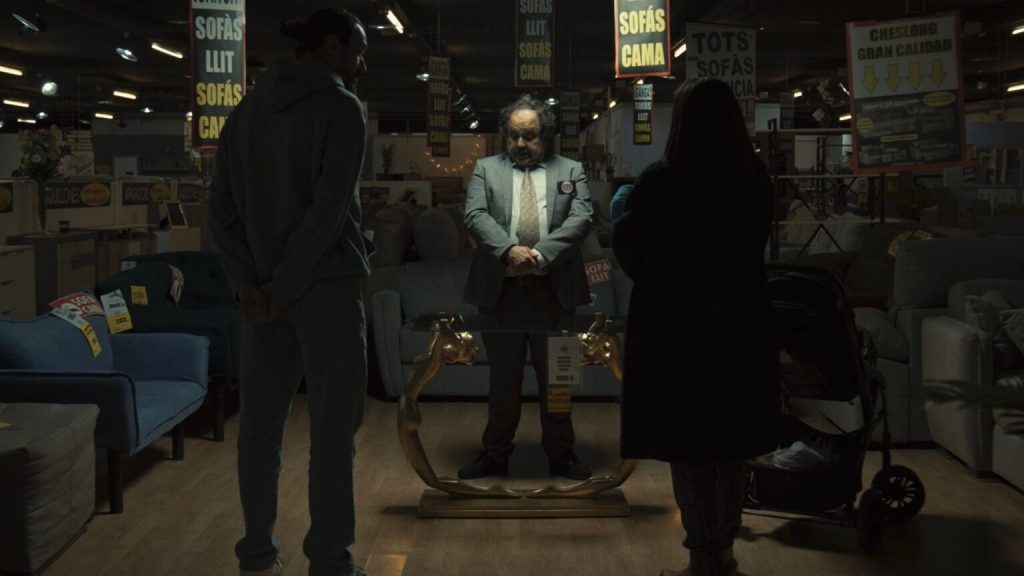
The film opens with recent parents Jesus (David Pareja) and Maria (Estefanía de los Santos) purchasing a garish coffee table from an unscrupulous salesman (Eduardo Antuña) who guarantees it will bring them happiness. The couple’s already troubled relationship is further strained by Jesus’ absolute insistence on purchasing it which Maria begrudgingly acquiesces to. After setting up the new table at home Jesus is left alone with the baby while Maria goes to the store and their lives are forever changed when an off-screen accident involving the new table ends up…..decapitating the infant child. The rest of the runtime is devoted Jesus’ emotional hell as he tries to conceal the fact from Maria for as long as he can that the worst possible thing has happened while she was gone.
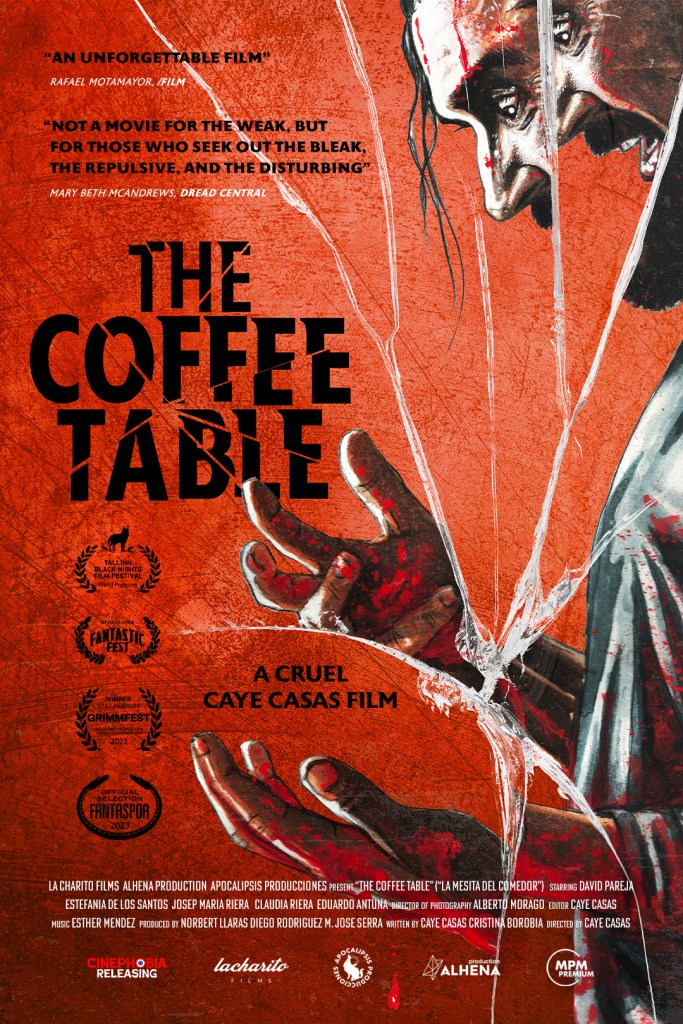
Perhaps the most jarring thing about this film (newborn beheadings aside) is the fact that it feels a bit confused tonally. The quirky opening credit sequence and even throwing the titular line at the end seem to frame this as though it were a fun, gruesome horror film and not the devastating domestic tragedy that it actually is. Strangest of all, the IMDB entry as well as the screener I received pitch this as a “horror/dark comedy” but some inconsequential moments of levity aside, this is a punishingly bleak, tense film that is about as much of a comedy as Come and See. The film has garnered a fair amount of buzz already for being a highly disturbing and upsetting watch and even describes itself as “cruel” on the poster which is fitting as director/co-writer Caye Casas seems to delight in twisting the emotional knife at every opportunity.
Those looking for a film to shock and disturb them in the way that they are accustomed to from Extreme Cinema may be disappointed. While there is some violence in the movie, what makes it a difficult watch isn’t the blood but the fact that it’s just relentlessly sad. Much like the scene of horrific domestic violence in I Stand Alone, this film forces the audience to sit and stew in the aftermath of tragedy, feeling the pressing weight of empathetic grief. This weight is further compounded as scene after scene reinforces how essential and meaningful this baby was to the couple, especially Maria, who continues on blissfully unaware that the unthinkable has already occurred as Jesus slowly unravels, knowing the charade can’t last forever.
None of this is to say that this is a bad or unsuccessful film. On the contrary, it is incredibly well made and superbly acted. The film succeeds at being genuinely tense and disturbing and is an interesting and unnervingly realistic character study on how people react when the most unimaginable horror becomes your inescapable reality. Less a horror film than a really upsetting drama about a horrible situation, The Coffee Table is nonetheless a bold and interesting film that I commend for its audacity, originality, and willingness to engage in an antagonistic, if not outright combative, relationship with the viewer. A worthwhile experience for those bold enough but new parents looking for a fun escape from their exhausting reality might want to give this one a pass.
Availability: Upcoming Release
For some reason this film is listed as being from 2022 in some places but it just started limited theatrical release on 04/19/24 and is coming to VOD and DVD on 05/14/24.
In Ride, Baby, Ride writer/director Sofie Somoroff utilizes the underrepresented sub-genre of sentient vehicles to deliver a stylish horror short where a female mechanic (Celina Bernstein) must do battle with a monstrous Camaro. The film is incredibly well shot and while its subject matter draws some thematic comparisons to Christine, the surreal style and dark absurdity of the content is more akin to Titane. While the concept might sound silly to some, the execution is not and the underlying feminist message comes through clearly. Somoroff does an excellent job using concise imagery to communicate the feeling of menace and violation the mechanic feels when she is simply trying to purchase the car from a couple of creepy guys in the opening scene. With top-notch production values and a core message that is as relevant now as ever Ride Baby Ride packs a lot under the hood in a fun trip that goes fast and leaves you wanting more.
Availability: Widely Available
The full film can be watched on the Alter channel on YouTube here.
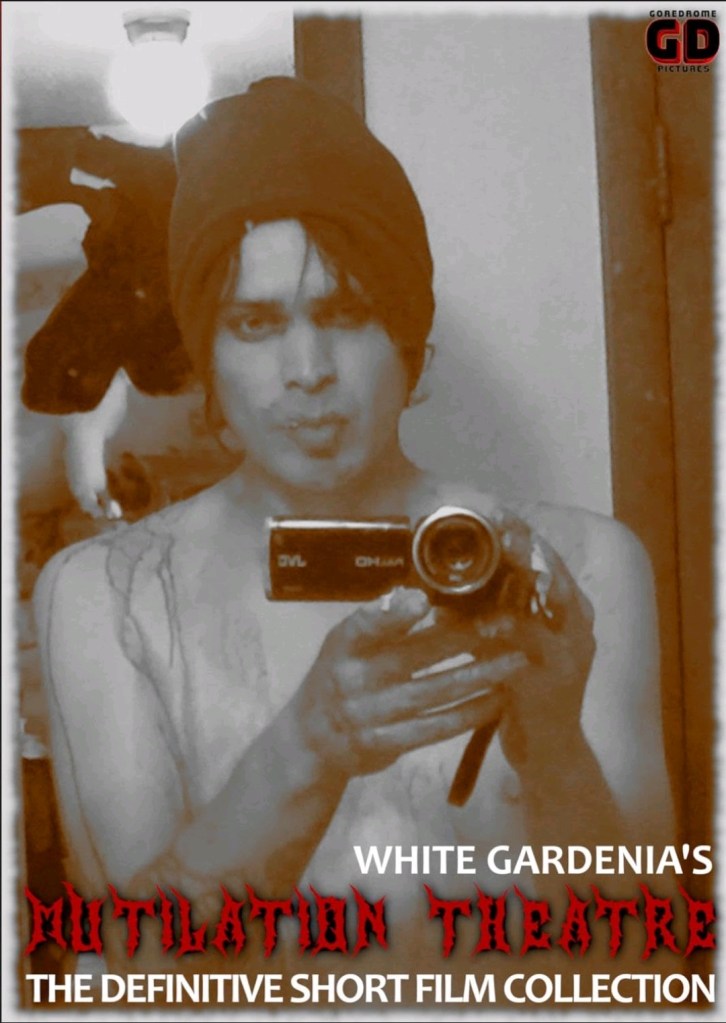
I’ve been a fan of White Gardenia (the underground artist collective helmed by controversial performance artist Daniel Valient) for quite some time now so naturally the idea of a definitive collection of their work was very appealing to me. Mutilation Theatre combines films from previous White Gardenia collections such as Blood Tastes Like Perfume and How to Raise Women from the Dead plus substantial additional footage. The film, released by Goredrome Pictures, comes in at a hefty four and a half hours and is billed as “The Definitive Short Film Collection”, which at that length it certainly should be. It’s definitely comprehensive but as far as definitive goes we’ll talk more about that a little later.
For fans of WG, Mutilation Theatre does provide the hits and features many of my personal favorites including The Oracle at Mesopotamia, Akasha’s First Time, m.i.p.a.m.h., Mobius Strip and more. These are the kinds of films that feature White Gardenia at their best and embody the surreal, unique experience that they are known for, featuring discordant audio soundscapes, bizarre onscreen text popups, and of course, real body mutilation and blood drinking. It also kicks off with a bang featuring a short that was new to me called The Oracle at Erythaea that was a sublime piece of disturbing art and featured a startling scene where Daniel viciously nails his own hand to the table before letting Allison drink his blood. The inclusion of the unsimulated shit-play/shit-eating scene later in the collection was genuinely surprising and good to see that WG can still find new shocking avenues to explore.
When your collection is longer than the extended cut of Return of the King, you’re bound to have some ups and downs in the quality of the material. White Gardenia is strongest when they focus on their well-honed format of surreal self-mutilation but falter a bit when it comes to narrative segments. While these scenes aren’t bad, they lack the forethought and substance to make them pop and are leaning heavily on the use of unsimulated cutting, explicit sex, and occasional special effects to keep the viewer engaged. There is also a bit of culling that could have been beneficial such as the segment The Oracle at West Gate Mall (Oct 1985) which is literally nothing more than a short clip of an animatronic skeleton inside a Spirit Halloween and was clearly shot well after 1985.
It’s great that there are underground companies like Goredrome willing to put out obscure content like this but there are a few things left to be desired about the release itself. The fact that this is branded as a definitive edition yet lacks some key WG segments is pretty disappointing. We only get V.O laden clips of the infamous finger-severing/eating from A Midnite Snack and segments like Allison’s Mouth Fills with Blood and Semen and Cher Nevin’s annihilating vaginal mutilation clip Yummy Fur are entirely absent. This is most likely due to their current inclusion on the Vore Gore and XXX: Dark Web compilations but still, these are keystone WG clips and you’d think they’d find a way to get them included. It’s also downright baffling to me that this collection still includes clips that are cut-off partway through with text directing you to a website for the full, uncensored version. Isn’t the whole point of a definitive collection to present artists’ work in its uncut entirety? And if these segments aren’t archived in physical media here then it seems unlikely it will ever happen for them.
If you know me then you know there is nothing I find more obscene and distasteful than censorship, self or otherwise. To that end, I was quite surprised that a collection that features bloodplay, explicit sex, and snacking on human feces would only include the censored version of A Perfume Made from Blood and Tears. And finally, not to sound overly nitpicky but it would have been really great to have more labeled subchapters to help find individual films rather than everything being dumped into a timeline and cut into four giant segments.
Ultimately, while there is good stuff here there is also room for improvement. The issue isn’t the content so much as the presentation that’s undermining it. We have yet to obtain a truly definitive gold-standard release of the work of White Gardenia but this is still a solid and comprehensive collection and a great way to dive in headfirst and experience the provocative, disturbing and thoroughly unique art they have created.
Availability: Limited
Limited copies are available from Goredrome.com while supplies last.
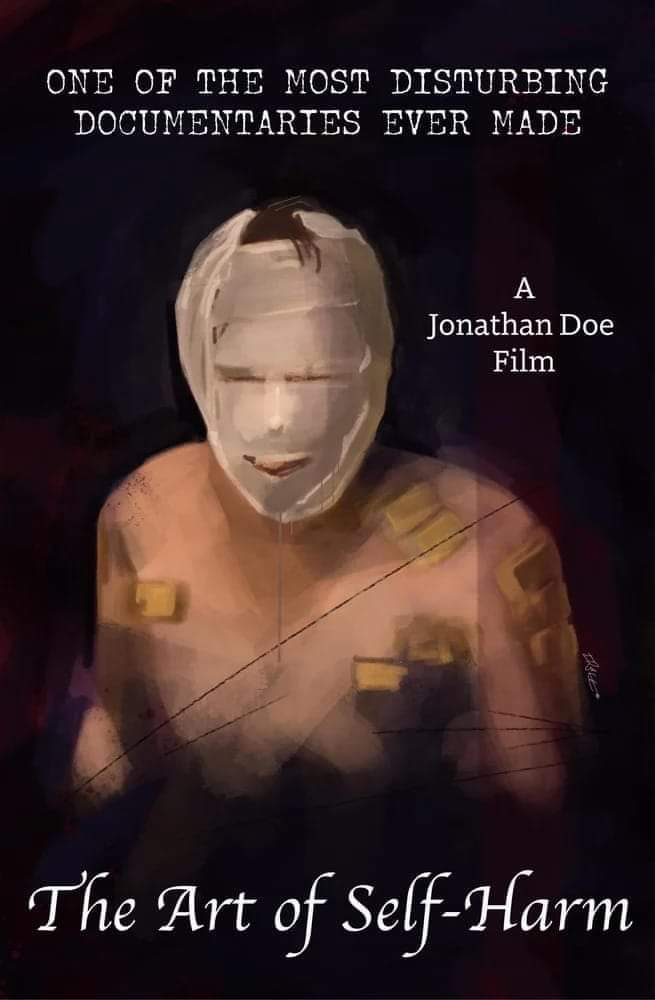
“One of the most disturbing documentaries ever made” a quote attributed to no one confidently proclaims at the top of the cover art. It’s a bold move to state this about your own film rather than waiting for others to bestow it upon you, but when the subject of your documentary is White Gardenia, a performance art collective that is literally on the cutting edge of underground Extreme Cinema you may have good cause to. So, does The Art of Self Harm live up to this proclamation or is it a hyperbolic marketing tactic? We’ll get more into this in a minute.
White Gardenia has been growing in prominence within the underground community thanks to limited edition compilations of their work like Blood Tastes Like Perfume and How to Raise Women from the Dead entering the marketplace along with segments in other collections such as XXX: Dark Web and Vore Gore. Defining exactly who is and isn’t officially part of the group can be a little murky as multiple people will pop in and out of videos, but the mainstays are Cherokee Nevin, Allison Belmont, and of course the ringleader himself, Daniel Valient. Much like the members themselves, the work of White Gardenia isn’t easily defined by strict labels or categorization but can most broadly be described as surreal short films that utilize music and unsimulated self-mutilation to create a unique and provocative experience for the viewer.
With The Art of Self Harm filmmaker Jonathan Doe (a prominent underground artist in his own right known for such films as The Degenerates, Barf Bunny, and Defilement of a Porcelain Doll) gains unprecedented access to the group, interviewing the key members and digging into WG’s backstory as well as some of their more notorious scenes. He even goes a step further and becomes part of the story himself when he films a new scene for them where Cherokee nails Daniel’s scrotum to a table in service of making a shall we say, “unconventional” candelabra.
The doc itself doesn’t really have a thesis statement nor does it delve too extensively into how this particular kind of outsider art fits into the larger cultural context but not every documentarian needs to be Ken Burns or Errol Morris. What it does offer is an intimate look at the people behind this provocative art and give context and additional information that even a long-time fan such as myself was unaware of. Whether its finding out the dark origin of the White Gardenia name, how the group shifted their focus from music creation to extreme performance art or just to see the “death pit” where Allison meditates amongst the corpses of various animals, this provides a lot of interesting info that fans are sure to appreciate. Daniel chooses to obscure his face in the interviews (even though it is on full display in the numerous clips that are intercut throughout) but is revealing in other ways as he further expands on his personal philosophy and motivation that he had only previously touched on in various clips in the past.
It’s not just the conversation that may be earning this film its distinction as a particularly disturbing documentary, as there are also numerous clips that those not desensitized by years of viewing Extreme Cinema may find hard to endure. Aside from the aforementioned candelabra piece, Doe also includes clips of classic White Gardenia segments including the notorious Midnite Snack from XXX: Dark Web where Daniel severs his own finger before he and Allison cook and taste it. It also includes the Yummy Fur segment from Vore Gore and Doe interviews Cherokee about what it was like to cut off a piece of her own labia and devour it.
There’s a lot of very interesting content within The Art of Self Harm for WG fans to…chew on if you will, but one more noteworthy parts that I found particularly intriguing was the behind-the-scenes controversy that XXX: Dark Web caused which even went so far as to involve the police. Yes, just like Ruggero Deodato was for Cannibal Holocaust and Hideshi Hino for Guinea Pig 2: Flower of Flesh and Blood, the members of White Gardenia were reported to the authorities for their involvement in the collection and had to prove that no one was in fact killed in any of the clips. I actually commend how reasonable the Montana police department was in their handling of this situation but the thought of three officers having to sit in a room and closely watch the entirety of XXX: Dark Web really puts a twisted smile on my face.
So, does The Art of Self Harm earn its self-appointed distinction? It really depends on your particular threshold for certain kinds of content and with films like Africa Addio, Orozco the Embalmer, Earthlings, Night and Fog, etc there are quite a few pushing the envelope in that category. That being said, I feel you would be hard-pressed to find someone who could reasonably disagree with the fact that a film with this much uncensored physical mutilation is indeed one of the most disturbing documentaries ever made.
Availability: Upcoming Release
Film will be officially for sale through Putrid Productions on November 18th, 2023 but is currently available for pre-order.
Truly anything can be the villain of a horror movie it seems, and I do mean anything. From killer Kombucha bottles to deadly donuts to sentient tires and evil bongs, there really is no object too random or absurd to come to life and wreak havoc in a horror film. These films aren’t so much striving for quality as banking on morbid curiosity, so the real trick is convincing the viewer that once they’ve started something like Death Toilet 5: Invasion of the Potty Snatchers there is actually enough entertaining content to keep them there for ninety minutes.
When I saw that “killer burrito” is what seems to have come out of the random word generator that I assume people are using to craft these ideas I didn’t have high hopes for All You Can Eat. Even though these types of films aren’t going for anything more than campy fun they more often than not fail to even hit that mark and are simply insufferable. Imagine my surprise then when this odd story of a fast food worker (Verity Hayes) who is rightly suspicious of the weird experiments her boss (Andy Muskett) is doing in the kitchen turned out to be not just passable but downright entertaining.
The fact that it’s a short helps All You Can Eat not overstay it’s welcome but after a well-paced and engaging thirteen minutes I was actually ready and willing to see more. No, this short about murderous Mexican food isn’t going to blow any minds seeking a rich, complex story but it does manage to succeed where so many have failed and deliver a bite-sized chunk of genuine horror fun that is both bloody and satisfying.













 Horror and Alternative Cinema Reviews