White Gardenia – John Calvin and Other Excerpts From the King James Bible (2025)

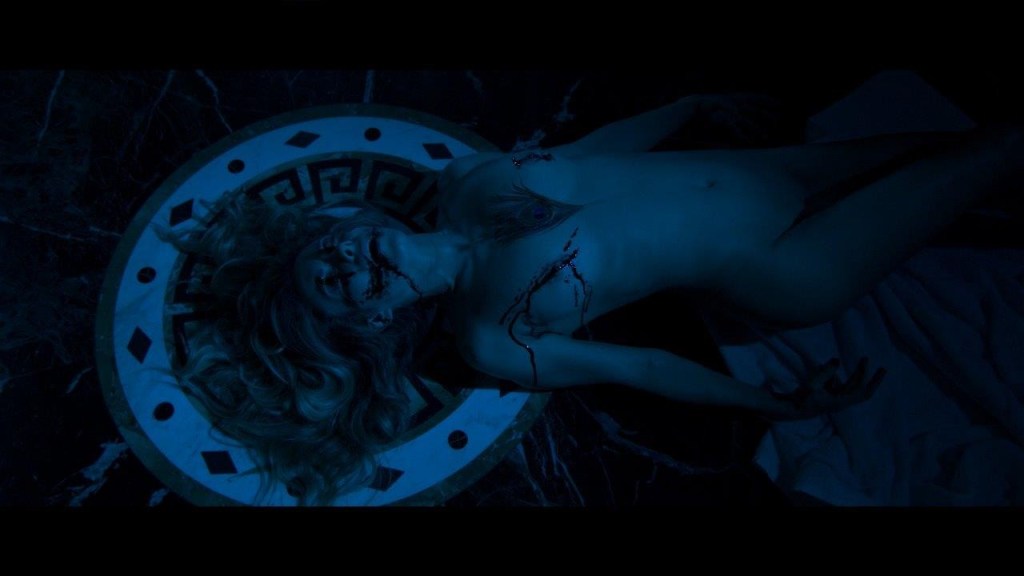
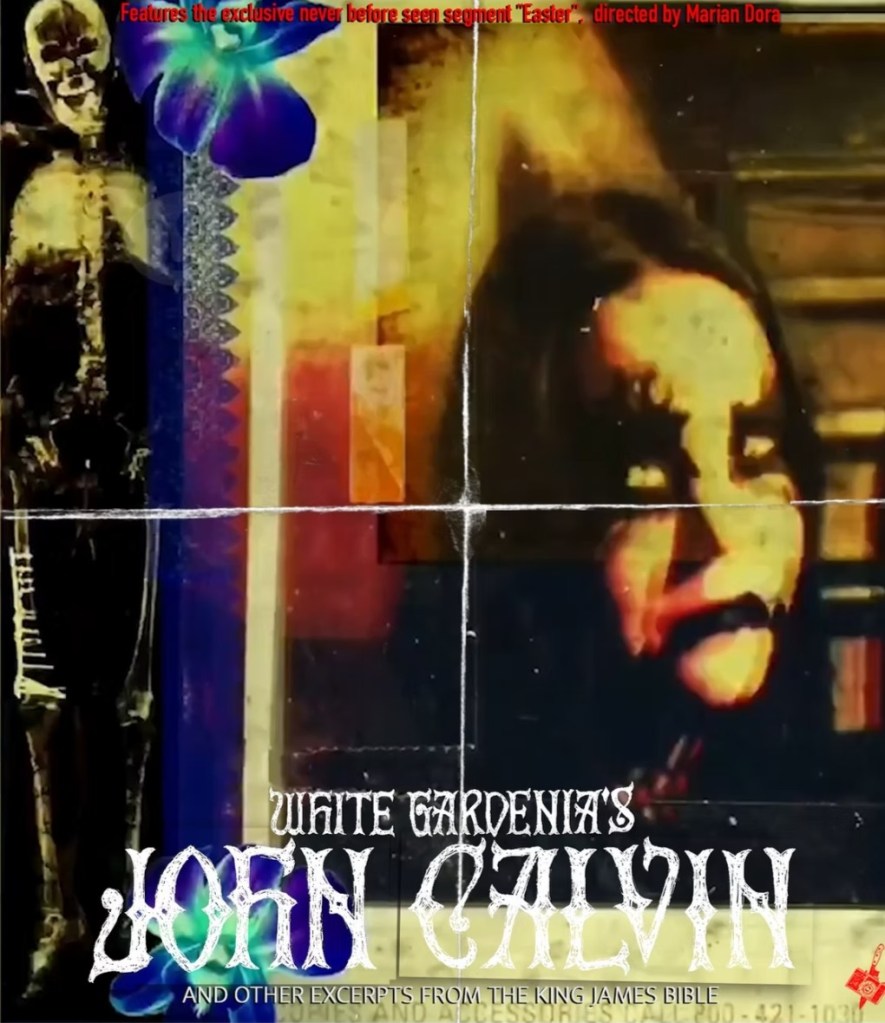
Art’s inherent subjectivity is never more apparent than in abstract films. Without a traditional narrative structure and so much of the imagery left up to interpretation, the goal isn’t so much about determining whether something was “good” or “entertaining” so much as it is understanding the artist’s motivation and goals and whether or not they were able to achieve them. Spearheaded by underground artist Daniel Valient, White Gardenia’s John Calvin is in many ways a significant departure from the style and content of their previous works in part because it shifts focus from nudity and self mutilation to biblical stories and also because it represents a collaborative effort with multiple other filmmakers.

Unlike traditional anthologies, the various parts aren’t clearly segmented by filmmaker and instead flow into each other with brief text on screen sometimes indicating the switch to a different segment. The presentation is a real variety of mixed media from static collage imagery accompanied by discordant and distorted soundscapes to live action scenes and old silent film footage reworked and reedited into Found Art style segments. This does make for a bit of an uneven tone as the highly produced black and white scene from Marian Dora (Melancholie der Engel) presents a much more professional tone than some of the less successful live action segments whose costumes and camerawork have a much more DIY aesthetic to them.

This collection is on a whole a very interesting and unconventional piece of artistic expression but is at its least successful when it leans into an over-reliance of on-screen text or direct voice-over to communicate the ideas presented in it. There are a lot of interesting concepts and ideas here dealing with religion, transhumanism, death, and resurrection but I would challenge Valient and the other artists to rely on their talents and abilities to process these concepts through a creative filter and express them more abstractly than simply telling it to the audience. I also found the choice to include footage that was clearly filmed handheld from another screen to be curious rather than just incorporating it into the footage itself.

The times when this film is at its most successful are when it’s able to lean into the surreal and bizarre aspects and run wild with them. The make-up effects on the lepers were truly inspired and genuinely haunting but the most interesting part of this experience is without a doubt the use of the bizarre collage imagery. The use of this creative technique, incorporating some moving images into a mostly static scene, coupled with distorted audio made for a unique and intriguing experience. I also like how the old footage was recontextualized into something strange and new and there were points that were reminiscent of early Lynch shorts and the kind of dark anatomical visuals Marilyn Manson used during his most provocative period. The time-lapse decomposition also brought to mind Peter Greenaway’s deeply unsettling masterpiece A Zed and Two Naughts.

Ultimately, a bit of a mixed bag as collaborations typically are, there are moments of experimental brilliance here and a more streamlined version that pairs down the overuse of text throughout would probably be more successful. While the effectiveness of the overarching message in the film will undoubtedly depend on your personal connection to the tenets of Christianity and interest in transhumanism, I always appreciate art that takes big swings and isn’t afraid to use highly unconventional and experimental ways of expressing ideas.

Availability: Limited

Limited edition Blu-rays can be purchased at Bizarretheater.com
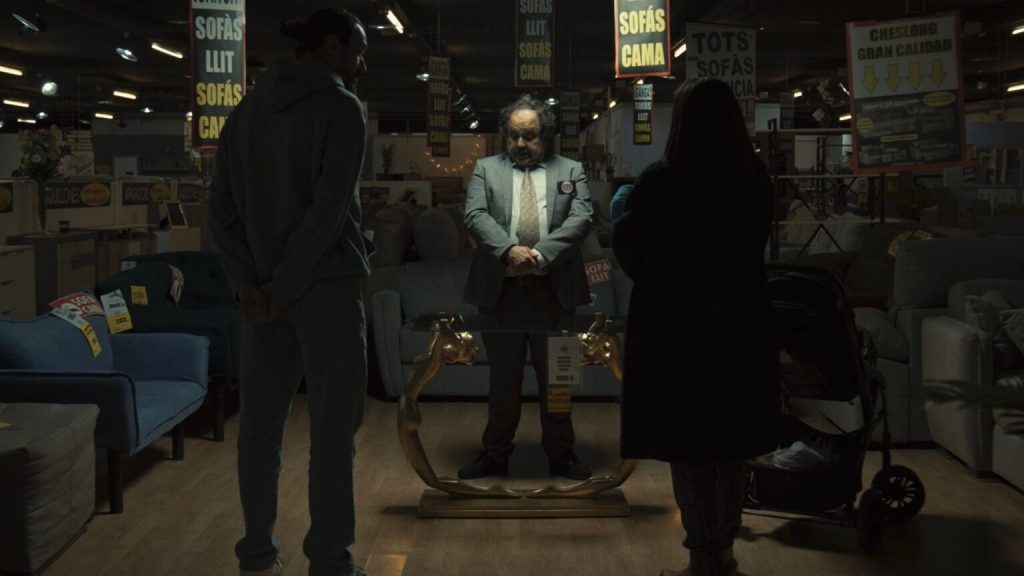
The Coffee Table (2024)

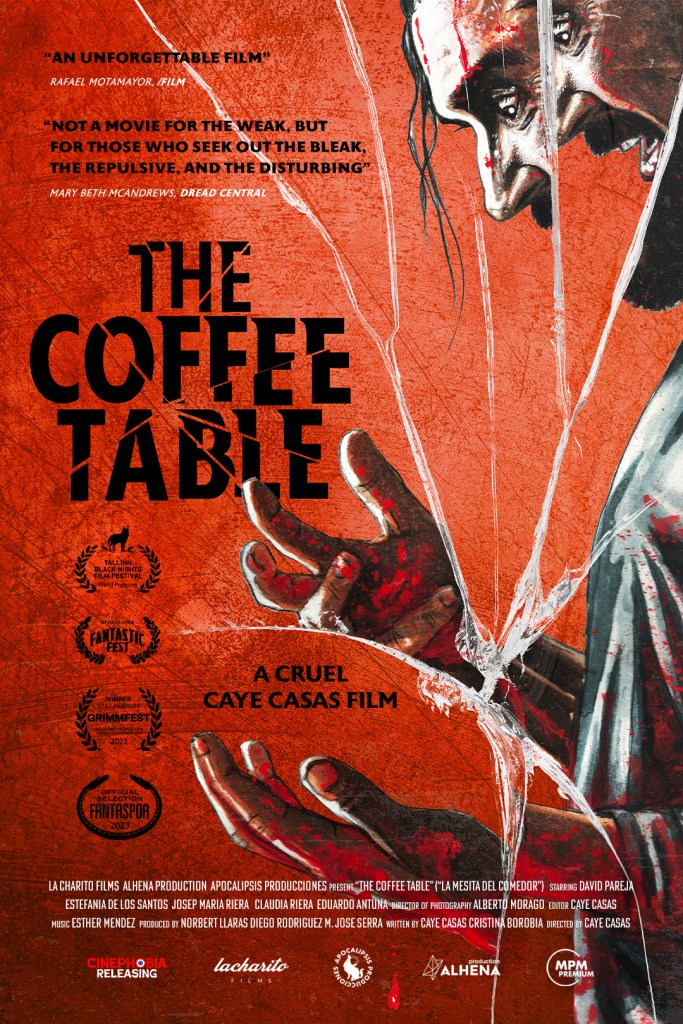
The Coffee Table is in a word…..grim. Even revealing the central concept can take a little of the sting off the gut-punch of the inciting incident so if you prefer to be blindsided by a film that starts with an extremely upsetting concept and spends the rest of the runtime ratcheting up the tension and turning the emotional screws then you might want to go into this one totally unaware. Otherwise read on because I won’t be going into any further spoiler territory than that and there’s a lot to say about this strange, bold piece of cinema.

The film opens with recent parents Jesus (David Pareja) and Maria (Estefanía de los Santos) purchasing a garish coffee table from an unscrupulous salesman (Eduardo Antuña) who guarantees it will bring them happiness. The couple’s already troubled relationship is further strained by Jesus’ absolute insistence on purchasing it which Maria begrudgingly acquiesces to. After setting up the new table at home Jesus is left alone with the baby while Maria goes to the store and their lives are forever changed when an off-screen accident involving the new table ends up…..decapitating the infant child. The rest of the runtime is devoted Jesus’ emotional hell as he tries to conceal the fact from Maria for as long as he can that the worst possible thing has happened while she was gone.

Perhaps the most jarring thing about this film (newborn beheadings aside) is the fact that it feels a bit confused tonally. The quirky opening credit sequence and even throwing the titular line at the end seem to frame this as though it were a fun, gruesome horror film and not the devastating domestic tragedy that it actually is. Strangest of all, the IMDB entry as well as the screener I received pitch this as a “horror/dark comedy” but some inconsequential moments of levity aside, this is a punishingly bleak, tense film that is about as much of a comedy as Come and See. The film has garnered a fair amount of buzz already for being a highly disturbing and upsetting watch and even describes itself as “cruel” on the poster which is fitting as director/co-writer Caye Casas seems to delight in twisting the emotional knife at every opportunity.

Those looking for a film to shock and disturb them in the way that they are accustomed to from Extreme Cinema may be disappointed. While there is some violence in the movie, what makes it a difficult watch isn’t the blood but the fact that it’s just relentlessly sad. Much like the scene of horrific domestic violence in I Stand Alone, this film forces the audience to sit and stew in the aftermath of tragedy, feeling the pressing weight of empathetic grief. This weight is further compounded as scene after scene reinforces how essential and meaningful this baby was to the couple, especially Maria, who continues on blissfully unaware that the unthinkable has already occurred as Jesus slowly unravels, knowing the charade can’t last forever.

None of this is to say that this is a bad or unsuccessful film. On the contrary, it is incredibly well made and superbly acted. The film succeeds at being genuinely tense and disturbing and is an interesting and unnervingly realistic character study on how people react when the most unimaginable horror becomes your inescapable reality. Less a horror film than a really upsetting drama about a horrible situation, The Coffee Table is nonetheless a bold and interesting film that I commend for its audacity, originality, and willingness to engage in an antagonistic, if not outright combative, relationship with the viewer. A worthwhile experience for those bold enough but new parents looking for a fun escape from their exhausting reality might want to give this one a pass.

Availability: Upcoming Release

For some reason this film is listed as being from 2022 in some places but it just started limited theatrical release on 04/19/24 and is coming to VOD and DVD on 05/14/24.

Vampus Horror Tales (2021)

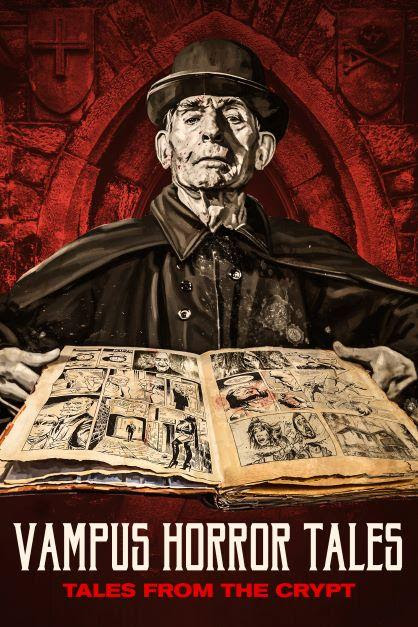
For many horror fans (especially those of us of a certain age) the Crypt Keeper holds a special place in our black little hearts. There have been many different types of horror anthology hosts ranging from the dignified and austere to the goofy and ridiculous. While the Crypt Keeper was certainly more the latter, there was something about that shriveled little monstrosity spouting out unbelievably cringey puns that just made him so goddamn endearing. The Keeper may not have been the first horror host, but he remains one of the more memorable ones and ever since, numerous horror anthologies have tried to put in their own host that can bring a similar level of macabre campy energy to the experience….with varying success. Enter Vampus, the titular host of Vampus Horror Tales, an old man in a black cloak whose odd, off kilter persona isn’t likely to be igniting any long-running horror franchises in the foreseeable future.

Going down well-trodden territory of not just Tales From the Crypt but also Creepshow, Trick ‘r Treat, etc each segment Vampus introduces comes from the pages of a comic book. Although the film seems to frame our intrepid host as winsomely grim he comes across more as unhinged and homicidal between stories, as we see him bludgeon a woman to death with a hammer, and give a young couple hot dogs before chainsawing off their heads. At one point he beats a man to death with a shovel before turning to the camera and saying “I guess it was curiosity that killed the cat.” Oh, that wacky Vampus. I’m all for the violence (if anything there should have been more of it onscreen than off) but the film isn’t really able to strike the right balance in tone as it fails at attempts to flesh Vampus out as the morbidly charming character it clearly wants him to be.

The real meat and potatoes of any anthology isn’t the framing device, it’s the stories themselves and these horror tales tell a variety of stories such as a well-dressed couple trapped in a room, a birthday party in a haunted theme park, a blind woman stuck in a house with a dangerous man and a post-apocalyptic viral outbreak. The acting was solid across the board and the film is well shot, but the stories vary wildly scene to scene from the intriguing to the mundane to the borderline incoherent at times. This isn’t helped by the fact that this Spanish language film contains white subtitles that aren’t bordered and have a habit of repeatedly disappearing into any bright sections of the scene. There’s nothing inherently terrible here but there isn’t anything inherently great either and if you’re in the market for a Spanish horror anthology with some real bite to it you’d be better served sinking your teeth into Mexico Barbaro instead.

Availability: Widely Available

Available on multiple streaming platforms to rent or buy as of streaming debut in February 2023.

Fleas 2: Home Remedies (2022)

“The goriest film since the original Fleas in 2016!” a quote attributed to no one boldly claims on the back of the DVD case for Fleas 2: Home Remedies. Now, (shockingly) I haven’t seen the original Fleas, so I can’t speak to its supposed levels of gore, but while Fleas 2 is many things, the goriest of any category it is not. Giving Evan Jacobs (director/co-star/co-writer of this two-man project) the benefit of the doubt, perhaps he meant it was the goriest film within the esteemed Fleas cinematic universe. Maybe (hopefully) it was a joke, but in case it wasn’t, Jacobs might want to take a cursory glance through the horror section on Amazon Prime or better yet see the real contenders for that title at Unearthed Films, Tetro Video or A Baroque House.

The plot (such as it is) follows Quentin (Mike Hartsfield, who also co-wrote) and Bob (Jacobs), a couple of dim bulbs that seem to have avoided the curse of total isolation through companionship with each other. Now, I should take a moment to clarify that “co-wrote” may be a bit of a stretch, as the movie appears to be not so much improved but….unscripted. Anyway, the faux-documentary style production is made up of a series of recordings that Bob makes of his friend trying to dig out an ingrown toenail with a razor, a task that gets more gruesome the longer it goes on.

Yes, that really is the entire plot of this hour long film, but within that limited scope there are actually some things that Fleas 2 pulls off really well. Chief among them is the opening shot which sets a strong tone with a self-mutilation scene that is so effectively cringe-inducing it’s sure to have you squirming in your seat. The FX are very minimal and DIY throughout, but for the most part do an admirably convincing job conveying the grotesqueness of the situation. I also appreciated how the actors managed to do a solid job creating characters that were decently fleshed out (and unsettlingly true to life) while having very little to work with.

The real problem here is that this is a unique and impressively uncomfortable ten minute film that is dragged down by fifty minutes of repetitive filler just to get it to the incredibly awkward runtime of an hour. Currently neither a short nor a feature, Fleas 2 is unquestionably made better by following through on the initial momentum of the opening scene and sparing the audience the incessant repetition of the phrase “you need to go to the doctor” and the brutally compulsive overuse of the word “dude”. If nothing meaningful is going to happen in the story then we don’t need multiple scenes of two guys picking up takeout or endlessly bickering about whether or not this particular home surgery is a good idea. An aggressively trimmed down cut would make Fleas 2 an intriguing curiosity and not the Sisyphean task of endurance that it currently is.

Availability: Limited

DVDs can be purchased directly through https://srscinemastore.com/products/fleas-2-dvd while supplies last.

Playdurizm (2020)

Queer horror is an underrepresented subgenre that despite being around for decades still struggles with visibility and acceptance. Certain filmgoers may be resistant to the idea that you don’t necessarily have to be part of the LGBTQIA+ community to be able to enjoy films created within it or at the very least aren’t actively seeking them out. Regardless, the subgenre continues to gain more mainstream traction as higher profile films are released. There’s a good chance you’ve seen, or at least heard about, 2018’s The Perfection or 2019’s Spiral and if you are part of the Extreme Cinema community, then there’s a very good chance you are familiar with 29 Needles. It’s a bit less likely that you are familiar with the surreal indie gem Playdurizm from 2020 but to be fair, there was kinda a lot going on that year.

After a trippy opening scene, the film starts off with a young man named Demir (Gem Deger) who wakes up with amnesia in a strange apartment that he is told he lives in by his apparent roommates Andrew (Austin Chunn) and Andrew’s (sort of) girlfriend Drew (Issy Stewart). Strange is the operative word here as everything seems a bit off; from the interactions, to the odd decorations and even odder characters who weave into the story. Although Demir has no recollection of his relationship to the people he is told he lives with, he seems to have awoken in the middle of a complicated and hostile situation where tensions are already running murderously high.

In addition to starring in the film, Deger also directed and wrote the short story upon which the film is based. It’s an impressive debut feature and, despite being a low-budget indie film, never feels cheap. The film is ambitious in concept but simple in design and Deger wisely chooses to keep the action contained to a few key locations. I appreciate that, unlike a lot of indie filmmakers out there, he understands that a film looks more professional if you focus on shooting scenes you can actually pull off instead of acting like you’re working with the budget of an Avengers movie.

This film is also weird and I’m there for it, especially when it veers off into surprisingly dark territory with incest, necrophilia and Cronenberg-style body horror. Fortunately, it also grounds itself and instead of just hitting the audience with “weird for the sake of weird” actually has a logic and an order to it that all becomes apparent by the end. Its structure very closely resembles another classic film, although I can’t mention the title without spoiling this one, but when you know, you know.

Now, I hate to call out a particular actor, especially in an indie production, but I’d be remiss in my duties if I didn’t mention that despite really looking the part, Austin Chunn’s performance was just a bit too stiff and not quite as convincing as the rest of the cast. It’s ultimately a minor quibble though, as it didn’t stop me from enjoying this strange, unique trip that felt like settling into a nice, cozy nightmare. If the only thing stopping you from taking this ride are some antiquated hang-ups about watching a gay-centric story then it’s time to move past that shit because you are missing out on some incredible and creative pieces of art.

Availability: Widely Available

Available on multiple streaming platforms including Amazon Prime, Google Play and Vudu as well as on Blu-ray.

Ouija Japan (2021)

It’s staggering to think about how many movies come out every single year, especially when you factor in the numerous straight-to-VOD releases that are being pumped into the home media system like so much sludge into a feeding trough. Yes, this can be a way for upstart artists to get their personal and groundbreaking work out to a larger audience but for every one of those films there’s at least a dozen more that are cynical cash-grabs whose only purpose is to make some money with as little financial (and creative) investment as possible. So the question here becomes ‘is Ouija Japan one of those rare exceptions of groundbreaking art made by an earnest and passionate filmmaker, or is it indistinguishable from the rest of the muck clogging up our on-demand queues?’

Ouija Japan tells the story of Karen (Ariel Sekiya) an American transplant living in Japan who has only been in the country with her husband for the last six months and is still struggling to fit in. When an interpretation misunderstanding results in her agreeing to join a group of her co-workers on a weekend getaway to a remote village she sees it as an opportunity to strengthen her connection to them and hopefully start to fit in. When the group decides to use a game of Kokkuri-san (essentially Japanese Ouija) to disrespect the fox deity that is worshiped in the village, they soon find themselves unwitting participants in a deadly game which can have only one winner.

Now, I know that movies take an incredible amount of work to make and I have no doubt that everyone involved is really trying but when the end result looks like a bunch of teenagers tried to remake Battle Royale on an iPhone it’s time to put away the participation trophy. To its credit, the fact that players in the survival game need to use their smartphones to fully participate and unlock real-world power-ups is a novel idea that modernizes the concept a bit but is nowhere near enough to counterbalance the flaws, of which there are many. Sure, the lighting is flat, the script is pedestrian, and every aspect of the film has an inherent cheapness to it, but nothing quite compares to the voice work on display here.

In what seems like a last-minute attempt to ingratiate the film with Western audiences the Japanese actors speak about half their lines in English. This would have been perfectly fine had they been fluent in both but their tenuous grasp on the language makes the stilted acting go from awkward to downright painful. While the dual languages do factor into the story, the filmmakers would have been far better served finding a script work-around instead and sparing the actors (and the audience) this unnecessary struggle. Additionally, some actors appear to have their dialogue fully recorded in ADR which is no better as it creates an almost cartoonish disconnect between the characters and the lines themselves.

At the end of the day, what it really comes down to is that modern viewers have a plethora of options for entertainment. For a horror title to stand out amongst the literally hundreds of other choices that are packed in with any given streaming service at no extra charge there really has to be something there that makes it worth the investment of our precious time. In the case of Ouija Japan it’s not even a question of a lack of resources since I have seen better filmmakers do far more with significantly less. Amateurish production values can be overlooked if there is a compelling soul to the film and brilliance from at least one aspect shining through. Here there is just a fundamental lack of creativity, originality, and technical ability but then again that does exemplify the difference between art and a product, between the gems…..and the muck.

Availability: Upcoming Release

Film will release on Blu-ray and Amazon Prime on 10/19/21.

Demigod (2021)

Imagine just how many lives could have been spared in horror movies had outsiders simply heeded the warnings of the Crazy Ralphs of the world and stayed the hell out of cursed areas. Although, that would be significantly less fun for the audience who has signed up for the twisted pleasure of watching at least most of the stubbornly disbelieving travelers be eviscerated in gruesome and (hopefully) creative ways. It really doesn’t need to be a case of either/or, though. I would like to see more characters take the threat seriously but still be unable to escape so that the inciting incident can occur and the fun can begin. Demigod opts to tread down the more well-worn trail to set up the conflict but we’ll see if it can rise above its conventional structure to bring a compelling and original story to light.

Upon receiving news of her estranged grandfather Karl’s passing, Robin (Rachel Nichols) heads to his now vacant home in the Black Forest of Germany to tend to his affairs, bringing her husband Leo (Yohance Myles) along for the ride. Once there, they encounter Arthur (director/co-writer Miles Doleac), an eccentric hunter and former friend of Karl’s who warns them about the supernatural presence that resides in the woods. Before long the three find themselves (along with several other unfortunate locals) embroiled in a desperate fight for survival against an ancient evil that lurks within the woods and the coven of witches that summoned him.

The lesson would seem to be “trust the locals and get the hell out while you can” but since Arthur finds himself in the exact same predicament as the outsider couple despite having intimate knowledge of the dangers that lurk in the woods, it turns out that it doesn’t matter after all. This feels less like an intentional choice by Doleac and more of an oversight, especially as it is far from the only inconsistency we witness in the film. That’s not to say that there isn’t still a lot to like about this movie and, despite the predictable set-up, there is a lot of tension to be had and a story that is compelling enough to grab your attention.

The experience of watching it is pretty much the definition of a mixed bag as the film will hit high points that are undone by low points which repeat the cycle to ultimately land somewhere in the middle. The visual style of the film itself is a good example of this as the overall quality falls within the flat look we’ve come to expect from low-budget digital only to be broken up by a strikingly creative shot or a very well executed special effect. The end result settles in the area of “good” but a more aggressively abstract filmmaking style, acting that is brilliant rather than fine, and a storyline whose tension didn’t peter out towards the end due to some unnecessarily long-winded speeches could have bumped it to the category of “great”.

The part that sticks out more than any other however is the look of the demigod himself. It’s hard to have a convincingly scary monster on an independent budget and Doleac wisely opts to shoot around the creature throughout most of the film offering glimpses rather than full-on shots. Unfortunately, he chooses to abandon this practice towards the end of the film letting the audience come face-to-face with the sheer terror of a sensibly-priced Halloween mask (and yes the red, laser eyes hurt more than they help). Still, the end result is a film with some effectively bloody kills and a few solid stretches of genuine tension so, while it may not be a masterpiece, it’s a decent enough way to spend an hour and a half.

Availability: Upcoming Release

Film is being released in select theaters and on VOD on 10/15/21.

Nightmare Symphony (2021)

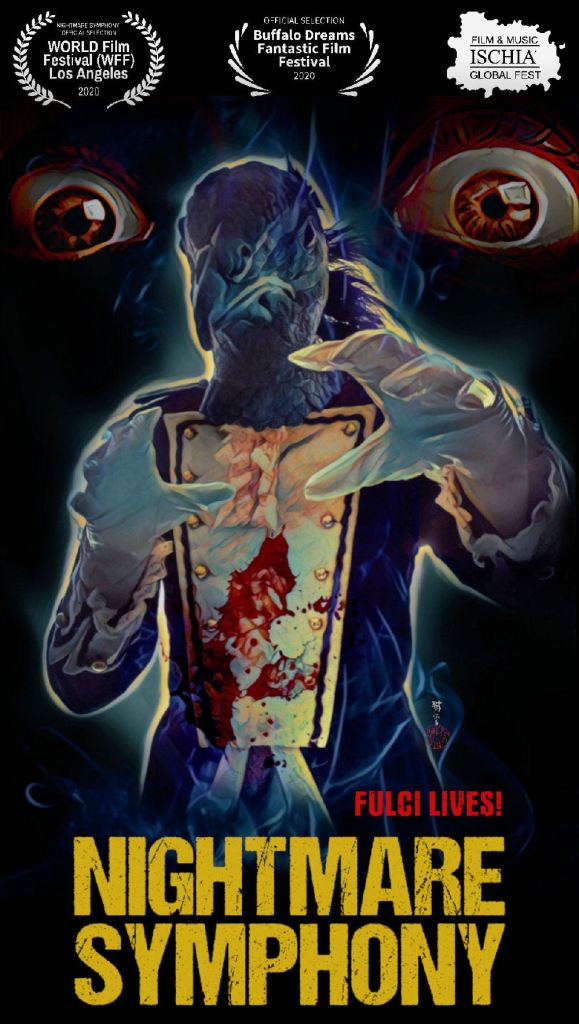
It’s interesting that the review for Nightmare Symphony would come directly after my review of Undergods since both films play with ambiguity and surreal imagery but achieve nearly opposite results. In this case, the Giallo-inspired film takes a big swing at meta commentary and the nature of reality with its story of an American director Frank (Frank LaLoggia) who goes to Italy to finish the edit of his film. Before long people all around him seem to be dying at the hands of a mysterious killer in a bird mask, who leaves no trace behind other than a peacock feather as their calling card.

Clearly this film is a love letter to Giallo itself, which is apparent long before the dedication to Lucio Fulci during the closing credits. On this front it succeeds wonderfully and the color-saturated scenes where the bird masked killer slashes up their victims with a straight razor to a pulsating synth score are a thing of beauty. In fact, I want to especially shout out all the FX work on this film because it is far and away the best part of the entire experience and every gory scene that features it is a work of brutal, bloody art.

What’s less successful is the story itself, as well as LaLoggia’s lackluster performance which never quite rings true, especially when paired with some of the actors in minor roles that are really bringing their A-game. It’s frustrating because I can see what writer Antonio Tentori (Cat in the Brain, Demonia) is trying to do but it simply does not come together. The ending (which I won’t reveal here) attempts to be very clever with a big meta reveal but falls utterly flat due to the fact that the preceding story in no way supports it.

Ambiguity in films can be a great thing, but a story that actively contradicts itself and feels like there are key scenes missing isn’t the same as not understanding a surreal film that’s filled with metaphor and symbolism. If you are going to play with the concept of reality itself in a film then you need to clearly establish what the reality of the world is and really understand when and how you are breaking with those conventions.

In this case Nightmare Symphony feels as confused as the viewer but attempts to cover its plot holes with stylized theatrics that it hopes will somehow congeal into meaning. Still, the film has a lot of style and a few carefully crafted re-shoots might be all it takes to fill in the missing pieces and tie the ending to the film that preceded it.

Undergods (2021)

Is it necessary to fully understand a film to enjoy and appreciate it? I would argue that it is not, for if that were the case surrealist masters like Jodorowsky and Lynch would never have ascended to their exalted levels within the film world. We still watch, discuss and are sometimes confounded by films like Holy Mountain and Eraserhead more than four decades later because there is far more beneath the strange visuals that bares fruit if we are patient enough to peel back the layers. Surreal films benefit from re-watching and further examination, the trick is to make your films good enough that its worth an audience’s time to do so.

Writer/director Chino Moya’s first feature is certainly a film that requires additional scrutiny to fully comprehend. While it’s not as overtly surreal as the previously mentioned films the slippery narrative thread and dream-like quality give it a viewing experience akin to Holy Motors with a healthy dose of High Rise mixed in. There aren’t exactly main characters nor is there a clear narrative through-line as segments seem to flow into each other, sometimes in the guise of stories told between characters, and occasionally intersect.

The structure in fact is more on par with a collection of short films taking place in a shared universe where the edges are muddied enough for them to meld into each other rather than all serving a common storyline. We see body collectors nonchalantly tossing corpses into their truck like they are common trash, a middle aged couple who’s frosty relationship threatens to become upended by an unexpected guest, a father telling his daughter a bedtime story of an unscrupulous merchant, a post-apocalyptic prison and an ordinary business man whose life becomes incalculably more complicated with the arrival of someone from the past.

Some of these segments flow very cleanly into each other, whereas at other times the connection is a bit more abstract. Regardless of their storyline similarities it’s really the emotional thread of dysfunctional relationships in a bleak and hopeless world that connects and links the stories. More importantly, the purpose of this film is not to provide a by-the-numbers plotline but to create an evocative experience where well-realized characters flow into each other’s worlds with a dream-like quality and in that regard it is better served by the unconventional structure. The result makes for an incredibly engaging experience whose shifting narrative works well to simulate the feeling of watching an unnerving dream (or more aptly a nightmare) unfold and giving the audience plenty to mull over between viewings.

Fortunately the beautifully bleak cinematography that deftly captures the quiet horror of a ruined city and the across the boards flawless acting make this a trip that’s worth taking multiple times. If you are looking for a straightforward, easily digestible story that neatly resolves then this is not going to be for you. On the other hand, those interested in taking on a cinematic experience that provides depth and layers of meaning to be gradually unraveled would do well to give this a try.

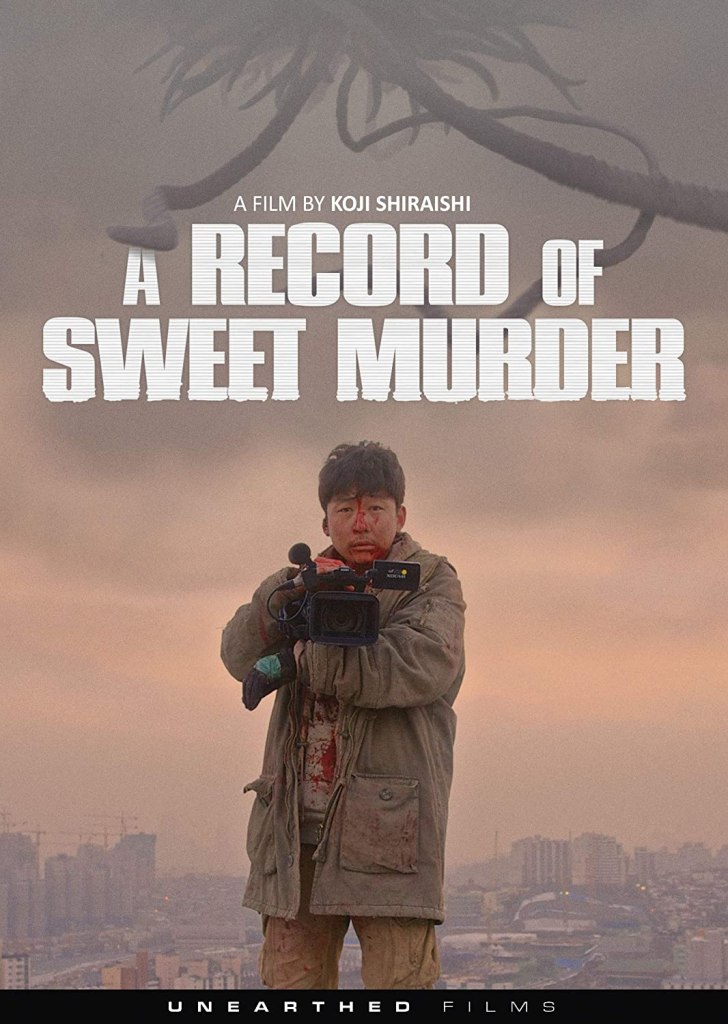
A Record of Sweet Murder (2019)

When The Blair Witch Project exploded onto the scene in 1999 it forever changed the world of horror cinema. In its wake, the once novel concept of a “found footage” film established by Cannibal Holocaust in 1980 quickly became ubiquitous within the market to the point of oversaturation. In the intervening years many filmmakers have used the audience’s willingness to embrace the rougher, naturalistic aesthetic of the style as an excuse for low production value as they churn out countless versions of the same basic story.

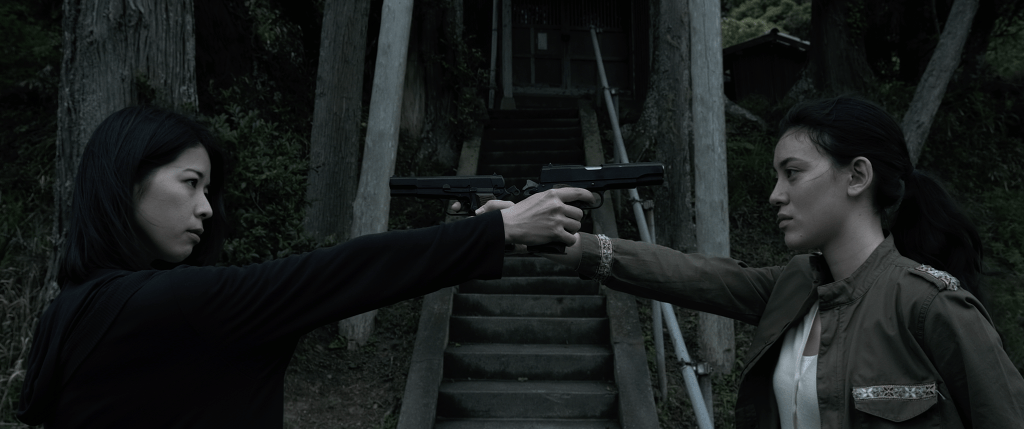
Thankfully, innovative filmmakers have also made their mark on the subgenre and films like Rec, Creep, and more recently Host (to name just a few) have elevated the style by taking it in new and creative directions. Innovation within the subgenre is rare enough but A Record of Sweet Murder is wholly unique as it dares to combine the found footage aesthetic with the rarest of cinema tropes, the single take film. By all conventional wisdom, an idea this ambitious could never work, but writer/director Kôji Shiraishi (Grotesque) pulls it off with results that are nothing short of mind-blowing!

The story centers around investigative reporter Kim Soyeon (Kim Kkobbi) who receives a call from Park Sangjoon (Je-wook Yeon), an escaped fugitive wanted for numerous murders. Park offers her an exclusive interview if she will meet him in a secluded location and bring along a Japanese cameraman. Since Kim and Park share a childhood connection, she believes that they will not be in any danger, but once they arrive it becomes clear that Park has a much larger plan in which they are to play an integral role.

To be clear, this film isn’t a true one-shot film like Russian Ark, but since everything but a few quick scenes at the end was done in a single take it’s still an incredible feat of filmmaking. It isn’t just the fact of doing it in a single take that is impressive, it’s what they are able to accomplish within the massive shot that is truly mind-blowing. Brutal fight scenes, multiple locations, numerous characters, realistic special effects, and an engaging storyline all work in concert to produce a thoroughly unique, mesmerizing experience. Even without the novelty of the single take this would be an incredible, well acted, and engaging film but the fact that Shiraishi goes the extra mile with a ground-breaking concept really puts it over the top.

It’s truly a cinematic travesty that such an innovative, brilliant film has gotten such little attention since its release yet Hitchcock’s faux one-shot film Rope is still talked about with such reverence after more than seven decades. I know that the cameras of the time limited the production to shooting it in a series of ten minute takes but Hitchcock’s blatant cutaways do absolutely nothing to preserve the illusion of an unbroken shot in that overrated “classic”. Despite this (and the fact that it felt more like watching a one-act play than a one-shot film) Rope was still innovative for its time and innovation should always be appreciated. To that end I’m hard pressed to think of many films in recent memory that have innovated more than ARoSM and here’s hoping that someday its style-blending brilliance will be appreciated for the unique achievement that it is.