
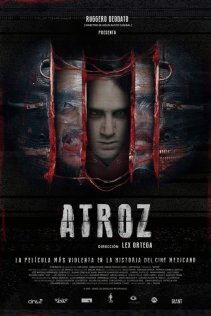
 Atroz, the Spanish word for atrocious and certainly an indication to the viewer that this experience is going to be anything but lighthearted. True to its title, the debut feature from Mexican director Lex Ortega is a harrowing journey indeed. Its style channels August Underground and its violent depravity reaches Human Centipede 2 levels of intensity. Much like A Serbian Film though, this movie plays out as more of a gruesome drama than a horror film but is so horrifying that it more comfortably fits into the Horror category than anywhere else. So, clearly its qualifications as an extreme film are indisputable but still, the most important question remains: “is it any good?”
After two men are arrested at the scene of a car accident that claims the life of a pedestrian, the police find a video camera in the car that contains a horrific video of them torturing a transgender prostitute to death. The film then alternates between the brutal interrogation of the primary suspect Goyo (Lex Ortega) and the graphic crimes on tapes that the police find during the investigation.
What instantly stands out about this film, aside from the extremely disturbing content, is the acting. The amount of commitment and realism that the actors bring to this project would be impressive for any film but the fact that this was a micro-budget production made for the $7,000 that Ortega and the producers crowd-funded really takes it to the next level. Even down to the smallest part, the actors really deliver in this film but Ortega himself truly stands out with his portrayal of the hulking, depraved monster that is Goyo.
Another key part of this film is the gore effects, which are very well done, especially considering the budget. Now, any would-be filmmaker can put gore into a movie but what makes the film so effectively disturbing is the fact that Ortega knows how to work within the limitations of his budget. Instead of attempting to create elaborate scenes and special effects that become laughable when done on the cheap, he wisely sticks to gritty, realistic violence and very upsetting concepts. Graphic genital mutilation, rape, incest, shit eating, bloodplay and various kinds of torture are all presented in unflinching detail.
While I enjoy seeing so much horrific imagery in a film, in this case it does work to its detriment a bit as well. Since the film is a little light on narrative, the extended scenes of violence do have a bit of a numbing effect without a more substantial storyline to support them. Still, the aforementioned acting quality and gore effects do a lot to elevate the overall film beyond the status of a run-of-the-mill Torture Porn making this a relatively minor issue.
A larger issue is the fact that the film falls into the standard found footage trap where characters are recording even at times where it makes no sense to do so. It is logical to think that the killers would be recording their crimes for their own sick pleasure. However, the fact that some of the transitional scenes, as well as large parts of what occurred in Goyo’s old home movie, were recorded is a bit of a stretch. I can certainly understand why Ortega included them as they were essential to the story itself but a bit more justification, like the camera already being on for a different reason, would have helped rationalize the fact that they were being recorded in the first place.
Truly, the only time Ortega completely breaks with the reality he’s created is during a playback of one of the tapes that suddenly cuts to an interior shot of the person’s ass who is being raped with the barbwire dildo (that’s right, you heard me). Certainly a cool effect but doesn’t make sense within the found footage context.
Minor structural criticism aside, this is an incredible film. Not only does it go to levels of darkness rarely achieved in cinema but it also provides powerful social commentary. The film opens with a statistic that 98% of 27,500 murders in Mexico are unsolved which sheds a light on the reality of the real world conditions the filmmakers must contend with. In the behind-the-scenes featurette producer Abigail Bonilla talks about the climate of fear and hopelessness felt by so many residents of Mexico City and how the film represents the violence and horror they see all around them. To properly understand and appreciate this film it is necessary to remove yourself from the initial gut reactions to the horrific images and realize that this is an artistic expression of the rage and fear that so many people feel from living in a dangerous environment. The movie also accurately reflects the fact that monstrous humans aren’t created in a vacuum but in most cases are the result of abuse and a lack of understanding.
A must-see for fans of extreme cinema and those looking for a film that delivers a legitimately hardcore horror experience. Atroz claims to be the most graphic and goriest film ever made in Mexico and ya know what, I would absolutely believe it. But let’s hope that it doesn’t stop there and perhaps this will encourage other daring filmmakers to push the boundaries and create art that resonates on such an intense, visceral level.

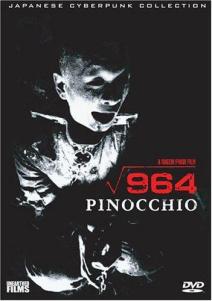 Watch out, people, there’s a lobotomized sex-cyborg on the loose! Yes, the insane premise of 964 Pinocchio (a.k.a Screams of Blasphemy) does certainly hold a lot of potential for a Tetsuo-style journey into another gloriously bizarre living nightmare. But the real question becomes “can it actually deliver on the same level as that mind-fuck masterpiece?” Well, let’s discuss.
 Helldriver is less a “movie”, more an unbridled ride through the cinematic insanity that is Japanese Splatter Cinema. Much like Tokyo Gore Police, this is another film that you are going to need to strap the fuck in for because this visual roller coaster is an example of unhinged, creative brutality at it’s finest.
 Truly, no discussion of the most notorious, disturbing films of all time could possibly be complete without the inclusion of Cannibal Holocaust. Even thirty-six years later, the film remains banned in a number of countries and was so controversial upon it’s initial release that director Ruggero Deodato was arrested shortly after the 1980 premier in Milan. However, the charges were eventually dropped once he was able to prove that this was not an actual snuff film and all the actors involved were in fact still alive. So, does the film that many have dubbed the most controversial of the 20th Century live up to it’s reputation and still manage to be shocking decades later? Well, let’s discuss.
 What’s great about a title like Tokyo Gore Police is that it is very clear about the kind of movie you are going to experience. Still, there is no way to truly wrap your mind around this film without watching it for yourself and even then, the uninitiated will be left baffled at what they have witnessed. To those I say “Welcome to Japanese Splatter Cinema, motherfuckers!”
 It should be noted however that this is a very different experience from the mean-spirited gore of Torture Porn films like Grotesque. I’m not saying one style is better than the other, this is simply a different approach to extreme cinema that portrays the violence in an over-the-top, cartoonish fashion, typical of Japanese Splatter films. This actually allows the film to maintain a more lighthearted feeling while simultaneously bombarding you with insane levels of violence in a world where anything can happen. Blood geysers from severed limbs can propel people like rockets, disembodied hands that strangle are shot like bullets, alligator heads grow from severed torsos and so much more!

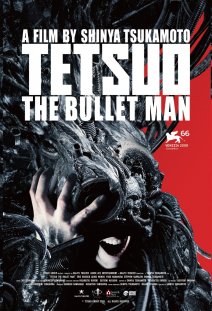 After a seventeen year hiatus from the series, cult director Shin’ya Tsukamoto returns for a third installment of metal-morphing insanity with Tetsuo: The Bullet Man. Given that it was made nearly two decades after Tetsuo 2: Body Hammer, Tsukamoto certainly had enough time to plan a brilliant return to the series that would not only honor the originals but also reinvigorate the concept for a new generation. With significantly more experience as a director, as well as the enormous advances that have been made in filmmaking technology, it should be a foregone conclusion that Tsukamoto knocked it out of the park with this one, right? Well, let’s discuss.
 If you are seeking out the most notorious, disturbing and controversial films of all time, Salo, or the 120 Days of Sodom is a title that’s sure to come up over and over again. The film is legendary for its levels of depravity and for being a kind of an endurance test that weeds out all but the most hardened viewers. It’s something that has been on my radar for years and I decided it was finally time to see what all the fuss was about. I wanted to judge for myself if this this forty-one year old film could in fact still live up to it’s reputation and hold a candle to modern-day examples of extreme horror like A Serbian Film, Human Centipede 2, Martyrs, etc.
 When you’ve already created one of the most original and disturbing horror movies of all time and a sequel that takes it to the next level, the natural question must be “where do you go from there?” With The Human Centipede 3: Final Sequence writer/director Tom Six closes out his infamous horror trilogy with one final entry, a last trip into the sick, twisted world he created. So, does the final entry live up to high expectations set by the first two? Well, let’s discuss…
 Corpse mutilation! Necrophilia! Cannibalism! And that’s just the first two minutes! Welcome to Father’s Day, motherfuckers! The 2011 film is the twisted brainchild of the five-man Canadian writing/directing team collectively known as Astron-6.
 How do you follow-up one of the most shocking and original horror movies of all time? Is it even possible to make a movie that’s more disturbing than The Human Centipede? Well, I’ll save you the suspense….yes, it most certainly fucking is! Once again I enter the astoundingly twisted world of writer/director Tom Six to see how The Human Centipede 2: Full Sequence stacks up against the ground-breaking original.
 Horror and Alternative Cinema Reviews