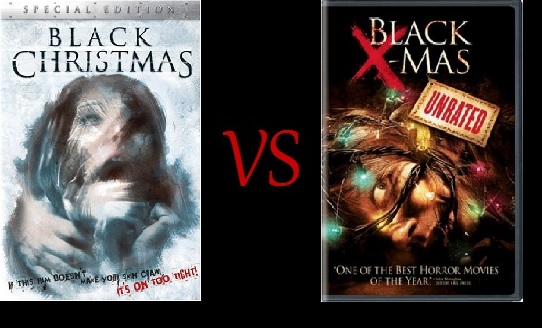
Black Christmas (1974) vs Black X-Mas (2006)

Black Xmas vs Black Xmas

Sometimes comparing an original to a remake is very simple. When the original is a masterpiece with a brilliant story that is simply watered down and cheapened by the remake then it’s a no-brainer. However, when neither film is exactly outstanding it actually makes the comparison trickier. Such is the case with Black Christmas but to it’s credit at least they waited a few decades before trotting this middling slasher out for a new coat of paint.

Both films center around a sorority house on Christmas that begins receiving disturbing phone calls from an unidentified creep. After that it’s not long before the residents of the house, in true slasher fashion, start getting gruesomely knocked off one by one by an unseen killer.

The set-up for each is basically the same but for some reason, perhaps to add more of a sense of menace, the writers of the remake decided to add an additional storyline involving the villain Billy escaping from a mental hospital for the criminally insane. This actually had the opposite effect pushing the film deeply into campy territory and taking all the power away from the scene where the first mysterious obscene phone call is made, which is a truly unsettling moment in the original film. This is also true of the copious amounts of flashback scenes, and the addition of the character of Billy’s sister, the remake included seeking to flesh out Billy’s backstory. In reality this only ends up slowing down the story and making the villain far less frightening than the mysterious killer from the original who lurked in the shadows and seemed to strike out of nowhere.

That being said though, the original does suffer from issues of it’s own. The film is punctuated by a few good kills and some effective scenes of tension, the creepy phone calls really are masterfully done, but it does spend most of the time between them with a story that severely drags. This is not helped by some comic relief scenes that further drag down the story (although that line about the Mormon Tabernacle Choir is a rare moment of comic brilliance).  However, I do want to acknowledge that in the context of Horror history the original does play a significant role as an early precursor to the Slasher subgenre.  It’s contribution to the genre in general has been an important one but many aspects of this film just have not aged well.

As underwhelming as the cast of the original is, they look like master thespians when compared with the utterly unbearable cast of pretty “actresses” they assembled for the remake. I swear I have never wanted a cast to die more badly in my life, so at least there was some satisfaction to be had when that began occurring in brutal ways (btw what’s with all the eyeball ripping in the remake? They’re obsessed!)

I will give credit where credit is due and say that the last half-hour or so of the remake does become more engaging as it builds towards the typical Final Girl climax. The fundamental problem with the remake though is the fact that the entire film itself has such a cheesy “campfire ghost story” kind of feeling to it. I’m surprised characters aren’t putting flashlights under their chins every time they talk about Billy’s unrealistically bad childhood. Every single shot is exaggerated, stylized and devoid of any substance or realism so you never forget you are watching a Hollywood movie.

So, despite some pacing and character development issues I am gonna give the win to the original in this case because at least I never felt like I wanted to stab my eyes out with an icicle rather than watch another minute of the witless banter between a group of actresses that prove the casting couch is alive and well.
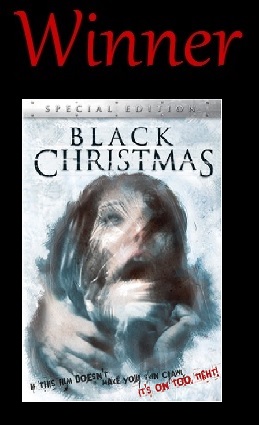
Winner Black Christmas 1974

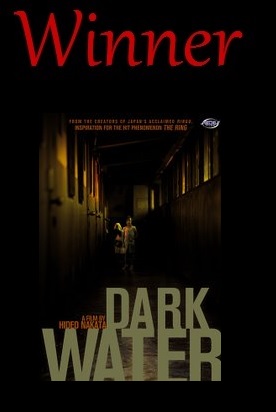
Dark Water (2002) vs Dark Water (2005)

Dark Water

Often times a remake is used to update a classic film for a new generation but when the remake is a mere three years from the original it’s hard to see it as anything other than a Hollywood cash-grab.  Of course that’s not always the case as a higher budget re-imagining could actually become a sleeker, more refined version of the original that actually surpasses it.  So how does the Dark Water “update” fair against the original, made all those many, many months before?  Well, let’s discuss.

The plot in both films follows a single mother in a custody battle trying to find a place for her and her young daughter to live.  Low on money, she has to settle for an apartment in a creepy old building where she must not only contend with filthy water leaking from the ceiling but also eerie sightings of a mysterious little girl. Tension builds as the sightings become more frequent and sinister and soon she must unravel the mystery of what really happened in that building in order to try and save her family.

Right off the bat it’s clear that the remake has higher production values, although it better considering the budget is more than seven times that of the original.  That aside, the newer version took what had been a tense, subtle and heartbreaking meditation on death and strength of familial bonds and turned it into a cliched fucking ghost story. One of the most overt examples of this was in the way the character of the daughter was portrayed. In the original she simply comes across as a normal little kid and by extension the relationship with her mother presents as much more realistic and natural. In the remake they felt the need to not only make her annoyingly precocious but also invent a side story where she has an “imaginary” ghost friend which makes her character come off as creepy rather than sympathetic.

In typical remake fashion it also feels as though the director is holding your hand throughout and making sure that every aspect is explained, god forbid everyone in the audience not keep up. This can be seen in the way they replace the icy tension of the separated parents with melodramatic bickering, or the over-the-top lengths they go through to make sure you know that the landlord is sleazy and dishonest, eating a sandwich on the phone, answering his cell at the horse track, yeah I get it. Despite the fact that they try to pump up the remake with more drama, dream sequences, back story and unnecessary ancillary characters it simply comes off as boring without the solid, minimalist writing that makes you so invested in the characters and the plot of the original. Surprisingly though, the ending is essentially true to the original, albeit in the most over-dramatic, Hollywood way possible.

All in all, the only positive I can see about this remake is maybe it will bring attention to the lesser known original so that more savvy viewers can seek it out for a far better watching experience.


Winner Dark Water 2002

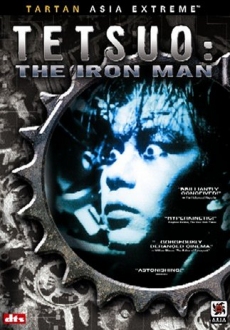
Tetsuo: The Iron Man (1989)


e_coverMany films can be bizarre and abstract but few films truly capture the feeling of being in a living nightmare quite so well as Tetsuo: The Iron Man. However, what may seem to more casual viewers like a series of disturbing black and white images simply meant to take you on an insane visual journey, is in reality a film with a strong narrative thread connecting the central characters to a single traumatic event.

Opening on a desolate industrial landscape, reminiscent of David Lynch’s surreal masterpiece Eraserhead, the film begins with an unknown man gruesomely inserting a metal rod into his leg. Shortly after doing so however he freaks out and runs screaming into the street. The film then follows an ordinary businessman (Tomorowo Taguchi, whose character is bizarrely listed in the credits as ‘Salaryman’), as he unwillingly embarks on a hellish journey in which his body begins to turn from flesh to metal following a horrifying encounter in the subway.

With a running time of a mere 67 minutes, barely qualifying as a feature, writer/director Shin’ya Tsukamoto packs an amazing amount into this dark, disturbing and utterly amazing film. The metal itself is fascinating, presenting to the characters like rusty junk-metal tumors protruding from their skin rather than some kind of sleek cybernetic enhancement. The Salaryman also feels like an authentic tortured soul, a classic movie monster cursed by a physical transformation he can’t control that threatens to destroy everything in his life.

This is tied into what is perhaps the most central theme in the film itself which is the melding of sexuality and metal-related violence. This is a running theme throughout (giant drill-cock anyone?) but rather than being an exercise in gratuitous perversion it is deftly tied back to the central narrative event making it an integral part of the story. This is also a key example of how Tsukamoto interweaves flashbacks with the disintegrating reality of the present to give us a story that is fast-paced and frenetic while at the same time nuanced and complex.

While the film is certainly groundbreaking it just doesn’t quite reach the five star level for me of films that have deep, emotionally complex acting and a rich, polished visual style that reflects a high level of quality filmmaking regardless of the budget.  But make no mistake, the gritty visuals, high-contrast lighting, stop-motion animation and lightning quick edits make this a horrifying journey into a surreal nightmare that simply must be experienced to be believed.  Overall, highly recommended.


tetsuo-iron-man-shinya-tsukamoto

4.5 Stars Red

Wyrmwood: Road of the Dead (2014)


Wyrmwood-630 Ah, the zombie film. Is there any horror subgenre more oversaturated these days? Much like the zombies themselves the films seem to be everywhere, shambling along with little change or innovation as the concept is resurrected time and again with similar, diminishing returns. As the zombie subgenre has become more and watered down with mainstream films like World War Z and Warm Bodies (zombie rom-com, seriously?) I’ve started to feel like we’ll never get back to the kind of brutal, badass action that made the zombie films great in the first place. That was until I saw Wyrmwood: Road of the Dead.


The film plays out in non-linear format following several survivors of a recent and sudden apocalyptic zombie outbreak in Australia. After losing his family in the outbreak, Barry (Jay Gallagher) eventually teams up with fellow survivors Benny (Leon Burchill) and Frank (Keith Agius) on a quest to find his sister Brooke (Bianca Brady).


Wyrmwood succeeds where so many others have failed because it knows exactly what a zombie film should be and gets right down to business. The story is fast-paced, gory and brutal but with enough innovative concepts, like zombies as a fuel source (!), to set it apart from the shambling masses of mediocrity. There’s just enough character development so that you understand and empathize with the survivors without taking away from or slowing down the plot. Added to this are the pitch-perfect performances from the indie cast and a strong visual style from director Kiah Roache-Turner which elevate the film well above it’s shockingly low budget of $160,000.


Does Wyrmwood have a mind-blowing storyline that will change the face of cinema as we know it? No, but it never claimed to and it achieves exactly what it set out to do which is create a fun, visceral ride that hits all the marks needed for a classic post-apocalyptic zombie thrill ride, homemade armor, tricked out battle car, exploding heads, etc. It also boasts fantastic cinematography that ranges from drab, washed out scenes to ones bursting with rich color which lend to the film’s unique style. All in all a superb film, seriously deserving cult classic status, that proves there is still some life left in the rotten heart of the zombie subgenre after all.

4 Stars Red