
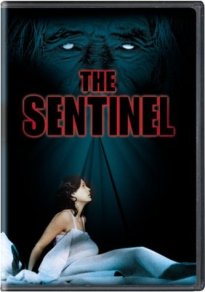
 The Sentinel is a lesser known film that was allegedly created as Universal’s response to The Exorcist which was made four years prior. And while it does in fact have some thematic elements that draw comparisons to that film, it actually seems to garner more inspiration from Rosemary’s Baby. So, the question naturally becomes “does it stand up those monumental horror classics but was unfairly relegated into near obscurity? Or is there a reason why it doesn’t often come up in the conversation when classic religious-based horror is discussed?”
The story follows model Alison Parker (Cristina Raines) who is devoted to her slick, lawyer boyfriend Michael (Chris Sarandon) but at the same time looking for her own apartment because she wants her own space. Despite the fact that her wealthy father soon dies, money seems to be tight so she opts for a spacious but somewhat creepy apartment where her top floor neighbor is an old blind priest who does nothing but “stare” out the window. As you can imagine, shit starts getting creepy when she’s there alone and her and Michael must figure out the truth about the building before it’s too late.
Now, I’m a big fan of slow-burn tension but forty minutes into this film I honestly had the thought “how is this even classified as a horror movie?” While The Sentinel tries to establish a world full of palpable tension where things are not as they seem, a la Rosemary’s Baby, the effort largely falls flat, resulting in large stretches of monotony. This is not to say that there aren’t scenes where the film earns it’s horror stripes. A surprisingly gruesome encounter with a ghost about halfway through and a climax that is both incredibly creepy and very inventive do help to redeem the film a great deal, even if it does come off as rather overt Christian propaganda.
Clearly, the studio had high hopes for this being an effective horror vehicle and a lot of thought did go into assembling the supporting cast, but with mixed results. Faded star Ava Gardner’s Transatlantic Accent comes off as stagy and out of place from the reset of the cast. In addition, fantastic character actors such as Christopher Walken and Jeff Goldblum show up as minor characters but are squandered on insignificant roles. On the other hand, Burgess Meredith actually does deliver an effective performance that deftly transitions from friendly old coot to one of genuine menace.
In conclusion, The Sentinel does have an original concept and some great scenes interspersed throughout (that one with the cat eating the bird certainly had a chilling weight to it) but the overall picture isn’t engaging enough to really make it worth it. If you are religion-themed horror completest, there will probably be enough here to keep you interested to the end but frankly you’d have a better time just putting in The Exorcist again.

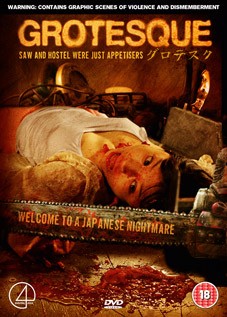 The term “Torture Porn” was first coined back in 2006 by film critic David Edelstein describing the emerging trend of films like Hostel and Saw which featured very graphic scenes of torture and dismemberment. While scenes of graphic violence have been a staple of horror films for decades the new crop of early millennium extreme horror films brought the violence to the next level by dwelling on graphic and explicit carnage to an extent not previously seen in mainstream films. The structure of these types of films also typically mirrors the structure of a porn, hence the name, in that the primary focus of the film is a series of set-ups and titillating, explicit pay-offs. Now, I’ve seen a lot of Torture Porn films, probably all of them, but none in my experience better capture the essential nature of what a Torture Porn film is better than Koji Shiraishi’s exercise in extreme brutality, Grotesque.
 Horror and Alternative Cinema Reviews